




Analysis of the Bank of Japan's Recent Policy Changes and Market Reactions
Insights into the Recent Decisions of the Bank of Japan
The Bank of Japan (BOJ) recently surprised the markets by raising its key interest rates by 0.25 percentage points to 1%. This decision came during the financial policy meeting held to assess the need for adjustments in the backdrop of rising long-term interest rates. However, it appears that the central bank's overall approach remains cautious, lacking a strong inclination toward aggressive rate hikes.
Market Reactions and Interpretations
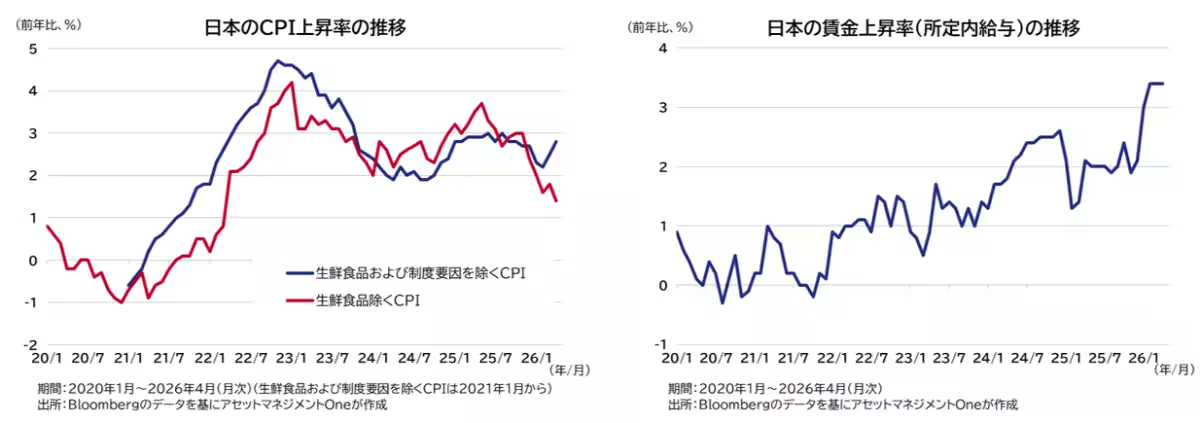
Following the BOJ's decision, the market reacted with a rise in long-term interest rates and a slight depreciation of the yen. Notably, the government's considerations of additional measures in response to inflation indicated a complex path for future monetary policies. Despite the increase in interest rates, analysts suggest that the bank's hesitance could be attributed to the current economic climate, where household consumption shows resilience amidst rising prices, primarily driven by factors outside of the government's new education funding initiatives.
Concerns Over Global Oil Prices
While geopolitical tensions in the Middle East raise concerns about oil prices and potential resource scarcity impacting the economy, the recent preliminary ceasefire offers some relief. Observers argue that these developments could justify a more proactive stance from the BOJ to boost interest rates further. The economic environment has shifted, and the opportunity for more assertive action may have been missed due to the bank's persistently cautious stance.
Analysis of Financial Stability
Both the bond and foreign exchange markets have expressed skepticism regarding the BOJ's potential for aggressive measures. Even with markets factoring in the June meeting's outcomes, the lack of concrete hawkish signals and rising fears of the BOJ falling behind the curve led to increased uncertainties in the bond market. The proposed suspension of bond purchase reductions may be seen as a government finance-related strategy rather than a legitimate attempt at tightening monetary policy, prompting further market volatility.
Implications for Currency Value
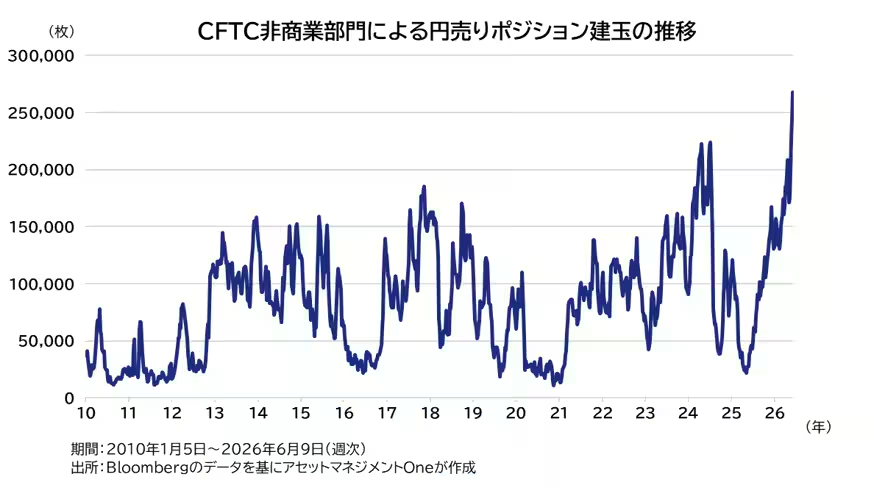
Notably, prior to the BOJ's meeting in June, speculative positions favoring a depreciated yen surged to historic highs—driven by perceptions of low, comparative interest rates and the carry trade environment. Market expectations regarding the BOJ aligning with other central banks in tightening measures were diminished, decreasing the rationale for long positions in the yen.
Conclusion: A Cautious Path Ahead
Ultimately, the BOJ's recent appropriation of a conservative approach may cement bonds’ yield increases and currency depreciation as consensus views. Without drastic changes in bond demand or significant shifts in the financial trends abroad, particularly in the U.S., the ongoing trend in Japanese government bonds and the yen may solidify. The strategic positioning of the BOJ in these turbulent times could shape future market dynamics significantly, as the push for a more assertive monetary policy appears dampened by contemporary economic assessments and prevailing global uncertainties.
This careful balancing act by the BOJ illustrates the precarious nature of managing interest rates in an interconnected global environment, marking a pivotal point in Japan's economic strategies that warrant continued observation.

Topics Financial Services & Investing)
【About Using Articles】
You can freely use the title and article content by linking to the page where the article is posted.
※ Images cannot be used.
【About Links】
Links are free to use.