



Identifying Anti-Inflammatory Components in Lactiplantibacillus plantarum OLL2712
Exploring the Anti-Inflammatory Mechanisms of Lactiplantibacillus plantarum OLL2712
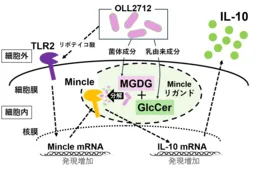
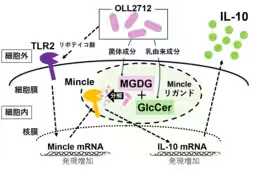
In a notable collaboration between Meiji Holdings Co., Ltd. and Professor Akira Yamazaki from Osaka University's Microbial Disease Research Institute, significant discoveries have emerged regarding the probiotic strain Lactiplantibacillus plantarum OLL2712. Recognized for its beneficial effects on sugar and lipid metabolism, OLL2712 demonstrates powerful anti-inflammatory properties. The research team has successfully identified specific functional components that interact with immune cells, particularly highlighting its influence on dendritic cells and their production of the anti-inflammatory cytokine IL-10.
Research Highlights
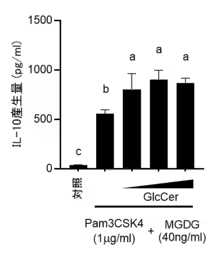
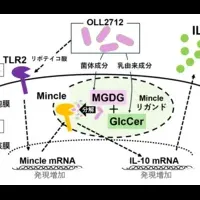
The study unveiled that the sugar lipid MGDG (monoglucosyldiacylglycerol), derived from the cell wall of OLL2712, serves as a principal player in stimulating immune responses. Additionally, it was discovered that GlcCer (glucosylceramide), a component acquired from the milk medium in which OLL2712 is cultured, amplifies this activity. This breakthrough was presented at the 2026 Annual Meeting of the Japanese Society of Lactic Acid Bacteria, taking place from July 24 to 26, and was pre-released online in the 'Journal of Dairy Science' on May 30, 2026.
Mechanism of Action
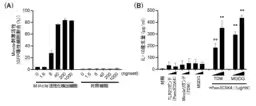
The researchers particularly focused on how OLL2712 activates specific receptors on dendritic cells known as TLR2 and Mincle. The activation of these receptors enhances the production of IL-10, a crucial anti-inflammatory substance. Notably, MGDG was identified as the main active compound stimulating Mincle, working synergistically with TLR2 to boost IL-10 production significantly. Furthermore, GlcCer has been found to also stimulate Mincle, indicating a dual mechanism of action through which these combined components operate to render potent anti-inflammatory effects.
Implications for Health and Nutrition
The insights from this research provide a powerful endorsement of OLL2712’s health benefits, particularly its capacity to stimulate immune cells via the Mincle receptor. It emphasizes the importance of culture conditions in maximizing these effects, paving the way for future innovations in product development aimed at improving glucose and lipid metabolism as well as overall health maintenance.
The study's findings also suggest that OLL2712's potential in health applications stems not just from the strain itself but from the careful manipulation of its growth environment.
Future Directions
Building on these discoveries, further research will continue to unravel the detailed mechanisms by which OLL2712 supports immune function and promotes health. By elucidating these pathways, the team aims to leverage this strain's benefits in developing new functional foods and probiotics that enhance not only metabolic health but also modulate inflammatory responses beneficially in the human body. Overall, OLL2712 holds great promise for advancing probiotic science and improving health outcomes for people seeking natural ways to maintain their well-being.
Conclusion
The study of Lactiplantibacillus plantarum OLL2712 illuminates a new frontier in understanding the link between probiotics and immune modulation. As promising as the results may seem, they lay the groundwork for a new era of health-oriented products based on scientific research and evidence. By harnessing the capabilities of such beneficial bacteria, a healthier future may be possible for many. In conclusion, the findings not only advance our understanding of probiotics but also promote a holistic approach to nutrition that combines modern science with traditional wellness practices.
Topics Health)






【About Using Articles】
You can freely use the title and article content by linking to the page where the article is posted.
※ Images cannot be used.
【About Links】
Links are free to use.