



Exploring Advanced Material Science at Okayama University: The Path Toward a Circular Economy
New Horizons in Advanced Materials Science Seminar
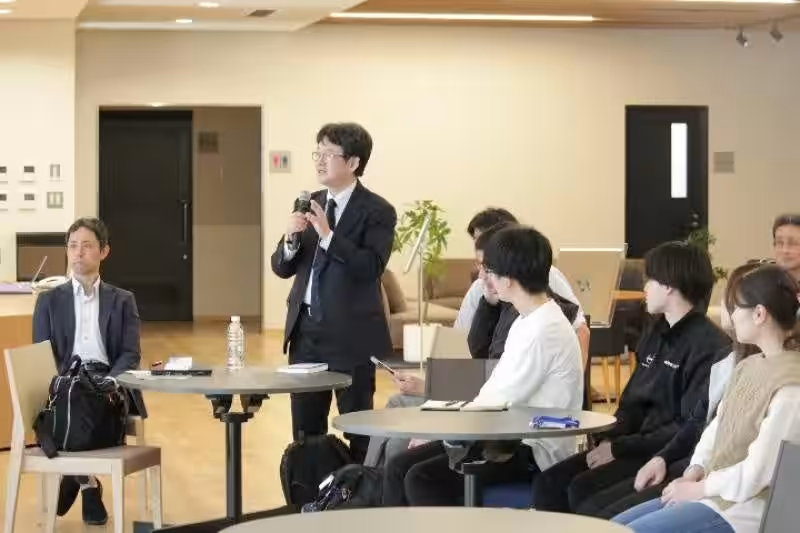
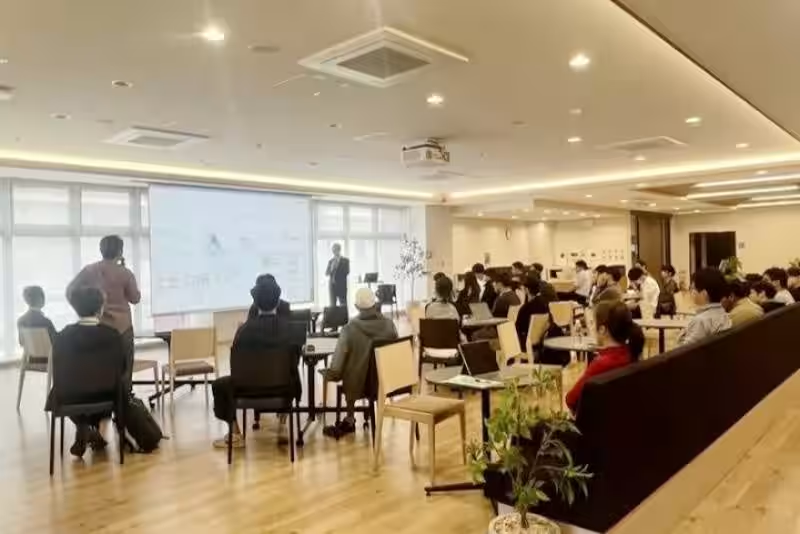
On June 16, 2026, Okayama University successfully hosted the second edition of the "J-PEAKS Special Seminar: New Horizons in Advanced Materials Science." This event, held at the Co-Creation Innovation Lab KIBINOVE on the Tsushima campus, gathered around 30 researchers specializing in materials and chemical engineering. The seminar was led by Professor Yuta Nishina of Okayama University's Institute of Interdisciplinary Fundamental Science.
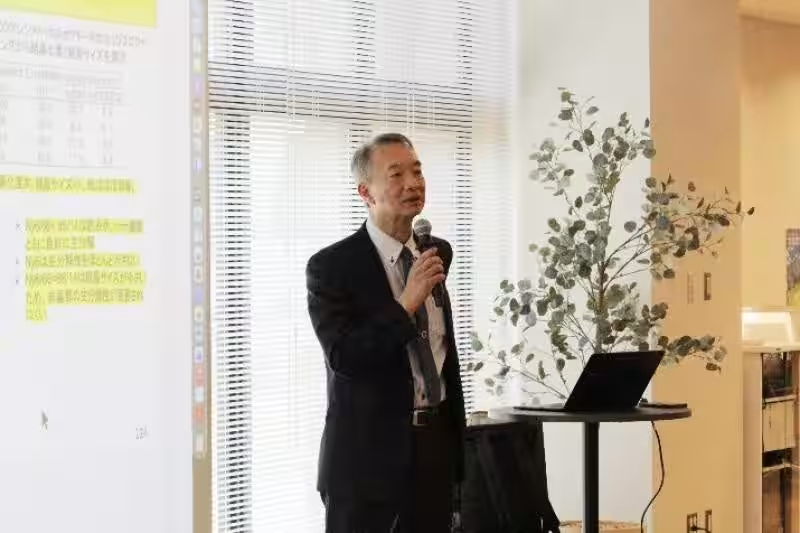
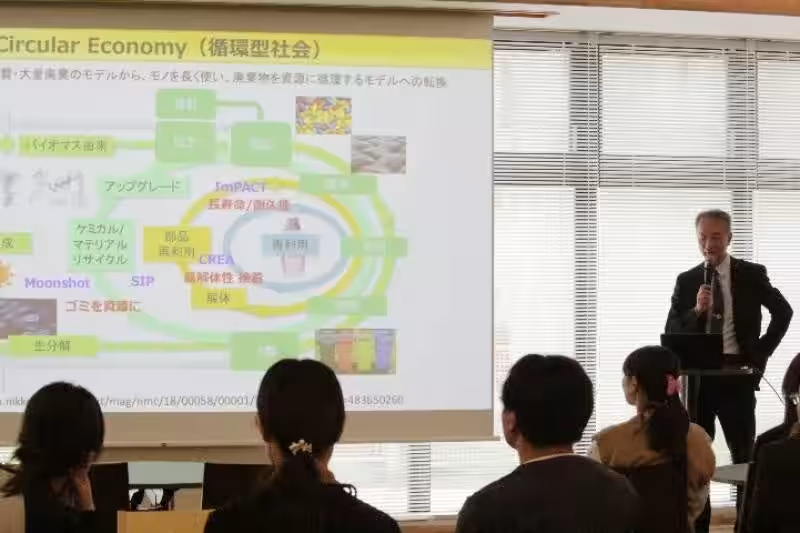
As a highlight, the seminar invited Professor Kozou Ito, a Special Professor from the University of Tokyo, who is renowned for his expertise in polymer materials using topological supramolecules. His talk revolved around the latest research findings that contribute to the realization of a circular society. He introduced the world's first synthesized cyclic polymer material, known as the "Slide-Ring Material (SRM)," which he created approximately 25 years ago. Professor Ito explained how the sliding mechanism of cross-linking points could distribute stress concentrically, significantly enhancing material toughness and durability. He also discussed nanosheets formed by self-organization, emphasizing their potential applications in medical and healthcare sectors.
In the latter half of the presentation, Professor Ito elaborated on the Moonshot-type research and development initiatives, alongside the Strategic Innovation Promotion Program (SIP) in which he serves as a leader. These research efforts have garnered considerable attention from policymakers, notably featured in the fourth ministerial meeting concerning the circular economy that coincided with the seminar. During this meeting, the SIP initiatives were repeatedly highlighted, and projections were set for a government-private investment plan totaling 1 trillion yen by 2030 to advance resource circulation research and development, extending to metals and plastics.
A notable breakthrough presented during the seminar was a field test conducted in the sea off Ainan town in Ehime Prefecture. This test confirmed that nylon fishing lines, traditionally believed to be non-degradable, could break down in marine environments. The underlying mechanism involved the crystal structure and the role of microorganisms in the "multi-lock mechanism." This discovery holds promise for addressing the ghost gear issue—marine plastic waste related to fisheries. Furthermore, the potential of reusing used plastics, such as food containers, as automotive materials was discussed, showcasing practical steps toward resource recycling.
"It's not the plastics themselves that are bad; it's how we utilize them that matters," Professor Ito remarked, reiterating that materials science may hold the key to resolving societal challenges. Participants engaged enthusiastically, raising numerous questions concerning material degradation mechanisms, recycling of composites, and future directions in next-generation material development.
This seminar was part of the "J-PEAKS" initiative aimed at strengthening distinctive research universities in key regions. It served as a vital platform for understanding the connection between cutting-edge polymer materials research and societal issues concerning resource circulation and marine plastic pollution. Okayama University remains committed to fostering research exchange and development in advanced materials science, continually contributing toward the establishment of a circular society. Moving forward, the university invites ongoing interest in its initiatives to support innovation in both local and global contexts.
Topics Other)
【About Using Articles】
You can freely use the title and article content by linking to the page where the article is posted.
※ Images cannot be used.
【About Links】
Links are free to use.