



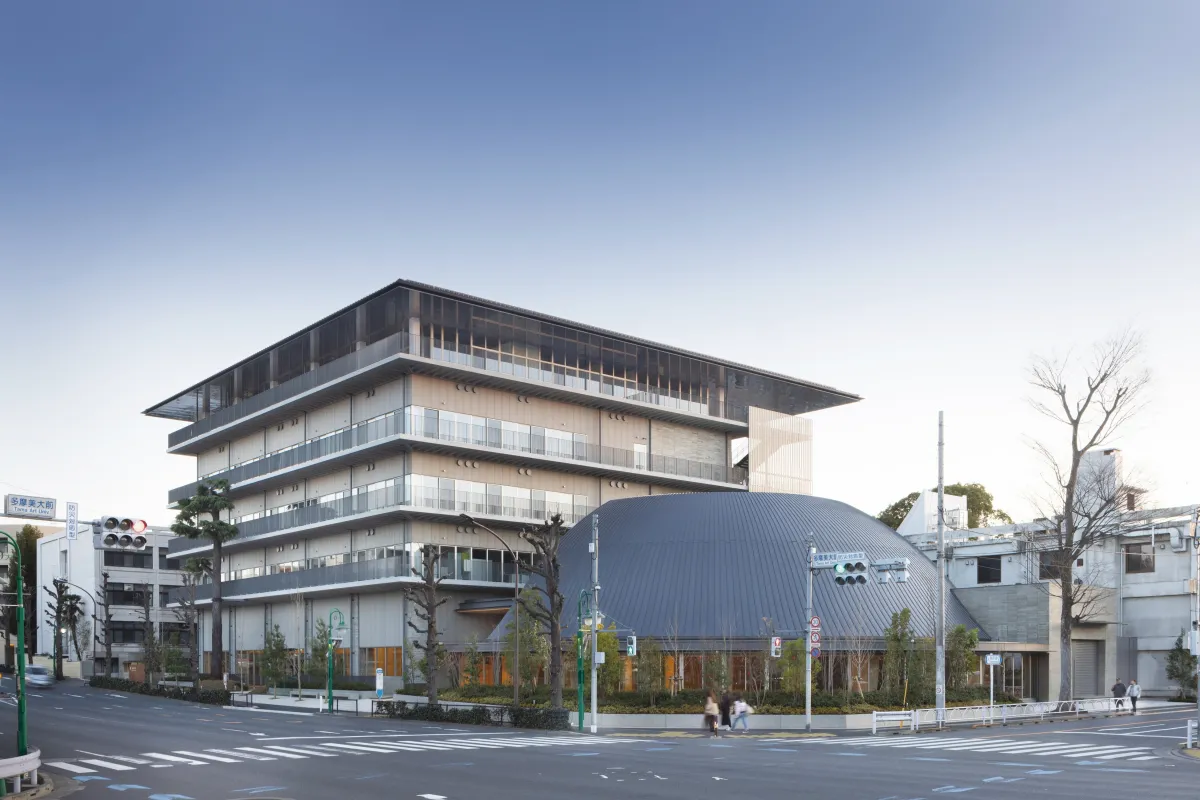
Completion of New Building at Tama Art University Enhances Educational Environment and Community Interaction
New Building Completion at Tama Art University
Tama Art University, located in Setagaya, Tokyo, proudly announces the completion of its new building at the Uenokou Campus, a significant milestone in its 90th anniversary celebrations. This new structure, which includes the main building and auditorium, represents a crucial step towards modernizing the educational and research environment while establishing a more open community hub. The new facility is set to be utilized starting in the 2026 academic year.
Background of the Uenokou Campus Renovation
The Uenokou Campus has served as the heart of Tama Art University since its establishment as the Tama Imperial Art School in 1935. With the pressing need to address issues of aging infrastructure and seismic safety, as well as the evolving demands of art and design education, the campus is undergoing a systematic redevelopment project. The construction of this new building positions itself as a cornerstone in enhancing the educational framework and reinforcing the university's commitment to community engagement.
A guiding phrase handed over by President Masaki Aoyagi to architect Hiroshi Naito encapsulated the essence of the new building's concept:
"It suffices to have a bright cover that protects against rain and dew, allows one to hold a pencil without freezing, and offers a space where friends and mentors can interact, compete, and build bonds."
Hiroshi Naito, who assumed the role of university president in April 2023, was also the lead architect for this project.
Features of the New Building
1. Creative Classrooms and Studio Spaces
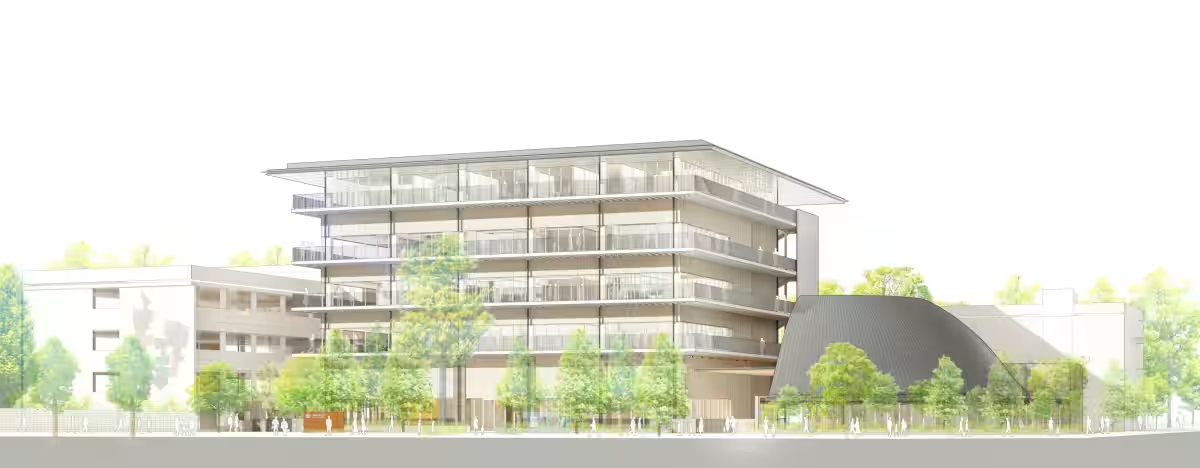
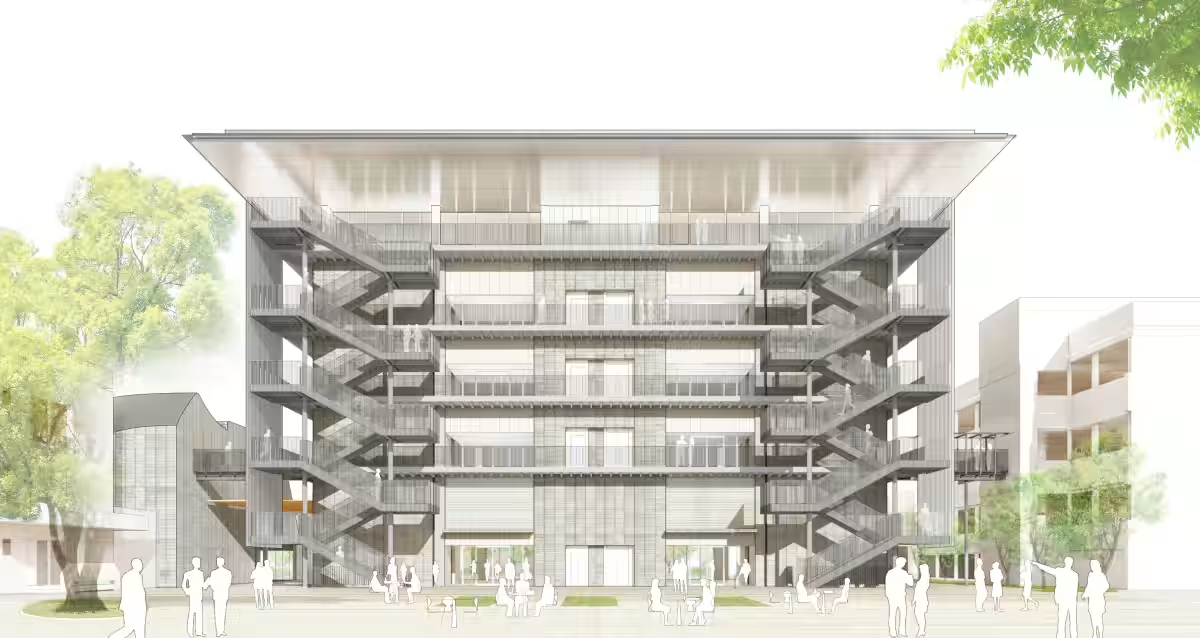
The main building, standing two to four stories, features classrooms and studio spaces with high ceilings tailored to facilitate various forms of expression, including planar, three-dimensional, and video art. Careful consideration has been given to incorporate natural light and strategic movement flow, ensuring an environment conducive for focused study and creation.
2. A Community-Focused Gallery
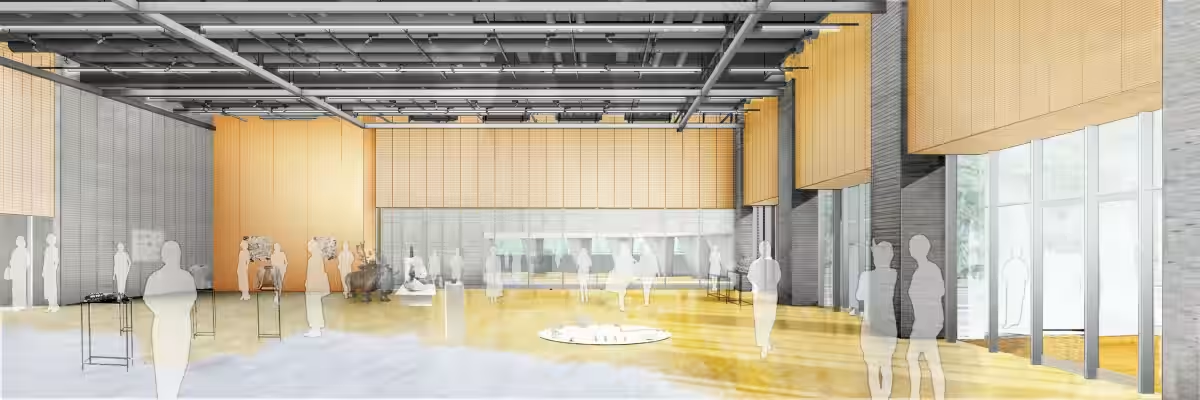
On the ground floor facing Route 8, the main building includes a gallery named "Sala Blu," where student works and project results can be showcased. With a ceiling height of approximately six meters, this expansive space can accommodate large exhibits and can be reorganized with movable panels for diverse utilization. The gallery aims to be a welcoming area for community members, fostering connections between the university and the surrounding neighborhood.
3. The Oculus Hall
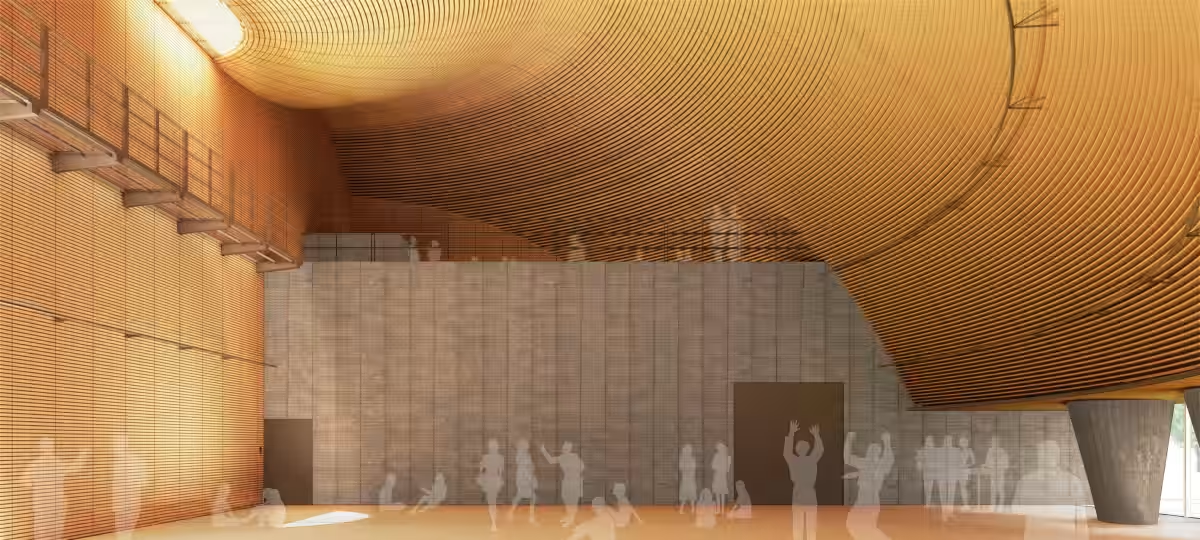
The auditorium, known as "Oculus Hall," boasts a unique exterior that faces the intersection of Route 8 and Komazawa Street. It features a top light at the dome's peak, allowing natural light to permeate the space. The interior walls are soundproofed to create an optimal acoustic environment for various performances, including theater and music. Named after the Latin word "Oculus," which means "eye" and refers to a window or skylight in ancient Roman architecture, Oculus Hall is designed to facilitate creativity and communal learning.
4. Interaction Terrace
On the rooftop of the main building, the fifth floor hosts an interaction terrace named "Subcaelo," designed to foster exchanges across disciplines and departments. This space will allow students, faculty, and anyone involved in the educational sphere to convene for meetings or collaborative projects, thereby broadening the learning opportunities available.
5. A Campus Landscape Full of Life
Covering the entire main building is a grand roof symbolizing a safe and inspiring space for students, embodying the essence of the guiding phrase. This roof creates an open area toward the courtyard, encouraging lively interactions among students and contributing to a vibrant campus atmosphere.
Educational Value and Community Engagement
Learning in art and design transcends mere creation; it deepens through connections with society. The new building promotes opportunities for exhibitions, presentations, and dialogues that allow students to engage with the local community, thereby expanding their educational experiences. Events like gallery displays and public critiques will increase the community's exposure to the university's educational activities and help cultivate local culture centered around creativity.
Statements from Leadership
In his comments on the building's completion, President Masaki Aoyagi expressed:
"The essence of learning lies in a nurturing environment that keeps both the body and mind healthy and allows peers to uplift one another. The 'bright cover' that protects against environmental changes and a 'high ceiling' to aspire to are reflections of our commitment to amplify student potential and accelerate innovative thinking beyond conventional boundaries."
Meanwhile, President Hiroshi Naito noted:
"The Uenokou Campus has a historical significance as our foundational base, and the renovation of the main building and auditorium marks a new chapter. The gallery on the ground floor aims to showcase our arts and design education, while the auditorium will serve as a venue for performing arts such as theater and dance, embodying the spirit of our motto: 'freedom and intent.'"
Architectural Overview
- - Location: Uenokou Campus, Setagaya, Tokyo
- - Site Area: 15,878.32 sqm
- - Total Floor Area: 6,411.86 sqm (main building), 795.62 sqm (auditorium)
- - Structure: Steel frame with reinforced concrete
- - Floors: 5 above ground, 1 underground (main building), 2 above ground, 1 underground (auditorium)
- - Design Management: Hiroshi Naito Architectural Office
- - Construction: Maeda Corporation
Upcoming plans include a preview event for construction stakeholders on March 30, 2026, with gradual usage beginning in the 2026 academic year. Further updates will be provided as the redevelopment progresses.
About Tama Art University
Established in 1935, Tama Art University has been a leader in contemporary art and design education, producing numerous talents who have made their mark globally across various fields. With campuses in Hachiouji and Setagaya, the university offers a broad range of disciplines, from painting and sculpture to design and theater, encompassing 15 departments and graduate schools.
For additional information, visit Tama Art University.

Topics Other)
【About Using Articles】
You can freely use the title and article content by linking to the page where the article is posted.
※ Images cannot be used.
【About Links】
Links are free to use.