



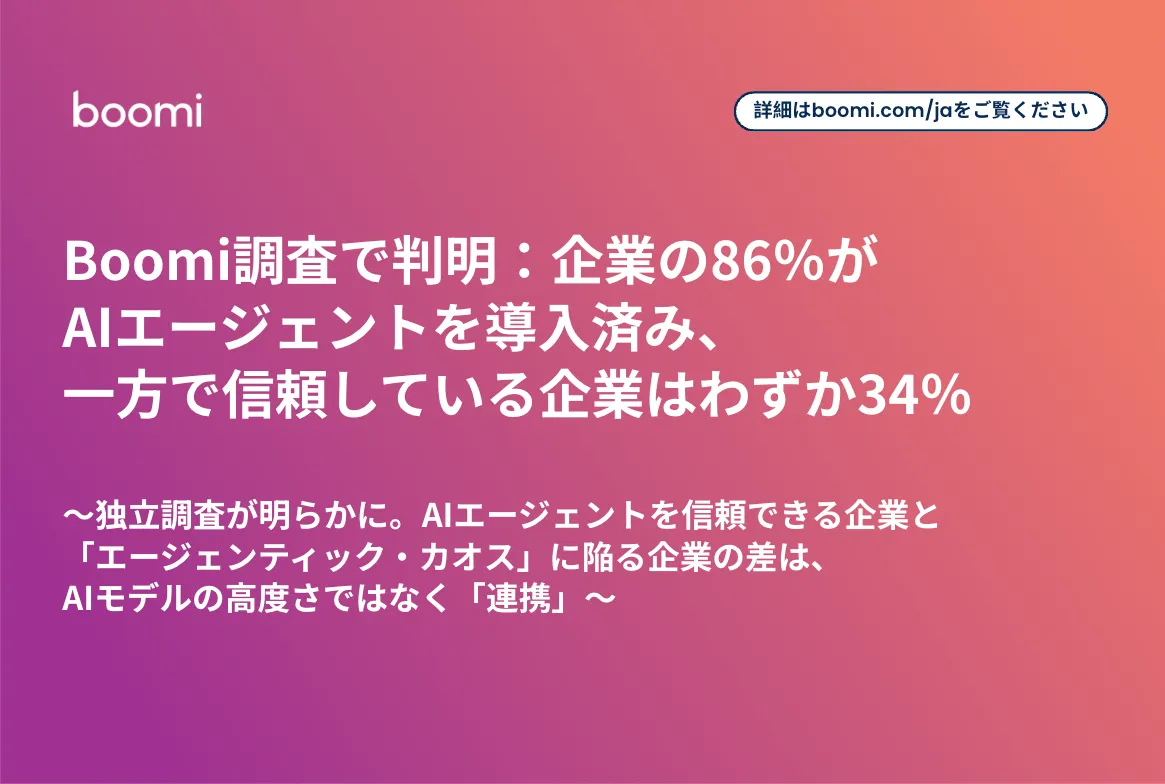
The Trust Gap: Why 86% of Companies Adopt AI Agents But Only 34% Trust Them
Understanding the Surge in AI Agent Adoption
In an era defined by technological advancement, AI agents are rapidly becoming a cornerstone for numerous businesses. According to Boomi's latest findings, which involved a survey conducted by Forrester Consulting among 409 decision-makers across North America, Europe, and the Asia-Pacific region, an astounding 86% of organizations have transitioned their AI deployments from proof of concept (PoC) to full-scale implementation. However, a stark contrast is observed; only 34% of these companies express confidence in the decision-making abilities of these AI agents.
The Disjoint Between Adoption and Trust
This discrepancy raises pressing questions about the foundational elements of successful AI integration. Many companies are racing toward adopting AI agents without solid governance or data integration frameworks in place. Of those identified as lagging behind in establishing necessary systems like API management and data governance, a staggering 77% moved to implement AI agents in operational environments prematurely. This hasty transition exposes these companies to significant risks, including compliance violations, customer loss, operational downtime, and averagely $2.1 million in additional costs.
The Role of Governance in AI Trust
Steve Lucas, Chairman and CEO of Boomi, emphasized the crucial link between the proper governance of AI systems and the trust that users place in them: "AI agents can only make reliable judgments and actions when they are built upon solid, well-governed data. Many companies are rushing into AI adoption without laying the necessary foundation first. The companies that do establish this groundwork will ultimately reap the true value of their investments."
Integration as a Trust Catalyst
The survey further identifies integration as a critical turning point for organizations. Those categorized under 'Agentic Control'—the top tier of operational readiness—show a stark contrast in sentiment regarding their AI systems. About 55% of these firms trust their AI agents compared to a mere 22% from the 'Agentic Chaos' category, which often lacks strict controls and integration oversight.
The usage of Integration Platform as a Service (iPaaS) also appears to be a game-changer. Companies classified under 'Agentic Control' report a 46% adoption rate of iPaaS to bolster workflows, whereas only 25% of 'Agentic Chaos' firms took similar steps. Moreover, 86% of organizations in control consider API and iPaaS functionality vital for building AI agents. In stark contrast, only 58% of those in chaos share this perspective. This shows a significant divide not just in technology usage but also in operational philosophy.
Sustaining AI Success Through Holistic Integration
Beyond merely focusing on AI performance, leader companies invest heavily in refining their foundational integration capabilities. For instance, 47% of 'Agentic Control' firms prioritize enhancing the synergy of tools and applications, in comparison to just 31% in 'Agentic Chaos' firms, which often prioritize the improvement of AI itself over the necessary infrastructure.
The implications of this lag in foundational enhancements are further highlighted in firms where the number of active AI agents can reach up to 200, a state termed by Forrester as 'POC/pilot purgatory.' In this limbo, companies find themselves unable to connect AI agents to the internal systems vital for action based on their autonomous decisions, hampering their effective deployment despite high enthusiasm.
Clear Benefits for Those Who Invest in Integration
Companies that commit to a robust integration framework are beginning to see tangible returns from their investments in AI agents. From the data, 59% of 'Agentic Control' participants report enhanced productivity due to AI implementations. Furthermore, 51% credit these technologies for driving innovation, and 45% acknowledge automating repetitive tasks. With strong foundational controls in place, these businesses are not only innovating but are establishing reusable systems that provide benefits across other business areas.
Forrester suggests several strategies for companies aiming to bolster trust in AI agents: integrating AI and operational units into a unified model, establishing a control plane for overseeing AI interactions, and creating orchestration features that enable AI agents to communicate both with data and each other.
Conclusion
In conclusion, while the push for AI adoption is widespread, the path to achieving trust in these technologies requires thoughtful integration and governance. Boomi's collaborative approach aims to equip organizations with the tools necessary to navigate this complex landscape. As the landscape continues to evolve, it will be crucial for companies not only to adopt AI agents but to do so intelligently, fostering a future where these technologies enhance business operations genuinely and sustainably.
Topics Business Technology)
【About Using Articles】
You can freely use the title and article content by linking to the page where the article is posted.
※ Images cannot be used.
【About Links】
Links are free to use.