



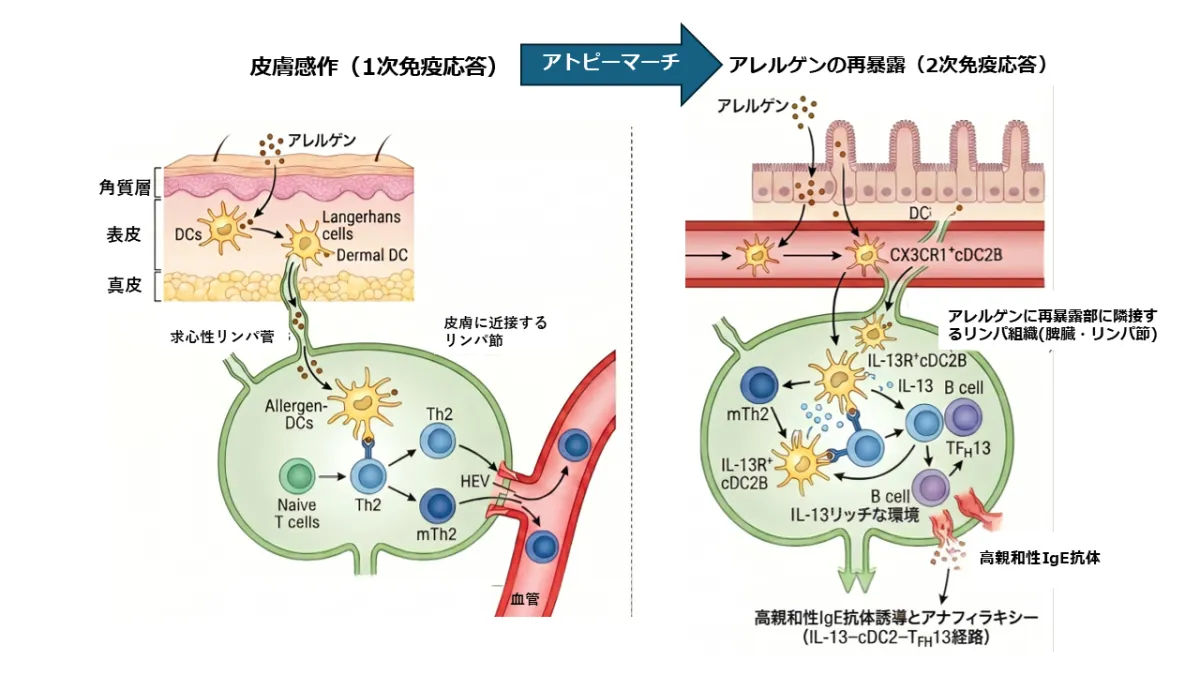
Understanding the Mechanism Behind Atopic March: IL-13 and Dendritic Cell Interaction
Understanding the Mechanism Behind Atopic March
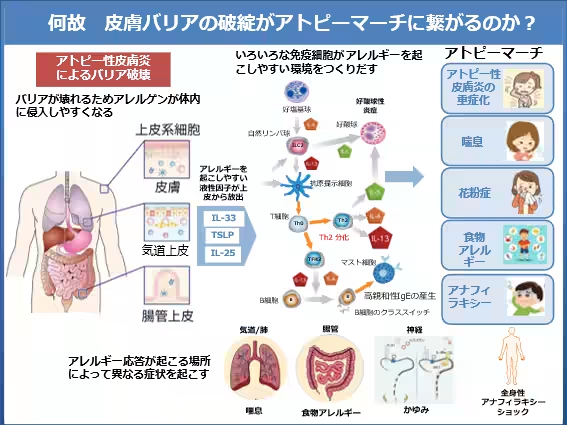
The phenomenon known as "Atopic March" refers to the progression of allergic conditions, starting with atopic dermatitis in childhood and potentially leading to systemic issues such as food allergies and anaphylaxis. This mechanism has long remained elusive, but recent research sheds light on the critical role played by IL-13 and specific dendritic cells in this progression.
Key Findings from Research
Researchers from various esteemed institutions, including Tokyo University of Science and Keio University, have revealed how IL-13, a type 2 cytokine, interacts with a specific subset of dendritic cells known as classical dendritic cells type 2 (cDC2). This interaction significantly enhances the antigen-presenting capability of these dendritic cells, subsequently inducing the production of high-affinity IgE antibodies, which can lead to systemic anaphylactic reactions.
This groundbreaking study was published in the Proceedings of the National Academy of Sciences on July 9, 2026, and underscores the potential for new therapeutic strategies targeting the pathways involved in the migration of cDC2 to lymph nodes, representing a novel direction in treating allergic diseases.
Methodology
Using a mouse model, the research team performed skin sensitization followed by systemic exposure to allergens. It was observed that the presence of IL-13 was crucial for the production of high-affinity IgE antibodies. Specific targeting of IL-13 receptors in dendritic cells via genetic manipulation demonstrated a marked decrease in the anaphylactic response, confirming their pivotal role in the allergy pathway.
Additionally, an increase in IL-13 receptor-expressing cDC2 was observed in patients with atopic dermatitis and other allergic conditions, indicating a correlation with the severity of their symptoms. This finding suggests a common underlying mechanism that could be harnessed for therapeutic intervention.
Implications for Future Treatments
The identification of the IL-13 and cDC2 interaction provides a mechanistic understanding of how localized inflammation can escalate to widespread allergic responses. This information is critical as it lays the groundwork for developing targeted immunotherapies that could prevent the atopic march's progression.
Current biopharmaceuticals that inhibit IL-13 have shown clinical efficacy in treating atopic dermatitis, and this research supports the rationale behind their use. Future strategies may focus on developing medications that either target the cDC2 population directly or inhibit their migratory pathways involving chemokine receptors such as CX3CR1, facilitating a more refined approach to allergy management.
Conclusion
In summary, the recent advancements in understanding the atopic march highlight the importance of IL-13 and specialized dendritic cells. This research not only opens avenues for novel therapeutic strategies but also reinforces the need for ongoing exploration into the molecular mechanisms driving allergic diseases. The findings are expected to significantly impact clinical practices in treating allergies and improving patient outcomes worldwide.
Topics Health)
【About Using Articles】
You can freely use the title and article content by linking to the page where the article is posted.
※ Images cannot be used.
【About Links】
Links are free to use.