



Innovative Autonomous Trucks Set to Transform Supply Chain Logistics
Introduction
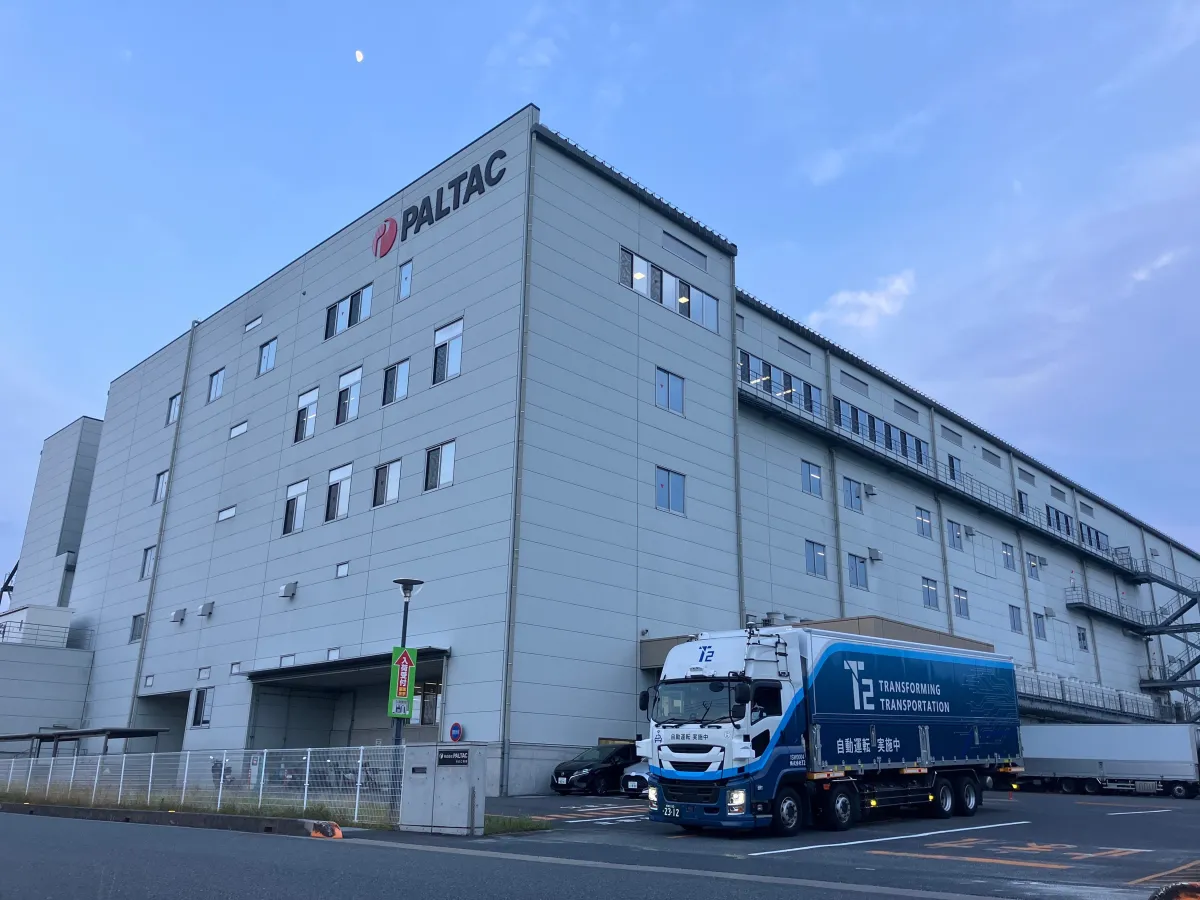
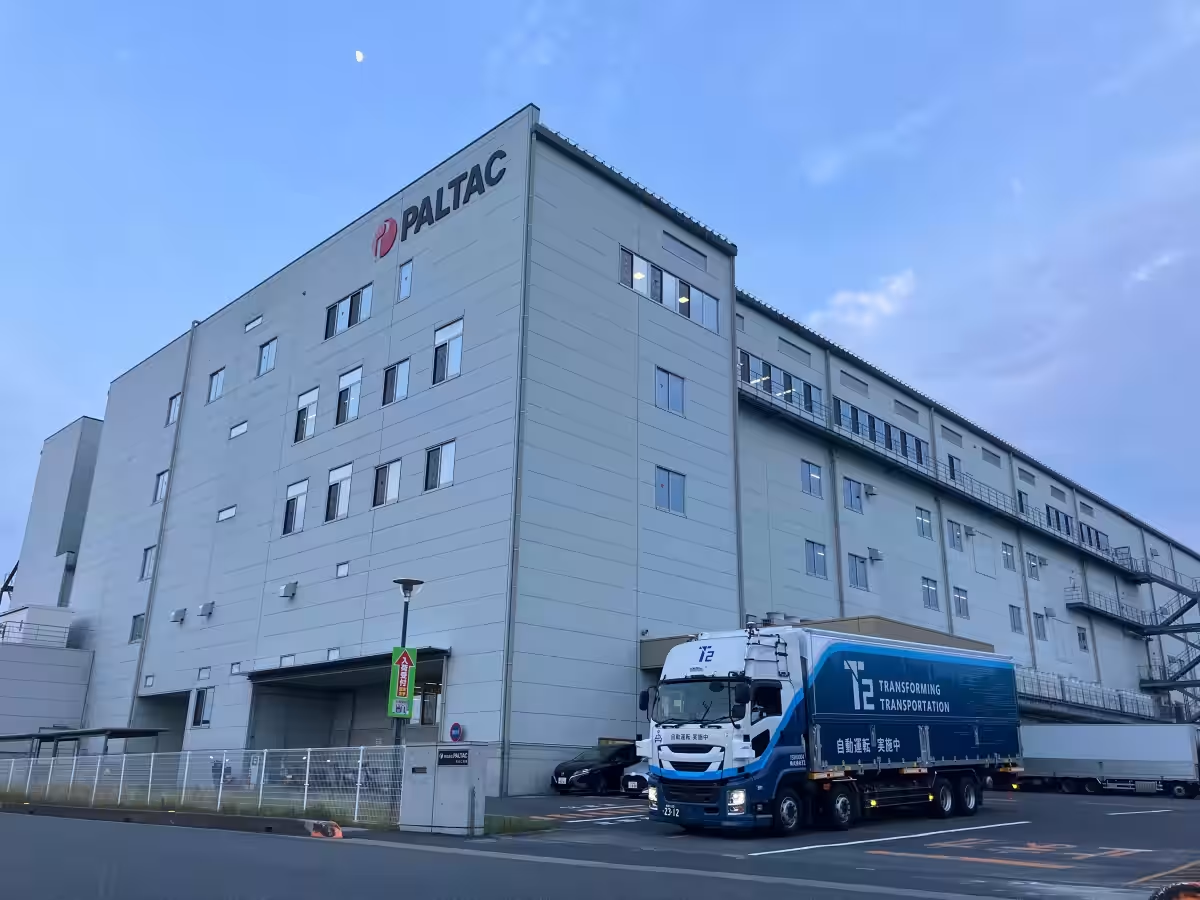
On July 3, 2025, a groundbreaking initiative commenced with the introduction of autonomous trucks for freight transport between the Kanto and Kansai regions of Japan. This innovative collaboration involves three companies: PALTAK, Daio Paper, and T2. The goal is to streamline the supply chain by utilizing self-driving technology to enhance efficiency and address the upcoming truck driver shortage predicted for 2024.
Key Players
PALTAK
Headquartered in Osaka, PALTAK is a leading wholesaler in cosmetics and daily necessities. With a vision to optimize logistics efficiency, the company is dedicated to collaborating with allied partners for enhanced supply chain solutions.
Daio Paper
Based in Tokyo, Daio Paper specializes in producing and selling various consumer products, including the well-known Elleair brand toilet paper. Their participation aims to align truck transport scheduling with actual stock levels, increasing loading efficiency.
T2
T2 is an innovative company focused on developing autonomous driving systems, specifically Level 4 trucks for freight services. Founded in 2022, T2's mission is to lead the way in autonomous transport solutions that can reshape logistics on a wider scale.
Implementation Plan
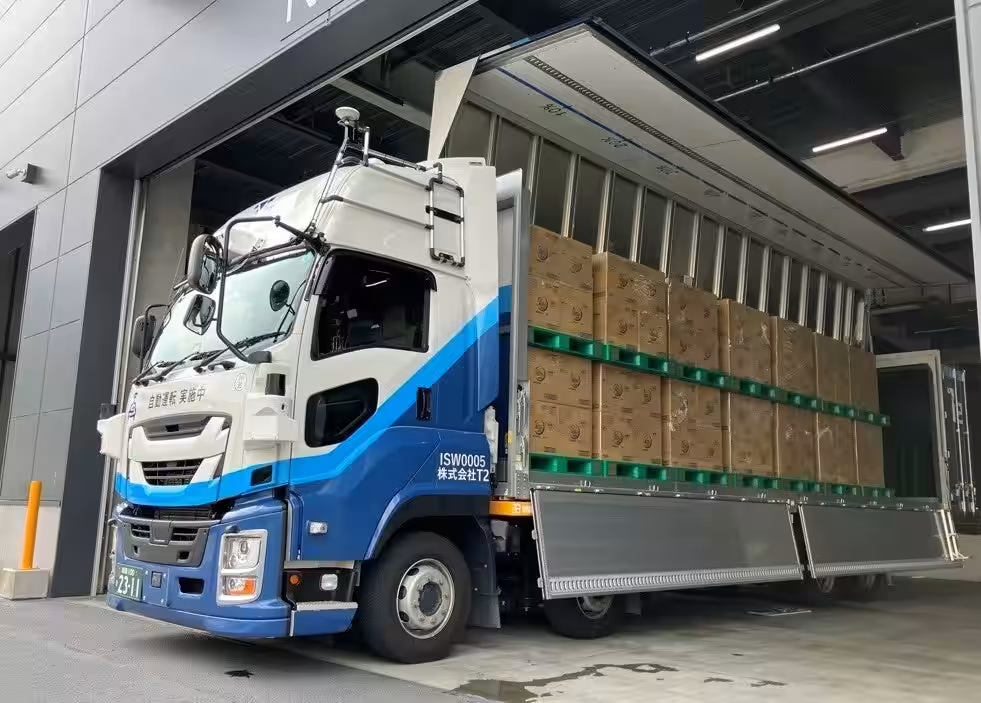
The project involves testing Level 4 autonomous trucks on designated stretches of highway. Prior to this, T2 will assess sustainable logistics through Level 2 autonomous trucks, transporting goods between Daio Paper's logistics centers and PALTAK's massive distribution centers.
Timeline
The initiative will roll out starting from July 3, 2025, and will be conducted multiple times to examine the viability of autonomous transport in long-haul logistics.
Routes
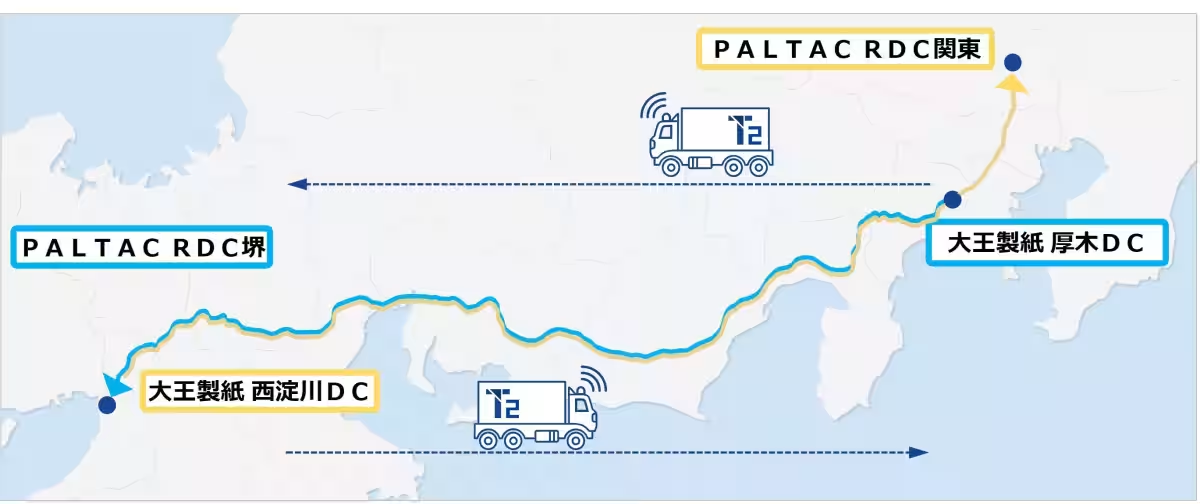
- - Outbound: Daio Paper's Atsugi DC (Kanagawa Prefecture) → PALTAK RDC Sakai (Osaka Prefecture)
- - Return: Daio Paper's Nishi-Yodogawa DC (Osaka Prefecture) → PALTAK RDC Kanto (Saitama Prefecture)
Specific parts of the highway will be utilized for these operations, ensuring a seamless transport process.
Objectives of the Demonstration
This collaborative effort aims to validate operational effectiveness and efficiency in autonomous trucking. Key components of the assessment will include:
- - Route optimization for freight transport with automated vehicles.
- - Validation of operational patterns and schedule effectiveness.
- - Evaluation of quality in transported goods.
Despite the high level of automation, all tests will have a driver present, ensuring compliance with safety protocols under Level 2 standards. This dual-phase testing approach is designed to optimize future operations as they transition to fully autonomous trucks.
Future Directions
Based on the results of this initiative, the involved companies will identify challenges and operational adjustments necessary for a successful shift towards full-scale autonomous driving in logistics. As the driver shortage looms, this project could potentially redefine the supply chain landscape in Japan, making freight transport more efficient and reliable.
Conclusion
With the collaboration between PALTAK, Daio Paper, and T2, the future of trucking in Japan looks promising. This venture not only seeks to alleviate concerns over driver shortages but also to create a more sustainable logistics framework. As technology advances, consumers may soon see the benefits of these innovations reflected in the supply chain ecosystem.

Topics Consumer Technology)
【About Using Articles】
You can freely use the title and article content by linking to the page where the article is posted.
※ Images cannot be used.
【About Links】
Links are free to use.