


How Japan's National Sports Events Influence Household Drinking Habits
Introduction
The impact of national sports events on household dynamics, particularly concerning drinking habits, is increasingly becoming a topic of interest. According to a study conducted by LifeScape Marketing Co., Ltd., which surveyed married households in the Tokyo metropolitan area, the influence of Japan's national sports events—such as the FIFA World Cup, Rugby World Cup, and World Baseball Classic (WBC)—on drinking behaviors during these events has been significant. This article delves into the findings and their implications on everyday life.
Sports Events as a Catalyst for Home Drinking
Watching national sports competitions fosters a unique environment that enhances the drinking culture at home. Analyzing data using the Food MAP® tool, it was revealed that the drinking rates in households escalated during Japan's matches in the FIFA World Cup, Rugby World Cup, and WBC.
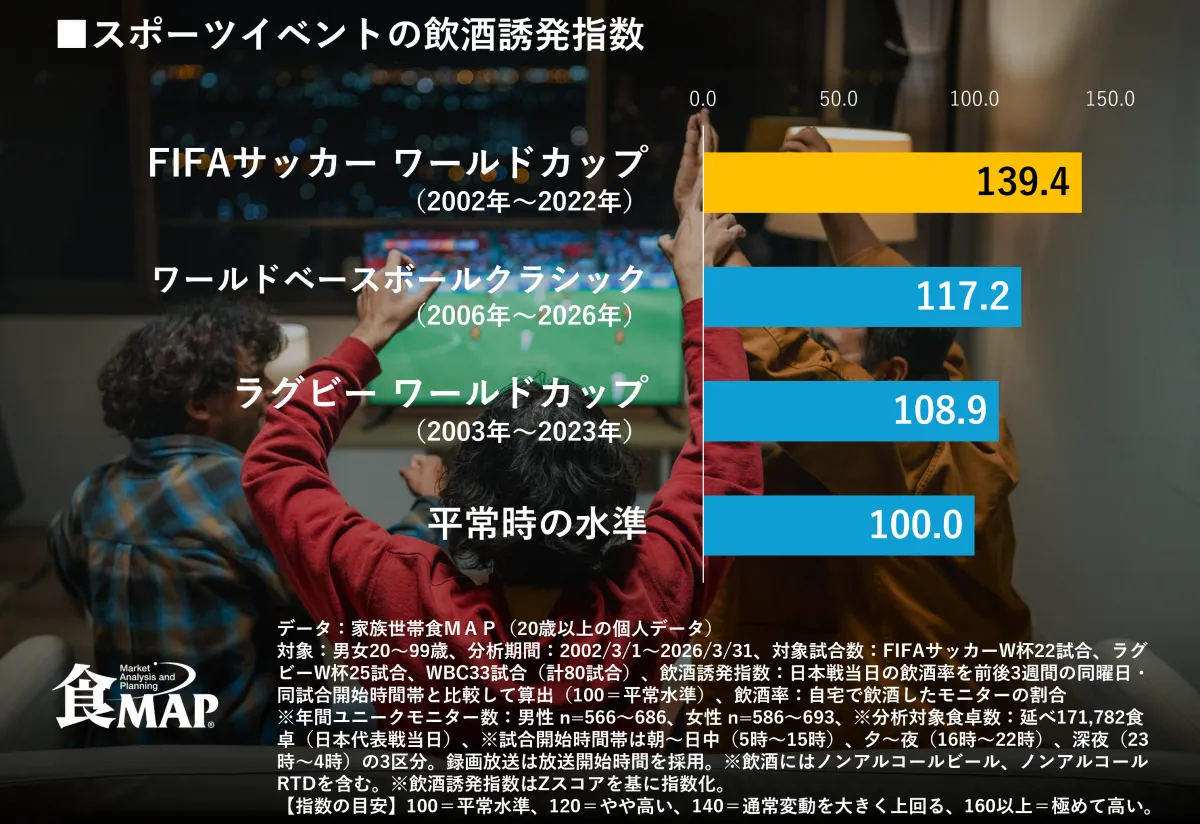
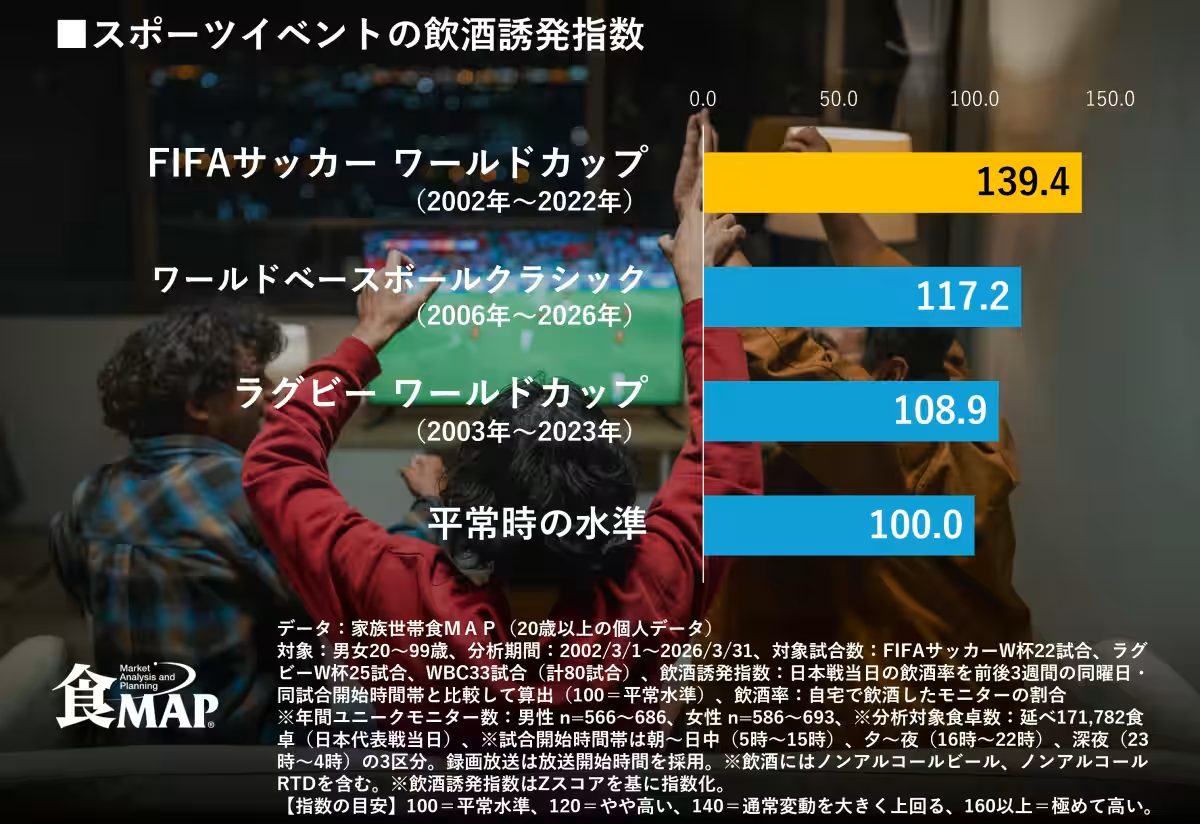
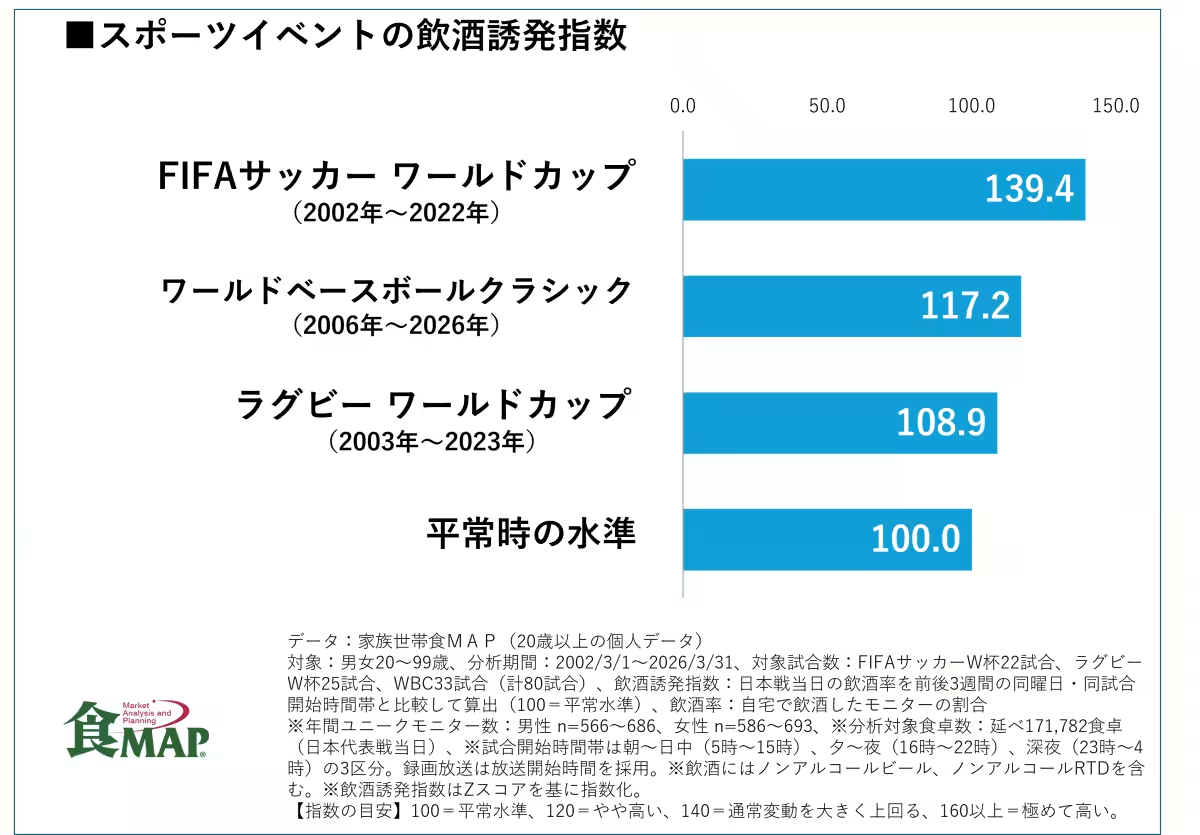
One key indicator from the study is the Drinking Inducement Index, which illustrates the unique propensity for drinking compared to regular days. Higher values on this index signify a greater likelihood of increased drinking behavior during these events. Notably, the FIFA World Cup stood out with the highest inducement effect despite being scheduled during late-night and early-morning hours.
Trends in Recent Sports Events
Since the 2015 Rugby World Cup, observed trends indicate that Japan's national matches have been linked with a tangible increase in household drinking. The WBC has consistently generated stable drinking demand, while the FIFA World Cup's late-night matches have surprisingly prompted high drinking rates. This shift can be attributed to increased viewing options through live streaming, influenced by evolving consumer habits.
Which Tournament Spurs the Most Home Drinking?
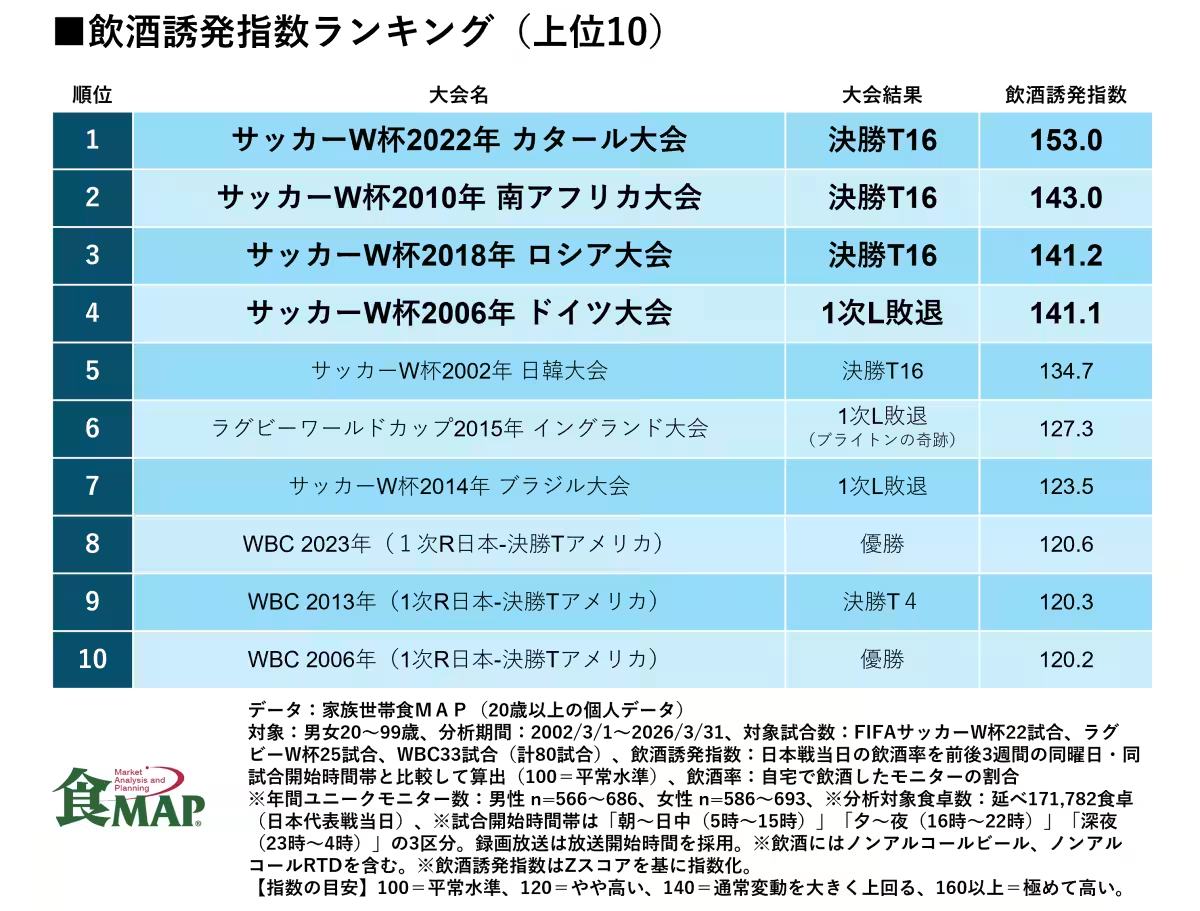
Among the international tournaments, the FIFA World Cup 2022 in Qatar yielded the highest Drinking Inducement Index ever recorded【Chart 1】. Despite challenging match schedules, such as the first game against Germany at 10 PM on a public holiday, analysis shows that the excitement surrounding the matches played a crucial role in surpassing previous international events in terms of drinking motivation. Interestingly, the index reflects that evening and night matches typically present challenges for drinking behavior, yet the high anticipation for the Japanese team counterbalanced it remarkably.
Implications for Future Events
This study elucidates that sports events are not merely forms of entertainment; they profoundly influence drinking habits during family gatherings. The FIFA World Cup, transcending the limitations of match timings, catalyzes changes in household behavior and routines. Encouragingly, the upcoming FIFA World Cup in 2026 stands as another opportunity for Japan, where the active participation of the national team may lead to even greater celebratory moments in homes across the country.
Conclusion
As we anticipate the next FIFA World Cup, we can expect a surge in home celebrations and communal drinking as families come together to support their national team. The findings underscore the intertwined relationship between cultural events and everyday practices, highlighting how sports can significantly alter our daily routines and social interactions.
About Food MAP®
Food MAP® is a marketing information platform designed for households in the Tokyo metropolitan area, focusing on married individuals aged 20 to 72 years old. It gathers insights on daily meal compositions, ingredient usage, and associated consumer behaviors to enhance understanding of household dynamics.
Inquiry
For questions regarding the data used in this report or our services, please reach out through our contact form. We appreciate your interest, and our team will respond promptly to your inquiries.
Contact Form Here
Topics People & Culture)

【About Using Articles】
You can freely use the title and article content by linking to the page where the article is posted.
※ Images cannot be used.
【About Links】
Links are free to use.