



Quality Assurance in Software Development: The Hidden Costs and Challenges
Quality Assurance in Software Development: A Hidden Cost
In the fast-evolving world of software development, maintaining high-quality standards is becoming increasingly challenging. A recent survey conducted by Rakus Partners sheds light on the state of quality assurance (QA) in software development, revealing alarming insights that stress the need for robust QA frameworks amidst escalating business demands.
The Survey Overview
Rakus Partners, an IT engineering dispatch company based in Tokyo, aimed to explore the impact of QA on software development projects. The survey targeted executives and project managers across various companies involved in software, web, and app development. Here are some key findings:
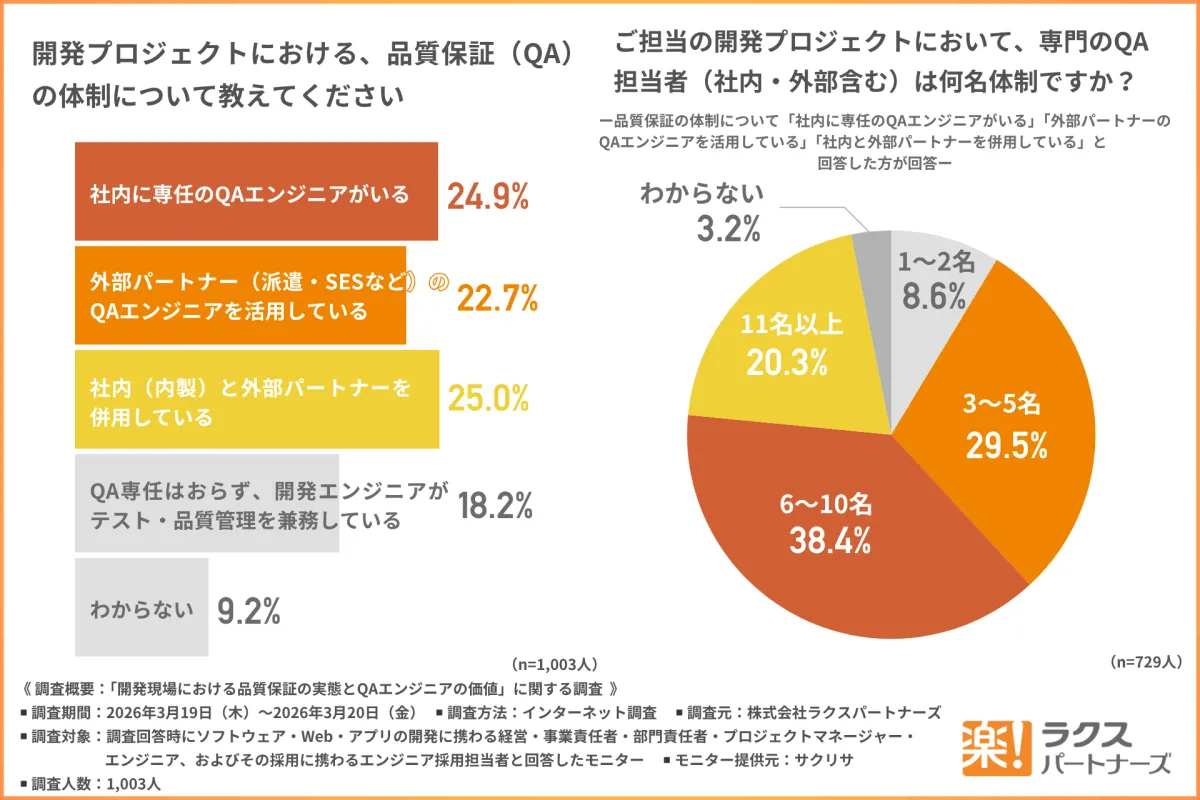
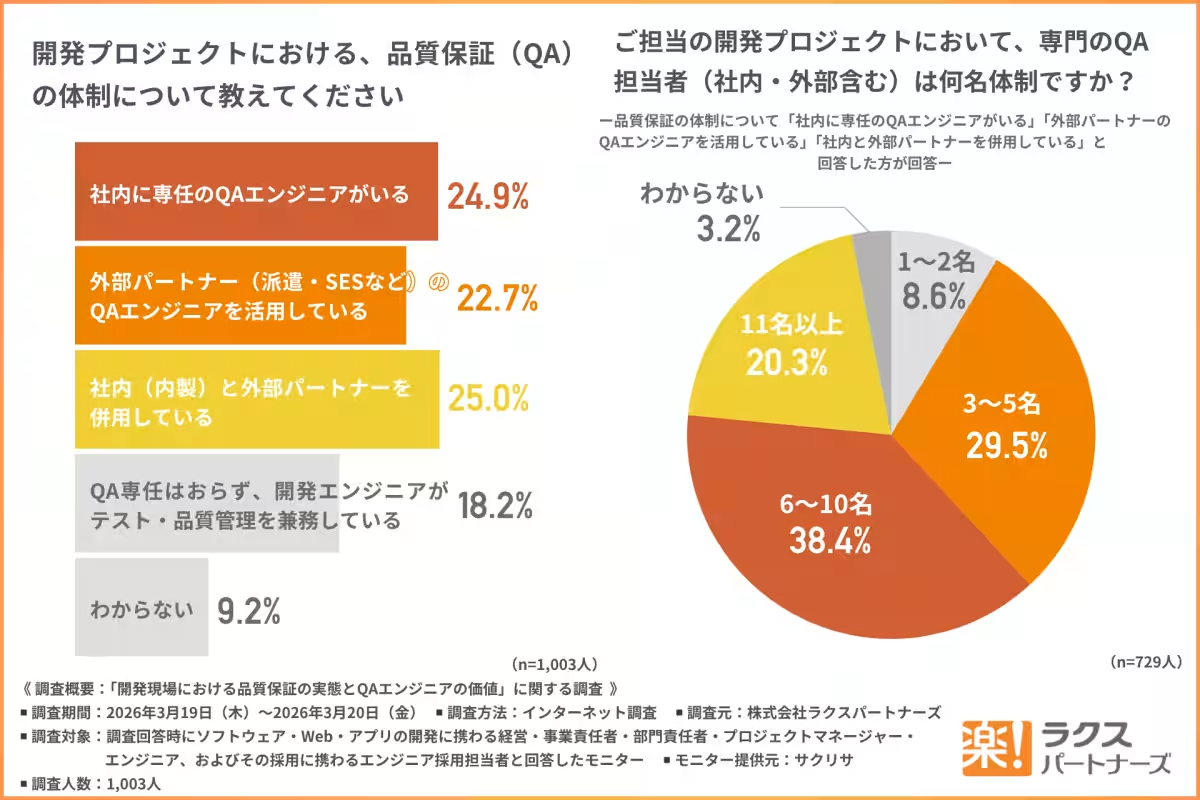
- - Over 70% of respondents use dedicated QA resources, including in-house teams and external partners.
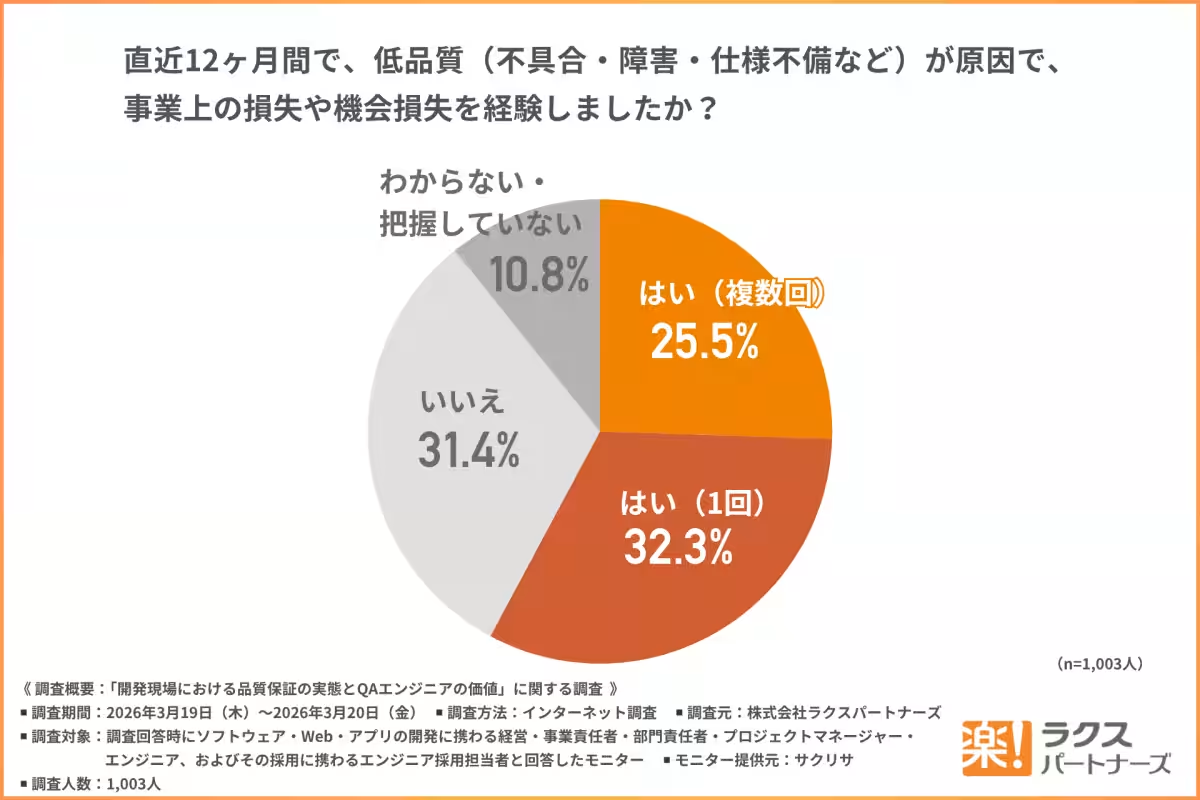
- - In the past year, about 60% reported business losses due to low quality, mainly resulting in project delays and lost revenue opportunities.
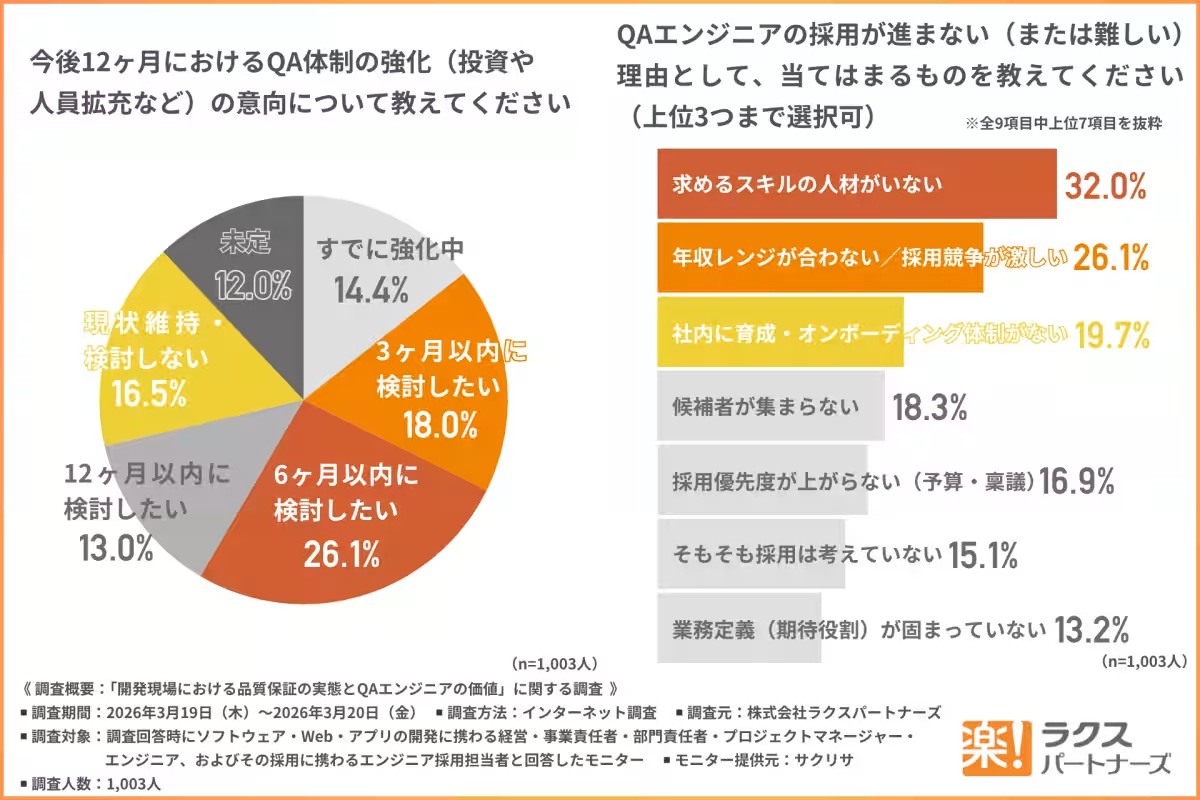
- - Around 70% expressed a desire to strengthen their QA framework within the next 12 months, but many face hiring challenges, citing a lack of skilled personnel and fierce competition for talent.
These findings highlight a pressing issue: while companies strive for rapid development, the importance of quality assurance is often overlooked, leading to serious repercussions.
Quality Risks and Business Impact
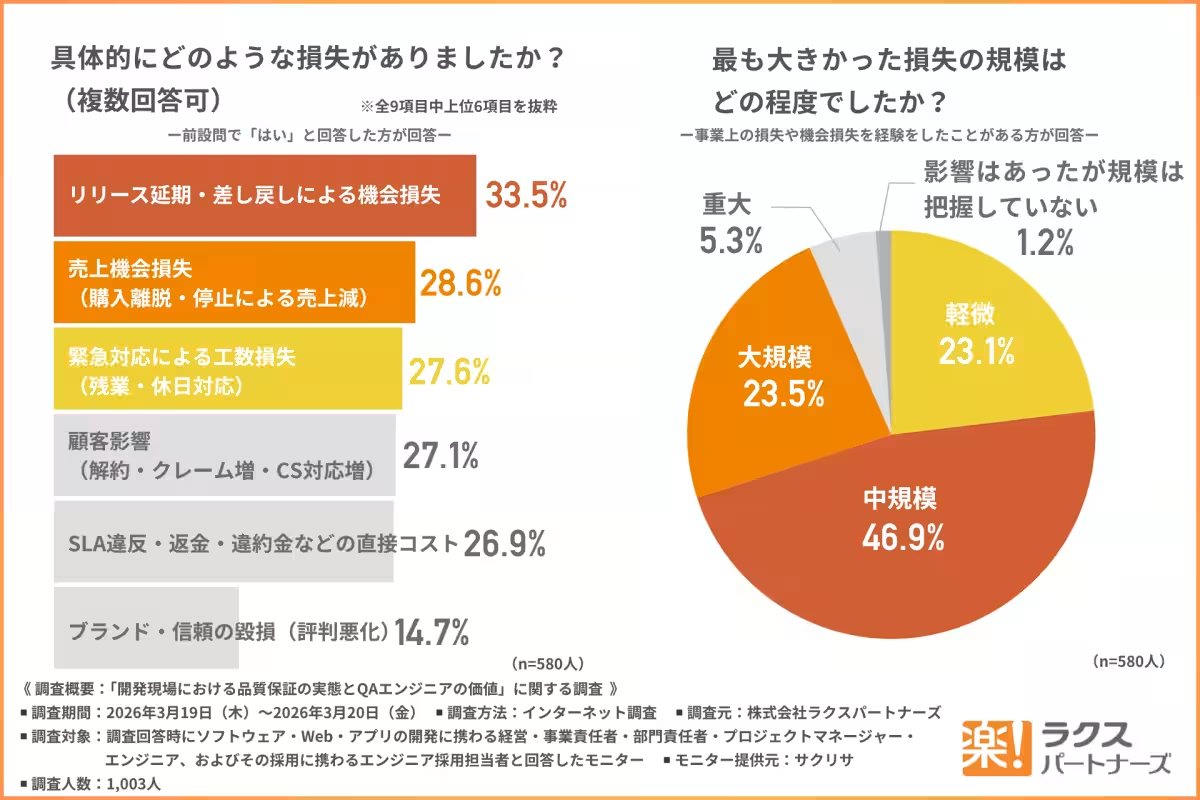
The consequences of inadequate quality assurance can be detrimental. The survey revealed that the majority of companies experienced losses due to quality issues, with the primary damages being:
- - Delayed Releases: About 33.5% experienced opportunity losses from postponements.
- - Lost Revenue: 28.6% faced decreased sales due to customer drop-off.
- - Increased Workload: 27.6% reported additional labor costs tied to urgent fixes.
Moreover, when issues arise, the average recovery time spans from days to over a week, further illustrating the significant impact on businesses. Approximately 70% of the respondents indicated that recovering from these quality issues demands considerable time and resources.
Staff Allocation for QA
When it comes to staff deployment for quality assurance, the survey findings showed varied structures:
- - Most companies employ between 3 to 10 QA professionals, with substantial proportions indicating that these teams consist of more than six members.
- - Despite this allocation, many organizations still rely on developers to manage QA tasks, highlighting resource constraints and budget limitations.
This suggests that many companies need to rethink their QA strategies, particularly in light of ongoing software complexity and speed requirements.
Future Intentions and Recruitment Challenges
Looking ahead, about 70% of firms are making plans to enhance their QA capabilities within the next year, whether through investment, team expansions, or other means. However, many face significant hurdles in hiring qualified QA engineers. The primary challenges include:
- - Skills Gap: 32% reported difficulty finding candidates that meet their skill requirements.
- - Salary and Competition: 26.1% indicated challenges with aligning salary packages within a competitive market.
- - Lack of Internal Training: Nearly 20% noted that their organizations lack the resources to train new hires adequately.
These barriers place an additional strain on businesses eager to improve their quality assurance frameworks.
Conclusion
In conclusion, Rakus Partners' survey highlights a critical need for organizations to prioritize quality assurance not merely as an operational cost but as an essential component of business investment. This shift in perspective is pivotal, considering the substantial risks associated with low-quality outputs, which can lead to considerable financial losses and reputational damage.
Companies should explore collaborations with external QA specialists and invest in developing internal training frameworks to mitigate contract execution risks. By doing so, they can strengthen their overall operational integrity and enhance service quality, securing a competitive edge in the ever-demanding software landscape.

Topics Consumer Technology)
【About Using Articles】
You can freely use the title and article content by linking to the page where the article is posted.
※ Images cannot be used.
【About Links】
Links are free to use.