



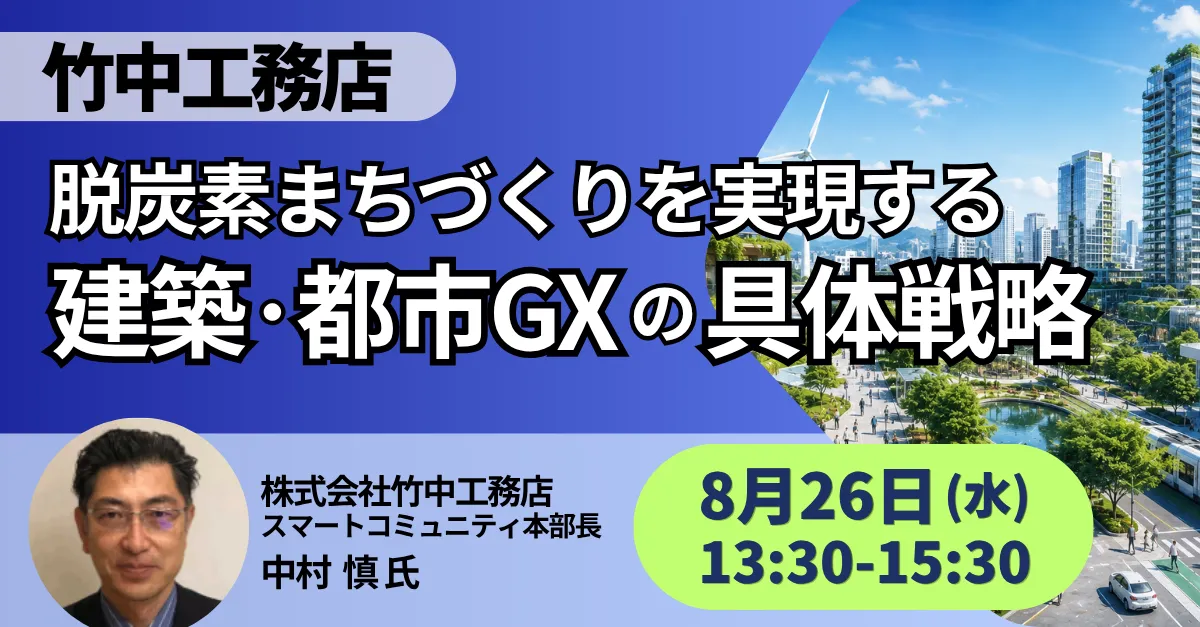
Strategies for Carbon-Neutral City Development and Building Practices: Insights from Takenaka Corporation
Unlocking the Future of Urban Development
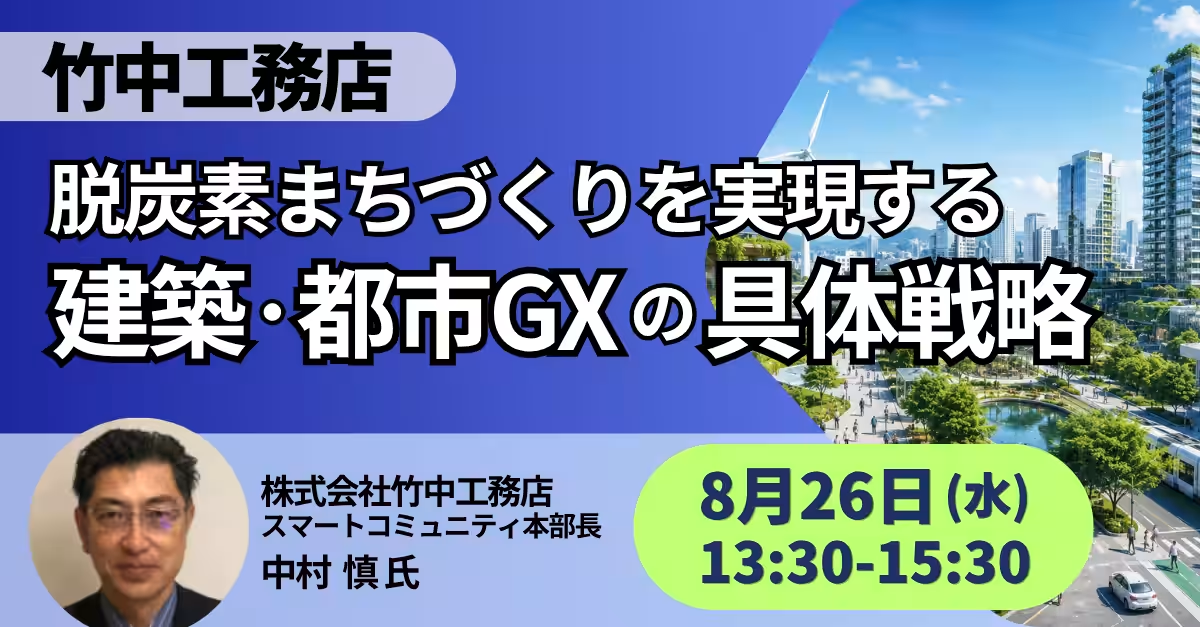
On August 26, 2026, the Japan Planning Institute (JPI) will host a crucial seminar titled "Strategies for Carbon-Neutral City Development and Building Practices" featuring Shin Nakamura, the Head of Smart Community at Takenaka Corporation. This event promises to deliver valuable insights into the practical strategies necessary for constructing sustainable, low-carbon environments pivotal for the future.
Why Focus on Carbon-Neutrality?
Japan's energy landscape has become increasingly complicated due to global fluctuations, making it essential to reduce reliance on fossil fuels. Urban development and building practices that embrace renewable energy and low-emission technologies are no longer optional— they are imperative. The seminar aims to facilitate an understanding of how to achieve carbon neutrality through innovative building designs and sustainable city planning practices.
Key Strategies for Building a Carbon-Neutral Future
During the seminar, attendees can expect to gain knowledge about:
- - ZEB Optimization: Understanding the final hurdles in achieving zero-energy buildings (ZEB) and how to approach HVAC load management effectively.
- - Energy Optimization through Innovation: The application of Power-to-Gas (P2G), energy storage systems (ESS), and electric vehicles (EVs) as components of an integrated energy management strategy. These systems can work synergistically to maximize renewable energy usage.
- - Investment Judgments for Competitiveness: Establishing guidelines that convert renewable energy utilization into competitive business advantages.
Seminar Agenda
Shin Nakamura will elaborate on the following topics:
1. The 2050 Environmental Strategy of the Takenaka Group
2. What Building a Carbon-Neutral City Implies:
- Aiming for ZEB: Addressing final HVAC loads with practical examples of renovations.
- Creating Self-Sufficient Communities: Transforming solar energy into hydrogen for seasonal shifts, highlighted by Japan's first P2G implementation in residential settings.
- Optimizing Energy: Understanding the main objectives in energy management based on case studies in the Koto district.
- Enhancing Storage Potential: Specific examples of how to absorb variability in renewable energy through storage batteries and efficient energy systems.
- Embracing Mobility: How new mobility solutions incorporate energy management as demonstrated in ongoing projects.
3. Conclusion: What Future Urban Development Needs
4. Q&A session
5. Networking Opportunities: Participants will have the chance to engage directly with the speakers and make connections with fellow attendees, fostering cross-industry collaboration and potential business opportunities.
Target Audience
This seminar is designed for professionals in various sectors, including:
- - Planning and design departments of construction companies and developers
- - Development and asset management departments within real estate firms
- - Energy businesses focused on technology and new project development
- - Corporate divisions promoting GX and sustainability practices
Admission Details
Attendance options include:
- - In-person attendance (no archive access included)
- - Live broadcast attendance (no archive access included)
- - Archive access
For more details and registration, please visit this link.
Conclusion
Post-seminar, the Japan Planning Institute encourages active engagement between participants and speakers, further facilitating the development of professional networks and new business initiatives. The opportunity for direct dialogue with highly knowledgeable experts in the field is one of the unique aspects of this seminar. Don't miss out on the opportunity to understand the critical steps towards achieving carbon-neutral urban development and enhancing sustainability in your business practices.

Topics Other)
【About Using Articles】
You can freely use the title and article content by linking to the page where the article is posted.
※ Images cannot be used.
【About Links】
Links are free to use.