



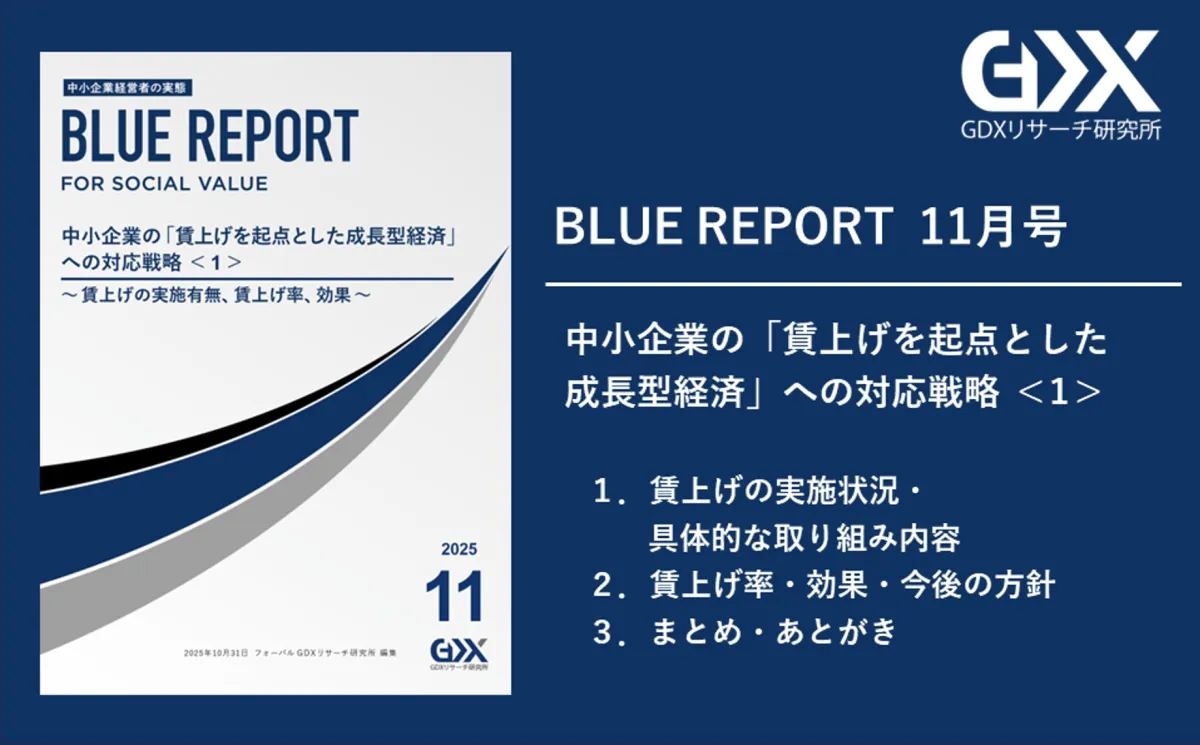
Understanding Wage Increases in Small Businesses: Current Trends and Future Directions
Wage Increases in Small and Medium-sized Enterprises
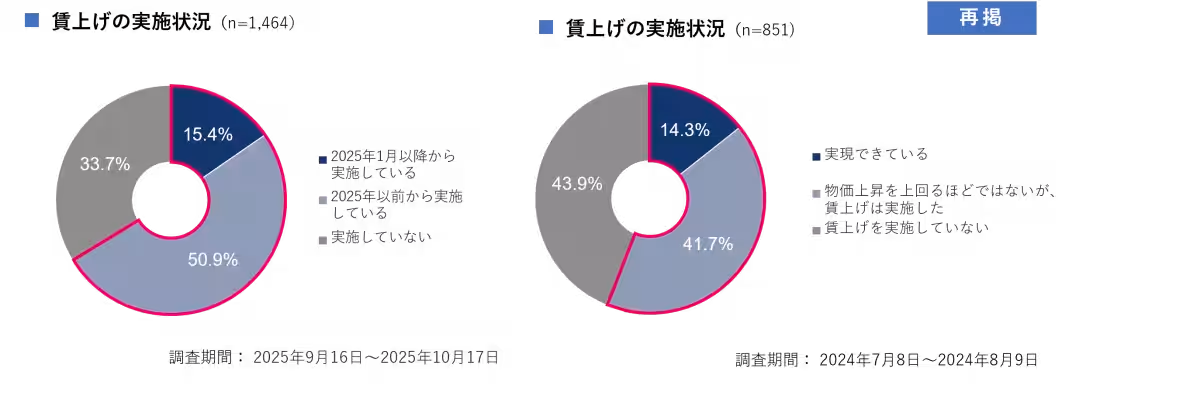
In Japan, small and medium-sized enterprises (SMEs) represent over 99% of all corporations. Recent statistics reveal that 66.3% of these businesses have implemented wage increases, with only 42.2% feeling the effects of such changes. This article explores key insights from the "BLUE REPORT" issued by Forval GDX Research Institute, which investigates wage trends, challenges, and the future direction of SMEs in relation to pay raises.
Current Trends in Wage Increases
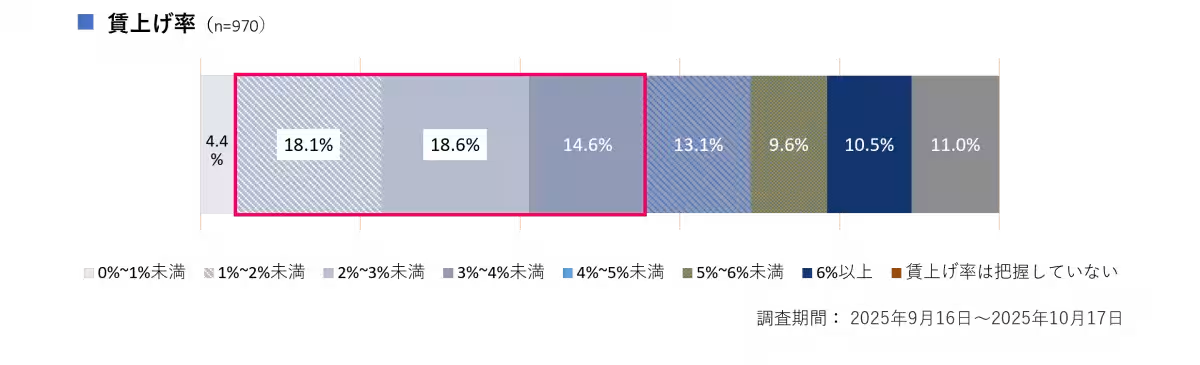
The report outlines that as of October 2025, 66.3% of surveyed SMEs had enacted wage increases, which is a notable rise from last year's figure of 56% recorded in similar surveys. A breakdown of wage increases shows that the most common range falls between 2% and 3% under 18.6%—indicating that a significant number of companies remain cautious in their financial commitments amid fluctuating market conditions.
The report also highlights that almost half (51.3%) of the responding firms raised wages between 1% and 4%. Interestingly, 10.1% of SMEs reported increases of over 6%, particularly within the construction sector, where labor regulations have tightened due to the increasing costs of materials and fuel.
Perceived Effectiveness of Wage Increases
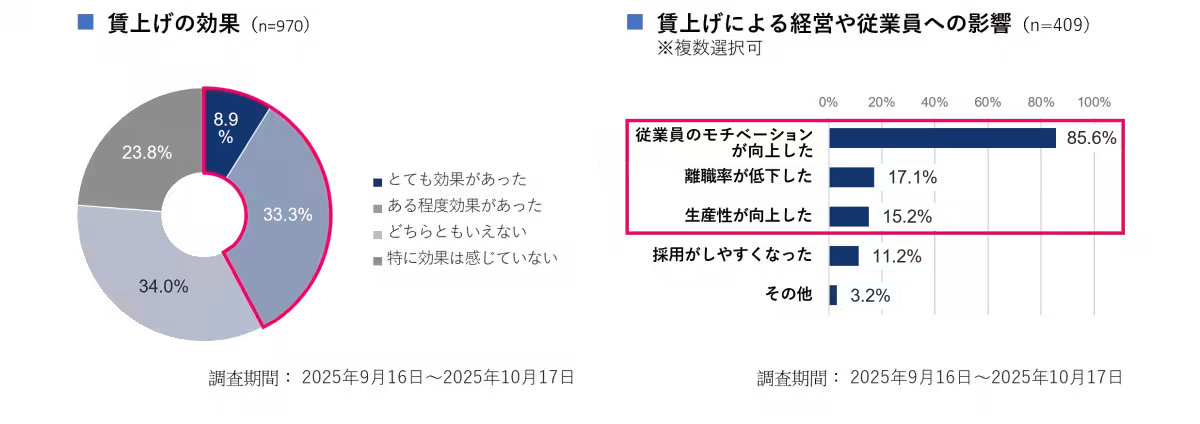
Despite the uptick in wage raises, only 42.2% of companies felt confident about the positive effects of these changes on operations and employee morale. Among respondents, 8.9% reported that the impact was "very significant," while 33.3% claimed that it had "somewhat significant" effects. The reality is that many firms (34.0%) are still uncertain, indicating a need for clearer metrics to evaluate the outcomes of their wage policies.
Notably, businesses that did witness positive outcomes revealed that improved employee motivation (85.6%) and decreased turnover rates (17.1%) were key benefits resulting from pay raises. Furthermore, productivity gains (15.2%) were also mentioned, emphasizing the important link between employee satisfaction and overall business performance.
Future Directions and Government Support
The growing trend in wage increases comes amid a backdrop of government initiatives aimed at encouraging these changes within SMEs. Policies, such as expanded subsidies and tax incentives since 2022, have provided crucial support to facilitate wage growth. In June 2025, the government announced a plan to ensure a 1% annual increase in real wages, indicating committed support for this endeavor.
Additionally, to prevent SMEs from being adversely affected by price fluctuations, new initiatives such as a "Price Negotiation Promotion Month" have been introduced. Moreover, amendments to existing regulations are in the pipeline, scheduled for implementation in January 2026, under the framework of the Transaction Adjustments Law.
Conclusion
The report by Forval GDX Research Institute provides essential insights into the ongoing trends of wage increases within SMEs, revealing a commitment to salary raises amid economic uncertainties. While employee satisfaction appears to improve with higher wages, the report reflects that a significant portion of businesses are still assessing the tangible effects of these changes. It's vital for SMEs to leverage government support actively to enhance their financial stability while navigating the complexities of the current economic landscape. As Japan seeks to move past decades of stagnation, the active role of SMEs in fostering growth and innovation through wage increases cannot be overstated.
For further details, please visit the comprehensive report here.

Topics Business Technology)
【About Using Articles】
You can freely use the title and article content by linking to the page where the article is posted.
※ Images cannot be used.
【About Links】
Links are free to use.