


Exploring the Evolution and Future Challenges of Environmental Architecture
Seminar Overview
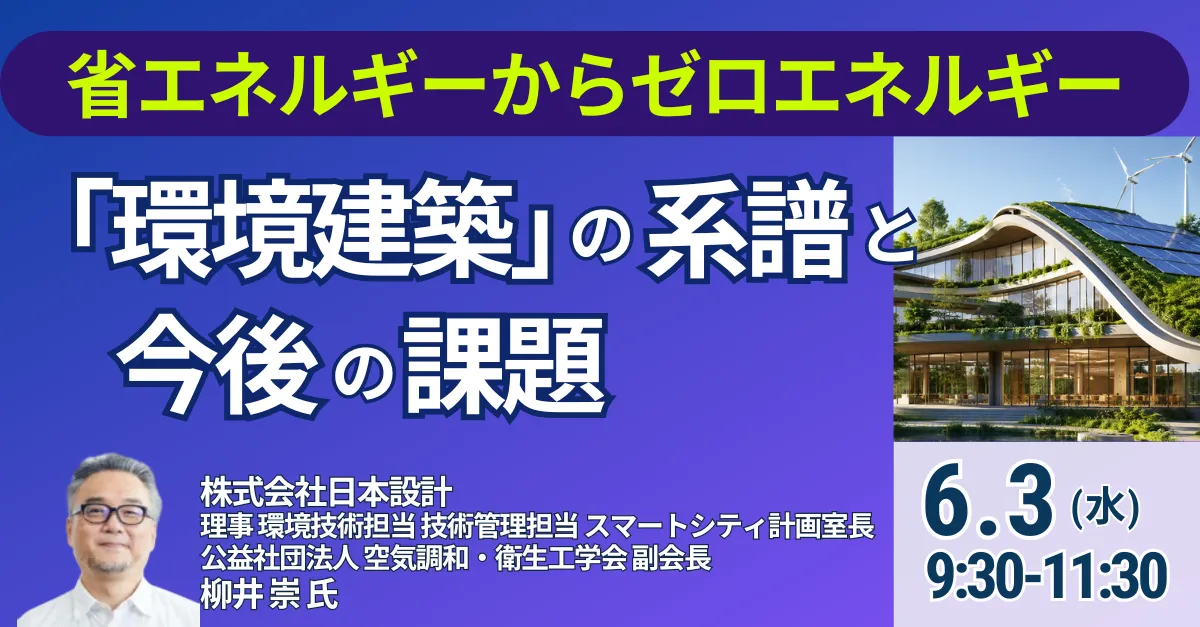
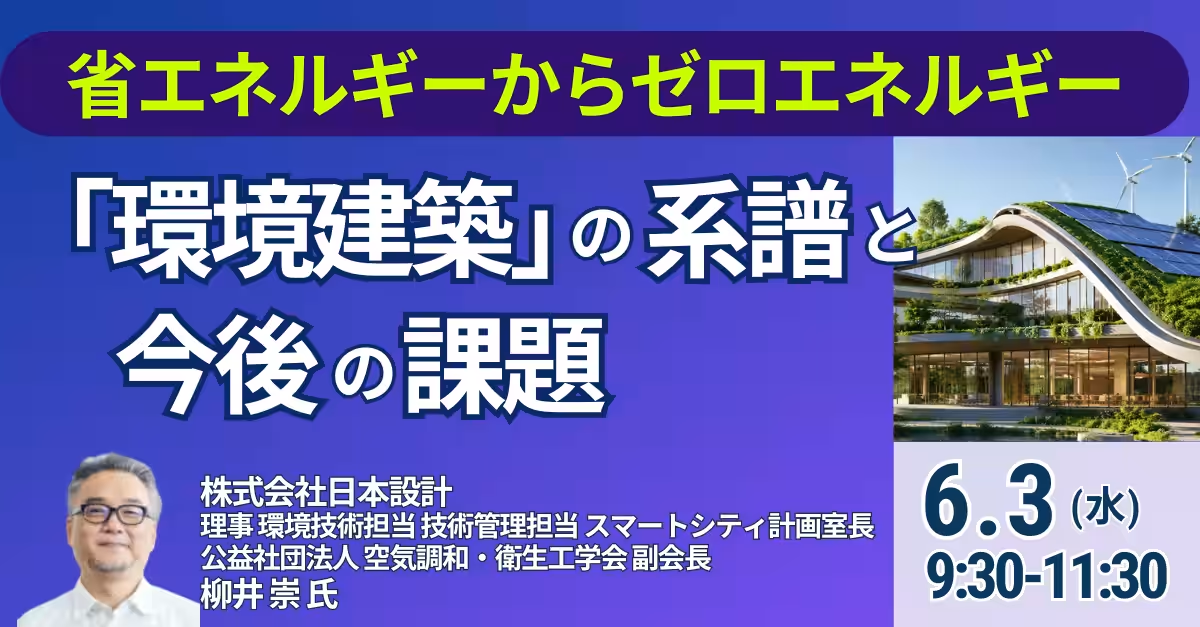
On June 3, 2026, JPI (Japan Planning Institute) will host a significant seminar titled "The Evolution of Environmental Architecture: Challenges Ahead". This event will feature Takashi Yanai, a leading expert in environmental design and management from the Japan Design Corporation. With over 40 years of experience, Yanai has been a pivotal figure in advancing numerous projects, including Zero Energy Buildings (ZEB).
Significance of the Seminar
The seminar aims to provide valuable insights into the evolution of environmental architecture, transitioning from energy-efficient practices to achieving carbon neutrality. Yanai will delve into critical themes surrounding the concept of environmental architecture, illustrating how it serves as a mirror reflecting the pressing environmental issues of each era—such as energy conservation, climate change adaptation, and pandemic preparedness.
Participants can anticipate gaining actionable knowledge about:
- - The evolutionary structure of environmental architecture and its decision-making axes that drive the shift from energy-saving to zero carbon.
- - Key design themes and priorities that must be considered as architecture evolves from ZEB to Zero Carbon Buildings (ZCB).
- - Implementation approaches for reducing lifecycle carbon emissions (LCC) on an architectural and urban scale.
Target Audience
This seminar is tailored for:
- - Environmental and equipment design departments within construction companies and design firms.
- - Development planning departments of real estate companies.
- - Corporate planning and ESG promotion divisions within companies focusing on decarbonization strategies.
- - Consulting sectors involved in smart city and urban development.
Lecture Content
The lecture will cover several crucial topics:
1. The historical changes in critical environmental and energy issues.
2. The transformation of themes within environmental architecture, with specific case studies:
- Phase I: Architecture incorporating natural elements (before 2000)
- Phase II: Balancing energy efficiency with occupant comfort (1995-2015)
- Phase III: Energy creation and resilience—realizing ZEB (2015 onward)
- Phase IV: Aiming for zero carbon architecture (2025 onward)
3. Future perspectives on environmental architecture:
- Transitioning from ZEB to ZCB.
- Emerging design themes associated with ZCB.
4. Summary and conclusion.
5. Q&A session to address participant inquiries.
6. Networking session for exchanging business cards and ideas.
This seminar presents an invaluable opportunity for attendees to engage directly with the speaker and foster collaborations beyond industry boundaries, facilitating access to practical insights and potential partnerships.
Registration and Fees
Attendees can choose to participate in the seminar either onsite or through live streaming. Details on registration are as follows:
- - In-person Attendance: (Archive does not include live streaming)
- - Live Streaming Attendance: (Archive does not include live streaming)
- - Archive Access: Those attending live can add the archive for a special fee of 18,500 JPY (tax included).
Individual registration fee is set at 37,990 JPY (tax included), with a discounted rate available for additional registrants from the same organization.
Local government employees may qualify for a reduced fee of 11,000 JPY (limited to two participants and applicable to onsite or live streaming only).
For further details and registration, please visit: JPI Seminar.
Contact Information
Japan Planning Institute
Address: 5-2-32 Minamiazabu, Minato-ku, Tokyo 106-0047, Japan
Telephone: 03-5793-9761
Fax: 03-5793-9767
Website: JPI
About JPI
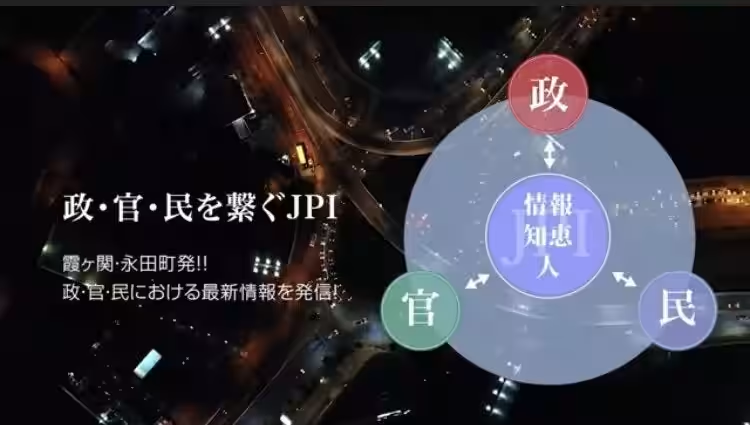
For half a century, JPI has been a bridge connecting government and private sectors, providing essential seminars that deliver insightful information supporting executives and senior management in implementing national policies and projects.

Topics Other)




【About Using Articles】
You can freely use the title and article content by linking to the page where the article is posted.
※ Images cannot be used.
【About Links】
Links are free to use.