



RAN Releases 2025 Forest and Human Rights Policy Ranking: Corporate Accountability Required
RAN Releases 2025 Forest and Human Rights Policy Ranking
On November 5th (U.S. time November 3rd), the Rainforest Action Network (RAN), an environmental NGO based in San Francisco with a branch in Shibuya, Tokyo, announced the annual report titled "Keep Forest Standing: Forest and Human Rights Policy Ranking 2025." This report highlights the slow progress made by global consumer goods companies in fulfilling their commitments to eliminate deforestation and human rights abuses from their supply chains.
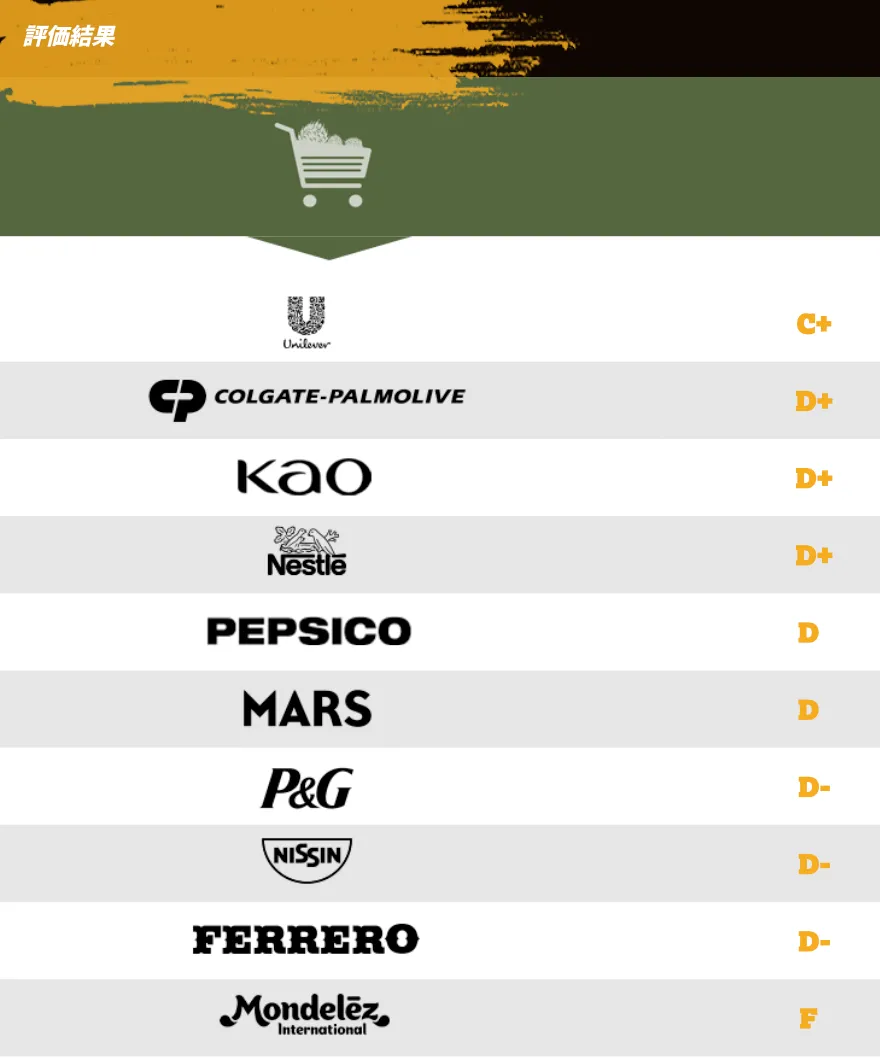
This ranking evaluates ten major global consumer goods companies involved in products with high risks of deforestation and human rights violations in tropical forest regions. Each company's policies and implementation plans are analyzed separately for forest and human rights criteria. Of these companies, only Unilever achieved a passing C grade. Japanese companies, Kao and Nissin Foods Holdings, received D+ and D- respectively, showing some improvement from last year, while Mondelez ranked the lowest.
Evaluation Criteria
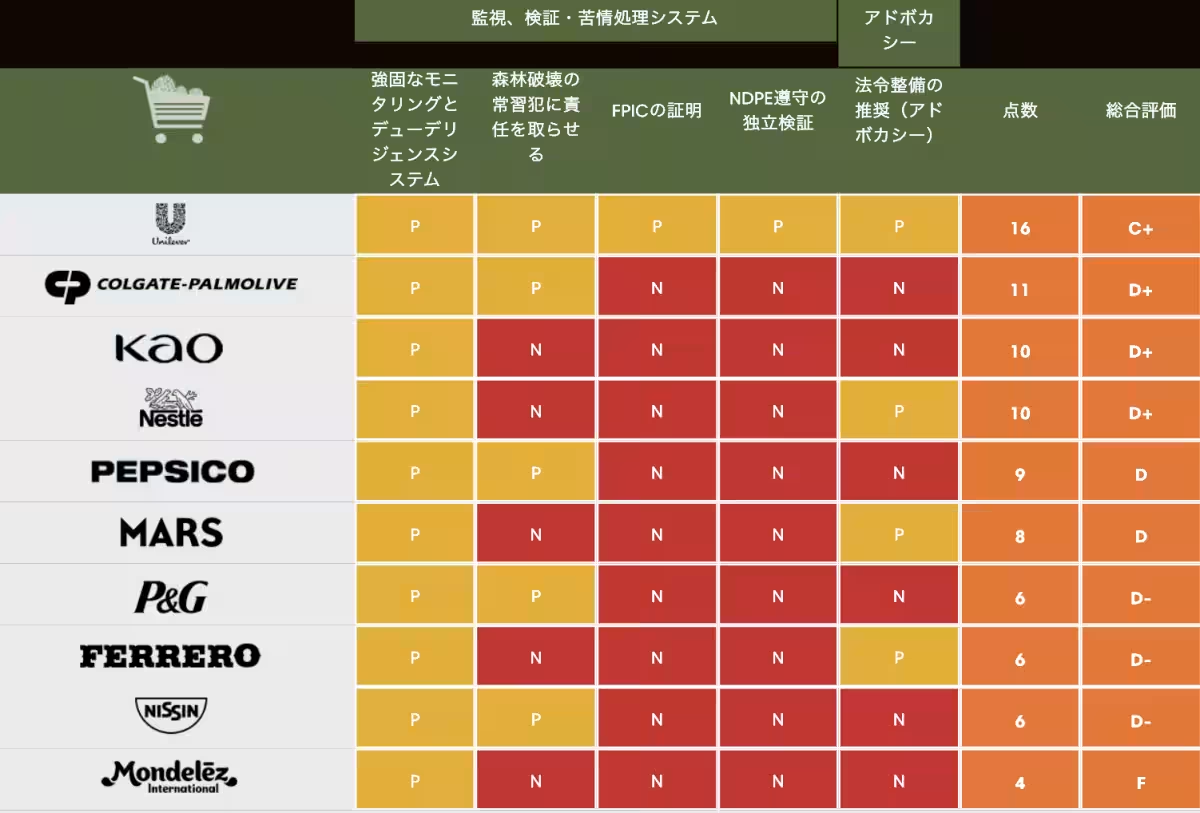
The evaluation method assesses each company's policies and initiatives based on 12 criteria concerning forest protection, human rights safeguards, and supply chain transparency, with a maximum score of 24 points. The grading scale categorizes performances into five ranks:
- - A (21-24 points)
- - B (17-20 points)
- - C (12-16 points)
- - D (6-11 points)
- - F (0-5 points)
Some of the evaluated products include palm oil, paper pulp, beef, cocoa, and wood products, all of which are linked to potential forest destruction. The rankings are as follows:
| Company | Score |
|---|
| ------ | --- |
|---|
| Unilever | C+ |
|---|
| Kao | D+ |
|---|
| Nissin Foods Holdings | D- |
|---|
| Colgate-Palmolive | D |
|---|
| Nestlé | D |
|---|
| PepsiCo | D |
|---|
| Mars | D |
|---|
| Procter & Gamble (P&G) | D− |
|---|
| Ferrero | D− |
|---|
| Mondelez | F |
|---|
Key Findings
Overall Evaluation
Leader Companies (C+ Rating):
Unilever maintained its top position with a C+ grade, demonstrating a clear commitment to their NDPE (No Deforestation, No Peat, No Exploitation) policy, supply chain transparency, and effective grievance systems. Their human rights advocacy policies, published in 2022, serve as a benchmark for others. They have also promised to test independent verification processes related to the rights of Indigenous peoples.
Mid-Level Companies:
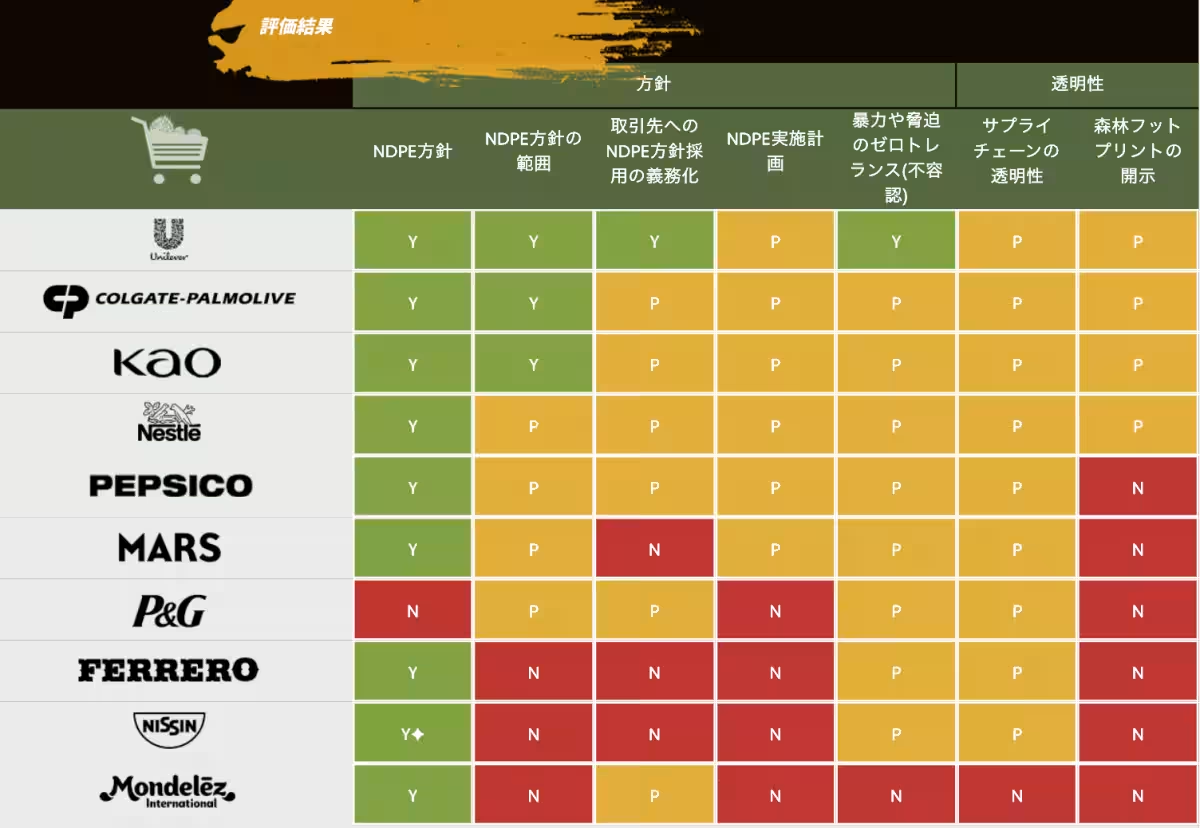
Colgate-Palmolive, Kao, Nestlé, PepsiCo, and Mars scored in the D range, showing varying application of their NDPE policies. All have pledged zero tolerance for violence against human rights defenders. However, they still need to improve their transparency regarding procedures to prevent such violence.
Lower Mid-Level Companies (D− Rating):
P&G, Ferrero, and Nissin Foods received low scores due to limited implementation of their NDPE policy. Nissin took a significant step by pledging zero tolerance for violence against human rights defenders for the first time.
Unsatisfactory Companies (F Rating):
Mondelez, known for Oreo cookies, scored poorly in almost all categories and has yet to make a definitive commitment to protect human rights defenders or disclose grievance tracking systems.
Japanese Companies' Performance
Kao improved to a D+ (10 points) and Nissin Foods to a D− (6 points) from last year.
Both companies have adopted the NDPE policy, receiving points accordingly. Kao applied their policy across all supply chain stakeholders, while Nissin's commitment fell short of explicitly stating core elements of the NDPE framework.
Implementation Challenges
RAN's Forest Campaign Director, Daniel Carrillo, emphasized that corporations must validate their commitments to zero deforestation supply chains, asserting that mere promises hold no weight when communities are subjected to violence and land theft. He insists that actions, rather than words, will safeguard forests.
Future Directions
Despite some progress, major consumer goods companies remain linked to ongoing deforestation and human rights violations. RAN continues to advocate for actionable commitments from these companies to significantly stop forest exploitation and provide safety to environmental and human rights defenders.
As the EU's Deforestation Regulation (EUDR) takes effect, many consumer goods companies are expected to ensure compliance. However, reliance on ineffective certification systems poses challenges, risking continued deforestation and human rights violations.
Conclusion
RAN's rankings reflect the urgent need for transparency and accountability in supply chains. Companies must aim for clear and actionable policies, while also investing in the protection of ecosystems and communities at risk. The commitments made must translate into effective measures that curb environmental harm, ensuring human rights are respected across global supply chains.
Topics Environment)
【About Using Articles】
You can freely use the title and article content by linking to the page where the article is posted.
※ Images cannot be used.
【About Links】
Links are free to use.