




Japan Airlines Partners with A*Quantum to Transform Operations Using Quantum Technology
Introduction
In a significant move towards digital transformation, Japan Airlines (JAL) has announced its investment in AQuantum. This partnership aims to leverage quantum technology to enhance operational efficiencies and innovate services across the airline. With the airline industry continuously evolving, such collaborations are essential to maintain competitive advantages and meet rising customer expectations.
Joint Initiatives
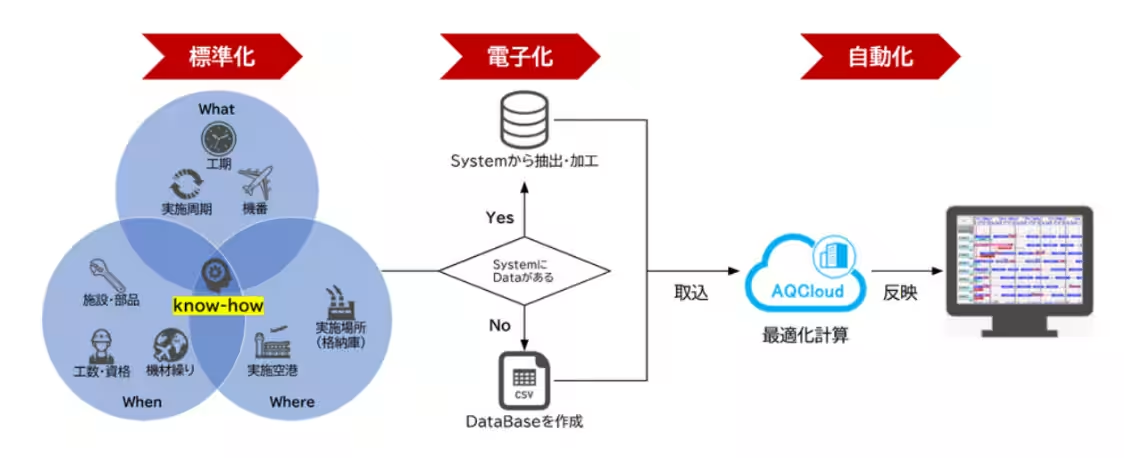
Since July 2023, JAL has been working alongside AQuantum on a project to develop an automated optimization tool for aircraft maintenance operations, spearheaded by JAL Engineering. This initiative is poised to officially commence operations in March 2026. Traditionally, the complex scheduling of aircraft maintenance relied heavily on the expertise and intuition of veteran employees; however, the introduction of this cutting-edge tool promises to drastically reduce the time needed for planning and logistics.
Benefits of Quantum Technology
The utilization of quantum computing technology in this context is expected to yield significant benefits. By employing state-of-the-art algorithms, JAL and AQuantum aim to streamline scheduling processes, ensure higher precision in maintenance planning, and ultimately minimize downtime for aircraft operations. The anticipated outcomes not only improve JAL's operational efficiency but also position the airline as a pioneer in adopting advanced technological solutions within the aviation sector.
Future Pursuits
Looking ahead, AQuantum plans to utilize insights gained from its collaboration with JAL to address challenges in various operational domains within the airline. This model case demonstrates the transformative potential of quantum technology. Additionally, the partnership is expected to extend beyond JAL’s maintenance operations, with AQuantum actively exploring solutions to other pressing issues faced by different business sectors.
JAL Digital, along with other subsidiaries, will collaborate to identify appropriate technologies tailored to the unique needs of various operational departments. The goal is to design custom solutions that effectively address challenges and fulfill demands across the JAL Group.
Broader Impact
Furthermore, as AQuantum’s projects demonstrate practical viability through continuous collaboration with JAL, the potential to offer these innovative solutions to other industries will be seriously explored. The applicability of quantum computing technologies can revolutionize not only aviation but also a multitude of sectors grappling with complex logistical and operational challenges.
Conclusion
In conclusion, Japan Airlines’ investment in A*Quantum represents a strategic leap towards a digitally transformed future for the airline industry. As both entities work hand in hand, they are set to redefine operational practices and provide more efficient services, thereby enhancing customer satisfaction and operational success. This collaboration stands as a testament to how traditional industries can embrace technological advancements to foster growth and innovation.

Topics Consumer Technology)

【About Using Articles】
You can freely use the title and article content by linking to the page where the article is posted.
※ Images cannot be used.
【About Links】
Links are free to use.