



Impact of Hypertension Medication Choices on Dementia Risk in Seniors Revealed by Big Data Analysis
The Link Between Hypertension Treatment and Dementia Risk
A recent study led by experts from various Japanese institutions has unveiled a significant connection between the choice of hypertension medications and the risk of developing dementia among the elderly. This research utilized a large-scale healthcare database called the LIFE Study, which integrates medical and health checkup information, covering around five million individuals in Japan. Given the global aging trend, understanding how hypertensive treatments may influence dementia is a step towards public health improvement.
The Significance of the Research
As the aging population continues to expand, dementia prevention has become a critical issue. While the development of new dementia treatments is ongoing, it is essential to evaluate existing medications that many seniors frequently use. This study particularly focuses on two commonly prescribed drugs: Angiotensin Receptor Blockers (ARBs) and Calcium Channel Blockers (CCBs). By comparing these, scientists aimed to identify potential protective effects against dementia.
Study Design and Methodology
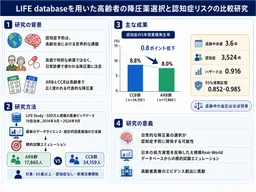
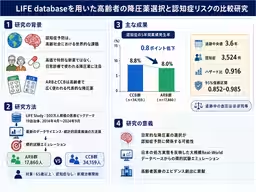
The researchers used advanced data science techniques, particularly a method known as target trial emulation, which statistically simulates ideal randomized clinical trials using real-world healthcare data. This allows for a more comprehensive understanding of how ARBs and CCBs affect dementia risk without the biases that typical clinical trials might face. The study focused on 52,019 seniors aged 65 and older, who had no prior dementia diagnosis. These participants were tracked over an average follow-up period of 3.6 years.
Key Findings
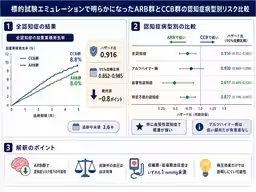
The findings were striking. Patients who started treatment with ARBs displayed a significantly lower risk of developing dementia compared to those treated with CCBs, despite similar levels of blood pressure control between the two groups. Specifically, the results revealed that the overall incidence of dementia for the ARB group was substantially reduced, with a hazard ratio of 0.916, indicating a potential protective effect provided by ARBs, particularly against vascular dementia.
- - Dementia Incidence Rates: 5-year cumulative incidence rate was 8.0% for ARBs and 8.8% for CCBs, with an absolute difference of 0.8 percentage points.
- - Risk Reduction in Vascular Dementia: The hazard ratio for vascular dementia was particularly impressive at 0.617 for ARB users, suggesting a strong protective effect.
- - Alzheimer's Disease Comparison: While the ARB group showed a trend towards lower risk for Alzheimer's, it did not reach statistical significance, indicating that more research is needed.
Implications for Clinical Practice
This study highlights the important role that existing medications among the elderly may play in dementia prevention. It encourages a reassessment of treatment strategies not only based on blood pressure management but also considering the longer-term implications for cognitive health. Moreover, this research contributes to the emerging body of evidence emphasizing that the choice between medications, even those that achieve similar outcomes in blood pressure control, can have differing impacts on broader health issues such as dementia.
Future Research Directions
Looking ahead, it is essential to extend this research using other medical databases and explore more long-term effects. Future studies should involve analyzing other classes of antihypertensive medications like ACE inhibitors and evaluate their cognitive outcomes, alongside factors like frailty and comprehensive elderly health metrics.
In conclusion, the study presented by this team serves not just as a discovery regarding the medication effects on dementia risk but also demonstrates the power of leveraging big data analytics in healthcare research. By advancing our understanding of how medication choices can influence long-term health outcomes, we have a potential avenue for reducing dementia risk through existing treatments in the elderly population. These findings were published online in the journal Alzheimer’s & Dementia on August 20, 2026.
Topics Health)
【About Using Articles】
You can freely use the title and article content by linking to the page where the article is posted.
※ Images cannot be used.
【About Links】
Links are free to use.