



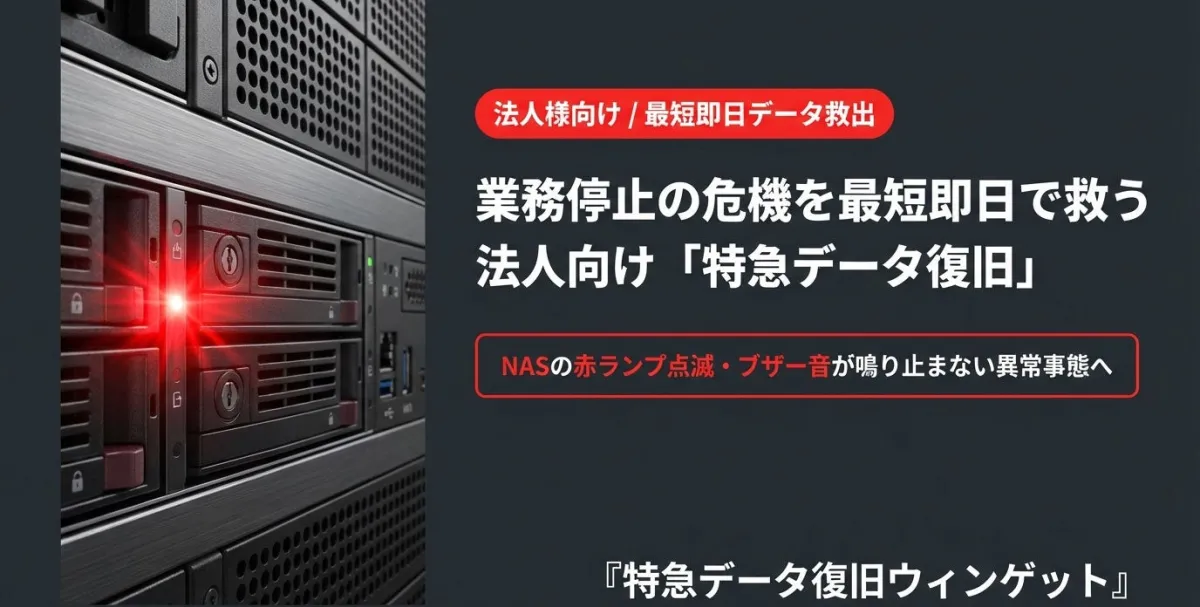
Urgent Data Recovery Service for Businesses Facing Server and NAS Failures
In today's data-driven world, businesses are increasingly reliant on Network Attached Storage (NAS) and servers for critical operations. Unfortunately, these essential tools can fail unexpectedly and disrupt entire companies. Recent statistics indicate a surge in incidents where employees return to the office only to find flashing red lights on their NAS devices, an ominous warning sign that could spell disaster for their operations.
When faced with a crisis due to NAS failures, businesses often experience debilitating risks that can affect both their reputation and financial stability. Imagine coming in to discover a continuous beeping alarm, a screen displaying unfamiliar error messages, or strange noises emanating from the NAS unit. In such situations, the urgency to retrieve critical project files, customer information, and foundational data becomes paramount.
Understanding NAS Failures
A malfunctioning NAS device can throw a business into chaos. Employees may lose vital access to core data, resulting in delays that could undermine client relationships and lead to significant financial losses. Understanding the common signs of NAS failure is crucial. These include:
1. Blinking or steady red lights on the device.
2. Persistent alert sounds.
3. Unusual error messages upon trying to access files.
4. Weird noises—clunks and whirrs—from within the NAS.
5. The management interface displaying an 'Emergency Mode' (EM Mode).
Five Dangerous Actions to Avoid
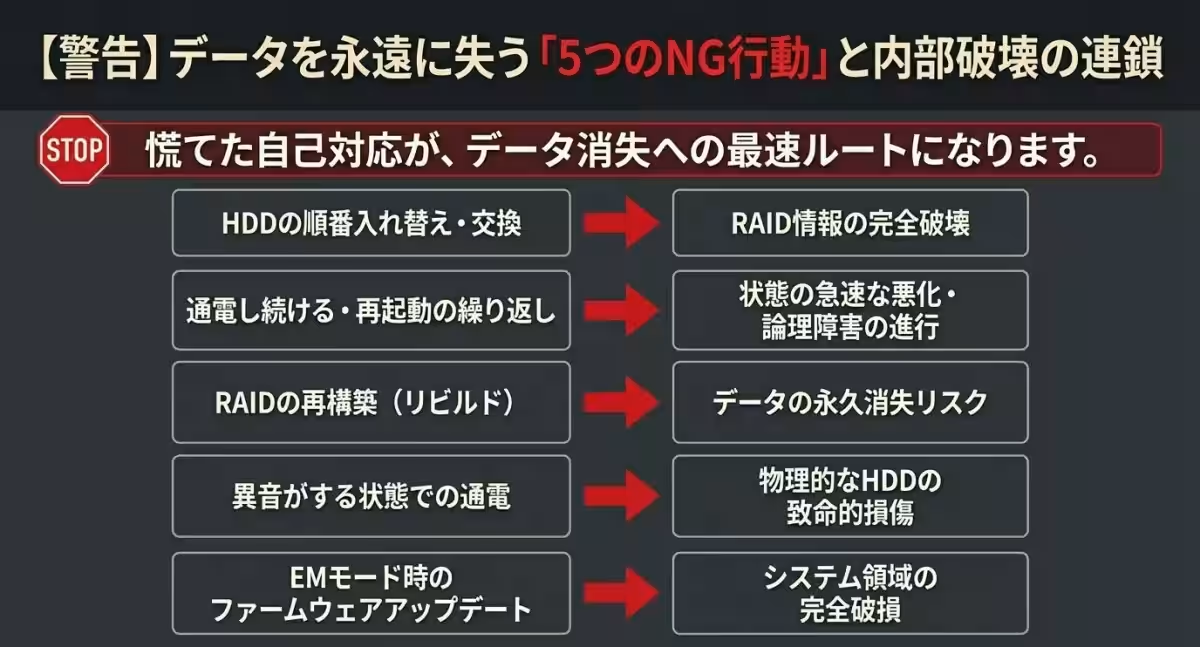
When faced with a NAS crisis, the instinct to act immediately can lead to missteps. Certain actions can further endanger data recovery efforts, including:
It's essential to remain calm and switch off the device while consulting a data recovery expert to avoid exacerbating the situation.
The Solution: Ultra-Fast Data Recovery Service by Winget
For businesses battling sudden NAS troubles, the 'Urgent Data Recovery Service' by Winget, operated by Riplus Inc., offers a lifeline. Within hours, our team can recover your critical data, allowing business operations to resume with minimal downtime. We support a comprehensive range of devices, including:
Our Unique Advantages
1. Nationwide Coverage: We operate a broad service network across Japan, guaranteeing rapid initial response times. Our staff will assess your situation and coordinate the best recovery strategy tailored to your needs, whether through in-person, on-site, or postal options.
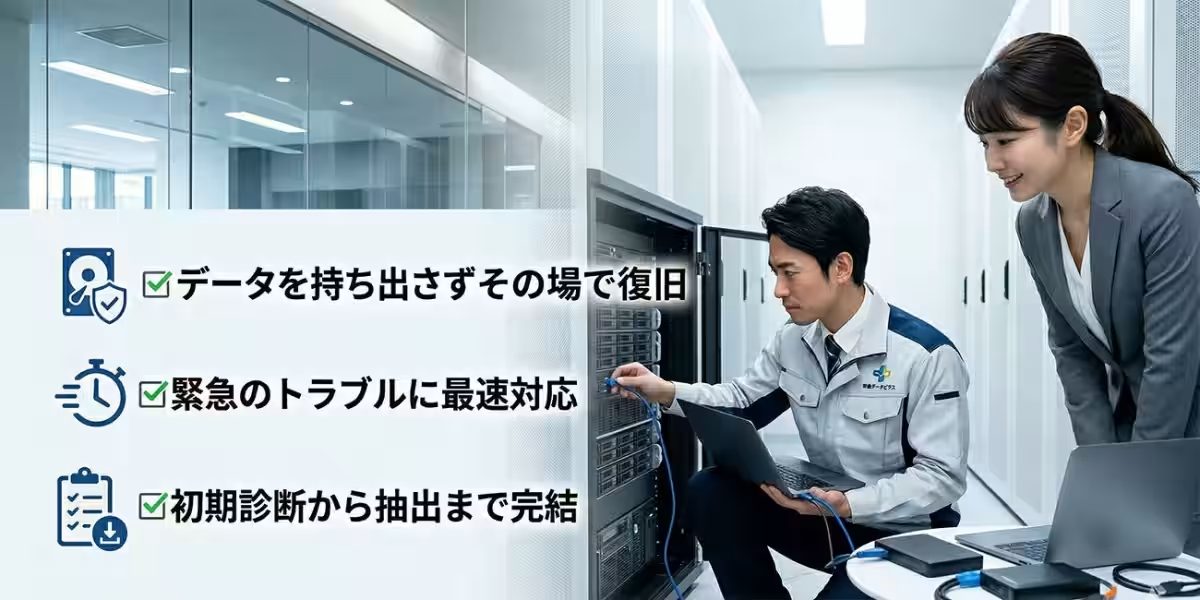
2. On-Site Recovery: If you can't move equipment or need immediate recovery, our expert engineers will come to your office with the necessary tools to perform initial diagnostics and data extraction on-site, ensuring the safety of your sensitive information.
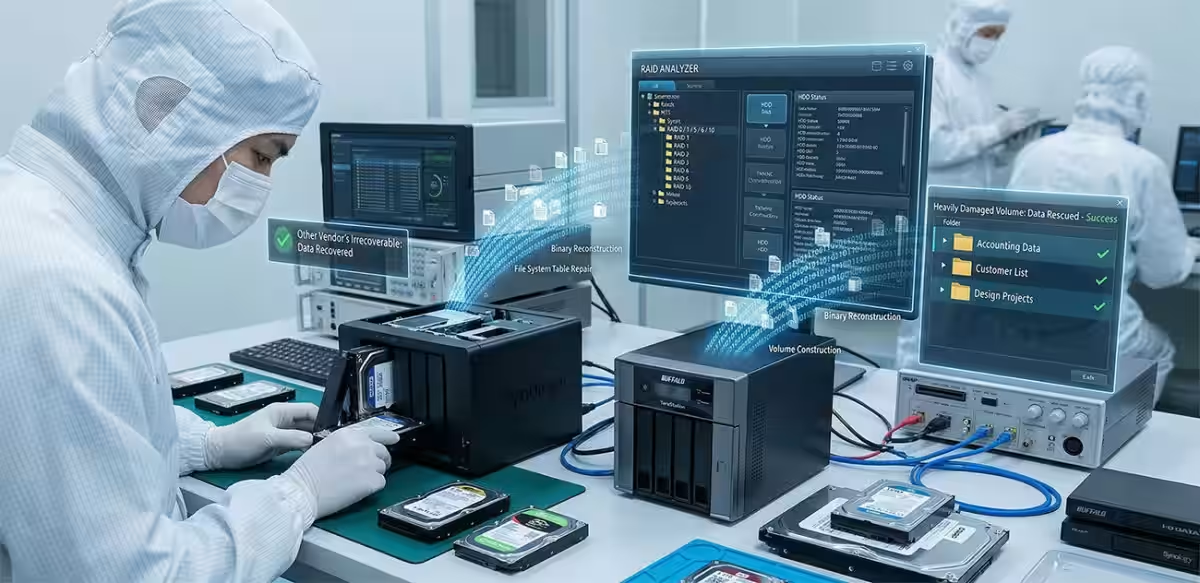
3. Expertise in Diverse RAID Configurations: Our specialists are adept at the intricacies of NAS systems from various manufacturers, including Buffalo, I-O DATA, Synology, and QNAP. We have extensive experience recovering data even from systems deemed irretrievable by competitors.
Don’t Wait Until It's Too Late
Before your situation worsens, take the proactive step of a free diagnosis. Find out whether your data can be retrieved and understand the estimated recovery timeline. Contact our dedicated technical staff immediately—swift action can make all the difference.
For trusted, nationwide urgent data recovery services that allow businesses to navigate the complexities of server and NAS failures, rely on Winget.
Contact Information:
Founded by Masaki Yanagimachi, Riplus Inc. operates out of Nagoya, Aichi Prefecture. Our mission is to ensure that your crucial data is always recoverable, no matter the circumstances. Don’t let a system failure define your business’s future—trust Winget to safeguard your data integrity.
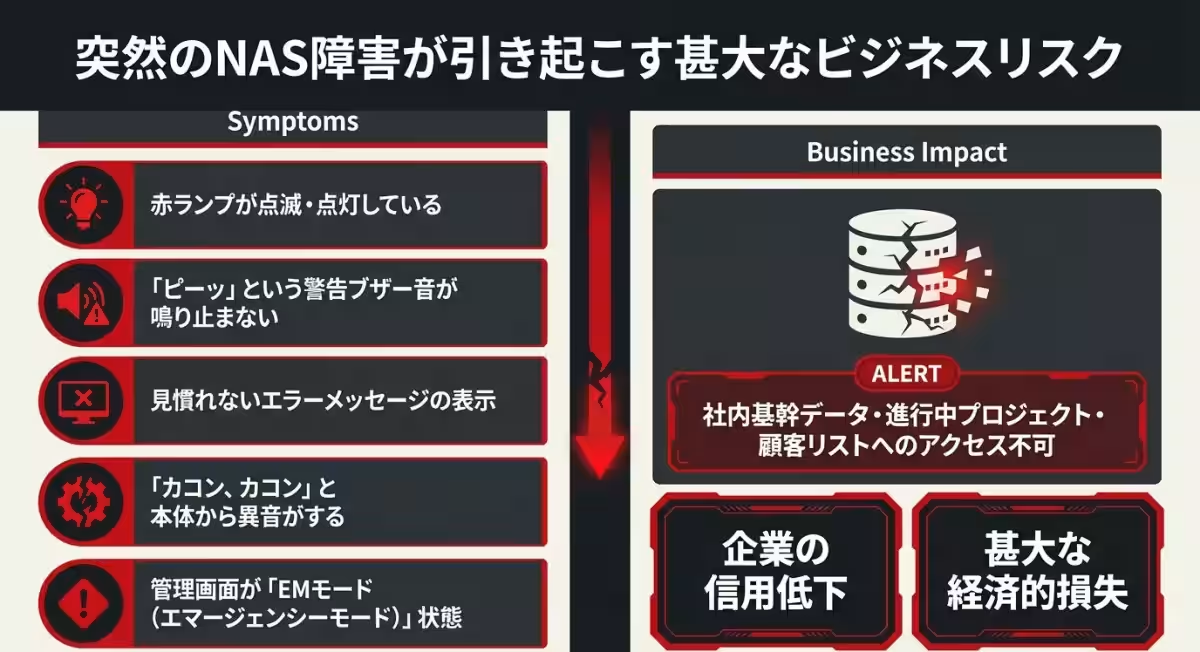
When faced with a crisis due to NAS failures, businesses often experience debilitating risks that can affect both their reputation and financial stability. Imagine coming in to discover a continuous beeping alarm, a screen displaying unfamiliar error messages, or strange noises emanating from the NAS unit. In such situations, the urgency to retrieve critical project files, customer information, and foundational data becomes paramount.
Understanding NAS Failures
A malfunctioning NAS device can throw a business into chaos. Employees may lose vital access to core data, resulting in delays that could undermine client relationships and lead to significant financial losses. Understanding the common signs of NAS failure is crucial. These include:
1. Blinking or steady red lights on the device.
2. Persistent alert sounds.
3. Unusual error messages upon trying to access files.
4. Weird noises—clunks and whirrs—from within the NAS.
5. The management interface displaying an 'Emergency Mode' (EM Mode).
Five Dangerous Actions to Avoid
When faced with a NAS crisis, the instinct to act immediately can lead to missteps. Certain actions can further endanger data recovery efforts, including:
- - Rearranging or swapping hard drives, which can corrupt RAID information.
- - Keeping the device powered on while it’s failing.
- - Attempting RAID rebuilds, which may lead to data loss.
- - Ignoring strange noises or continuing operations.
- - Updating firmware during an emergency mode situation, which can damage the system.
It's essential to remain calm and switch off the device while consulting a data recovery expert to avoid exacerbating the situation.
The Solution: Ultra-Fast Data Recovery Service by Winget
For businesses battling sudden NAS troubles, the 'Urgent Data Recovery Service' by Winget, operated by Riplus Inc., offers a lifeline. Within hours, our team can recover your critical data, allowing business operations to resume with minimal downtime. We support a comprehensive range of devices, including:
- - TeraStation
- - LinkStation
- - LANDISK
- - Synology
- - QNAP
Our Unique Advantages
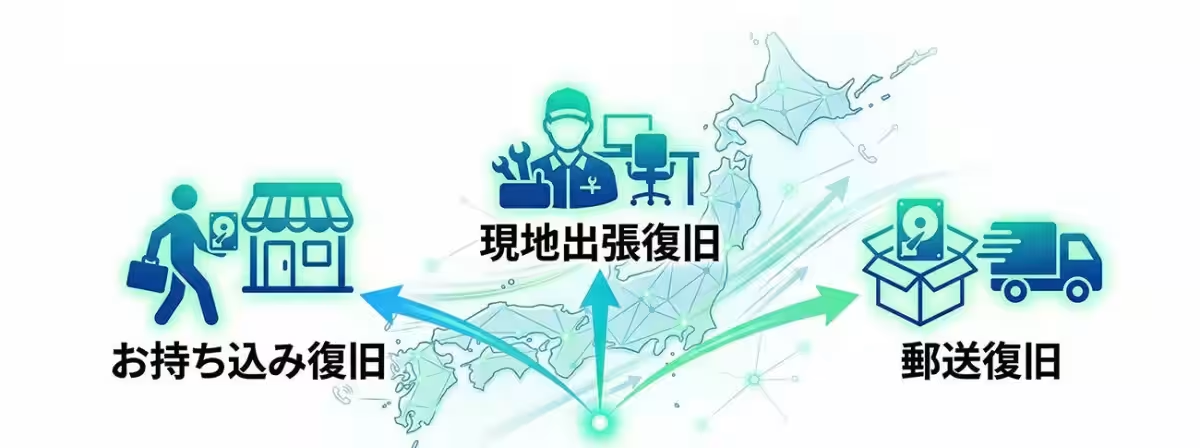
1. Nationwide Coverage: We operate a broad service network across Japan, guaranteeing rapid initial response times. Our staff will assess your situation and coordinate the best recovery strategy tailored to your needs, whether through in-person, on-site, or postal options.
2. On-Site Recovery: If you can't move equipment or need immediate recovery, our expert engineers will come to your office with the necessary tools to perform initial diagnostics and data extraction on-site, ensuring the safety of your sensitive information.
3. Expertise in Diverse RAID Configurations: Our specialists are adept at the intricacies of NAS systems from various manufacturers, including Buffalo, I-O DATA, Synology, and QNAP. We have extensive experience recovering data even from systems deemed irretrievable by competitors.
Don’t Wait Until It's Too Late
Before your situation worsens, take the proactive step of a free diagnosis. Find out whether your data can be retrieved and understand the estimated recovery timeline. Contact our dedicated technical staff immediately—swift action can make all the difference.
For trusted, nationwide urgent data recovery services that allow businesses to navigate the complexities of server and NAS failures, rely on Winget.
Contact Information:
- - Toll-Free Contact: 0120-703-845
- - Visit our Website: Winget Data Recovery
- - Online Booking: Schedule a Recovery
Founded by Masaki Yanagimachi, Riplus Inc. operates out of Nagoya, Aichi Prefecture. Our mission is to ensure that your crucial data is always recoverable, no matter the circumstances. Don’t let a system failure define your business’s future—trust Winget to safeguard your data integrity.
Topics Consumer Technology)
【About Using Articles】
You can freely use the title and article content by linking to the page where the article is posted.
※ Images cannot be used.
【About Links】
Links are free to use.