



Boundary Administrative Scrivener Corporation Participates in Establishing Drone Operations Guidelines
Introduction
Boundary Administrative Scrivener Corporation, headquartered in Chiyoda, Tokyo, is making waves in the drone industry by actively participating in the establishment of guidelines for the simultaneous operation of multiple unmanned aerial vehicles (UAVs). This initiative, announced by the Ministry of Land, Infrastructure, Transport and Tourism on March 28, aims to ensure the safe use of these drones, particularly in Level 3 and 3.5 flight scenarios.
Understanding Multiple Simultaneous Operations
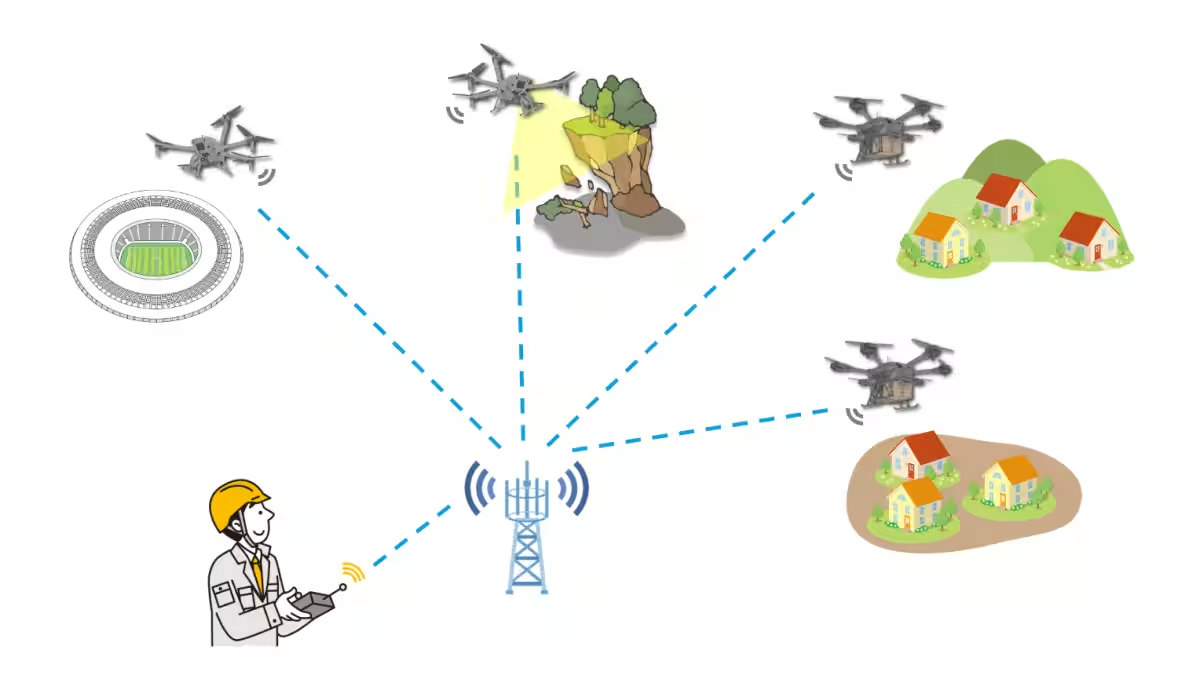
So, what exactly does "multiple simultaneous operations" entail? In simpler terms, it refers to a situation where a single operator manages up to five drones at once. This model, categorized under Level 3 and 3.5 flights, is expected to witness a rise in implementation, particularly for purposes such as inspection, surveillance, logistics, and post-disaster responses. Major airlines and telecommunication companies have already commenced extensive testing in this area.
The Importance of Safety Guidelines
The newly introduced guidelines come at a crucial time, as the number of applications and operations involving drones continues to escalate. Recognizing the complexity of managing multiple drones, especially when remote control operations extend beyond visual range, the guidelines prioritize safety and operational management. To facilitate the safe execution of these flights, the guidelines set a clear framework, focusing on several key aspects:
- - Drone Specifications: The drones must be equipped with essential features such as automatic piloting capabilities, external monitoring cameras, and fail-safe mechanisms.
- - Operator Training: Operators must undergo comprehensive training to handle emergencies effectively.
- - Operational Management: Systems must be in place to simplify situational awareness for operators, including the implementation of pop-up features for monitoring screens to highlight critical information.
- - Risk Assessments: The guidelines necessitate verification of operational risks and proposed mitigation strategies.
The Role of Boundary Administrative Scrivener Corporation
As an expert in drone law specializing in aerial vehicle permits and legal advice, Boundary Administrative Scrivener Corp. has been integral to the formation of these guidelines. By contributing its extensive experience in obtaining flight permissions and approval requests, the firm aims to enhance the operational security of simultaneous drone flights. The guidelines they helped develop emphasize safety requirements and risk countermeasures tailored specifically for the intended use of four to five drones simultaneously. This approach aims to promote widespread acceptance and operational efficiency in commercial drone applications.
Looking Ahead
With the establishment of a specialized study group formed in response to feedback from drone operators, the future looks promising for multiple simultaneous drone operations in Japan. The Ministry is committed to continuously revising these regulations to incorporate advancements in technology and ensure they meet emerging industry needs. Boundary Administrative Scrivener Corporation remains dedicated to contributing to these efforts, collaborating with various stakeholders to ensure the safe implementation of drone technologies that enhance societal efficiency and utility.
About Boundary Administrative Scrivener Corporation
With over 35,000 successful consultations on drone-related legal matters, including complex flight permission applications and regulatory compliance, Boundary Administrative Scrivener Corp. stands out as a leading authority in UAV law. Their wide-ranging services, from legal counsel to business consulting, bolster the growth and development of the drone industry in Japan. For more information, find them at boundary.or.jp.
Topics Other)
【About Using Articles】
You can freely use the title and article content by linking to the page where the article is posted.
※ Images cannot be used.
【About Links】
Links are free to use.