




Survey Reveals Manufacturing Site Report Forms Are Effective Yet Require Improvement
Understanding the Usability of Report Forms in Manufacturing
In recent years, the transition to digitalization has gained momentum across various industries, particularly in manufacturing. Traditional paper-based report forms have been a staple in operations such as work records and inspections. A critical question being raised is, "How user-friendly are these forms?" To gain insights, a survey and interviews were conducted targeting leaders at manufacturing sites.
The Survey Background
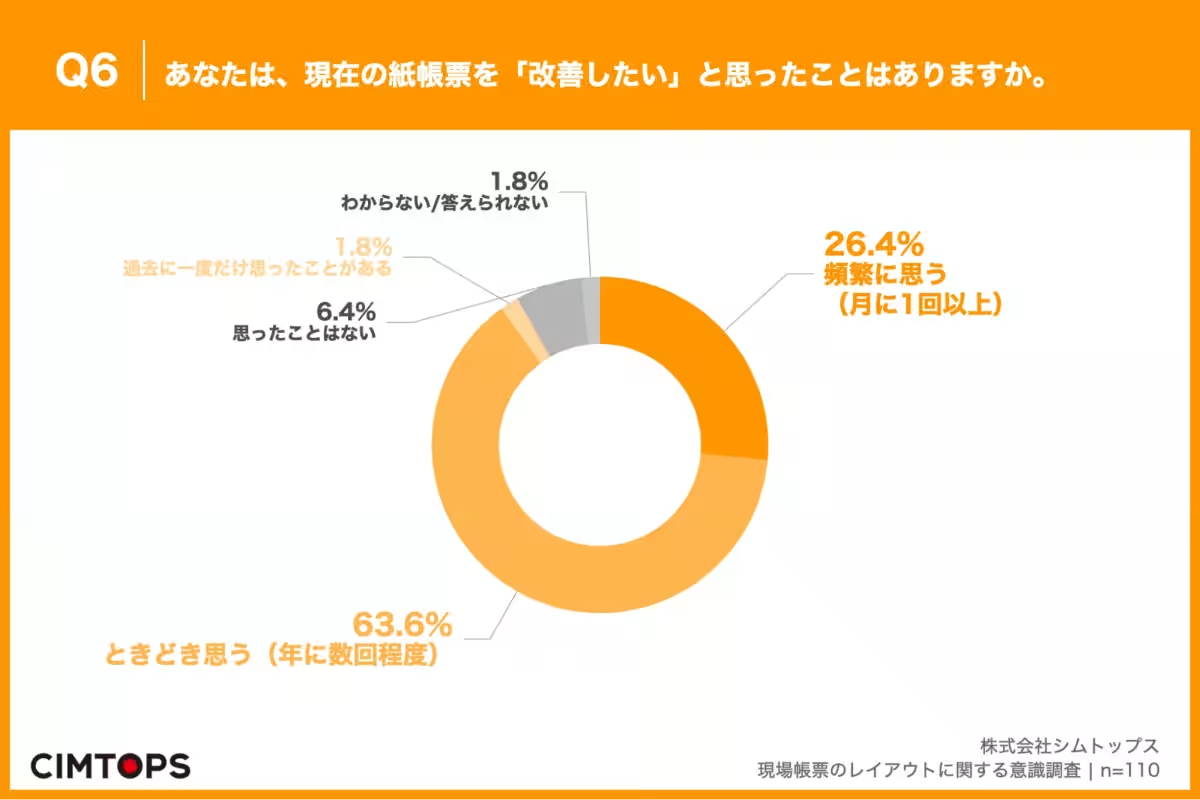
CIMTOPS Co., Ltd., headquartered in Shinagawa, Tokyo and known for its market-leading report form system, i-Reporter, engaged 110 site leaders using conventional paper forms for their daily operations to evaluate the usability of these forms. The results indicated that approximately 69.1% rated the current forms as easy to use, while a staggering 90% expressed a desire for enhancements. This duality raises questions worth exploring.
Key Findings
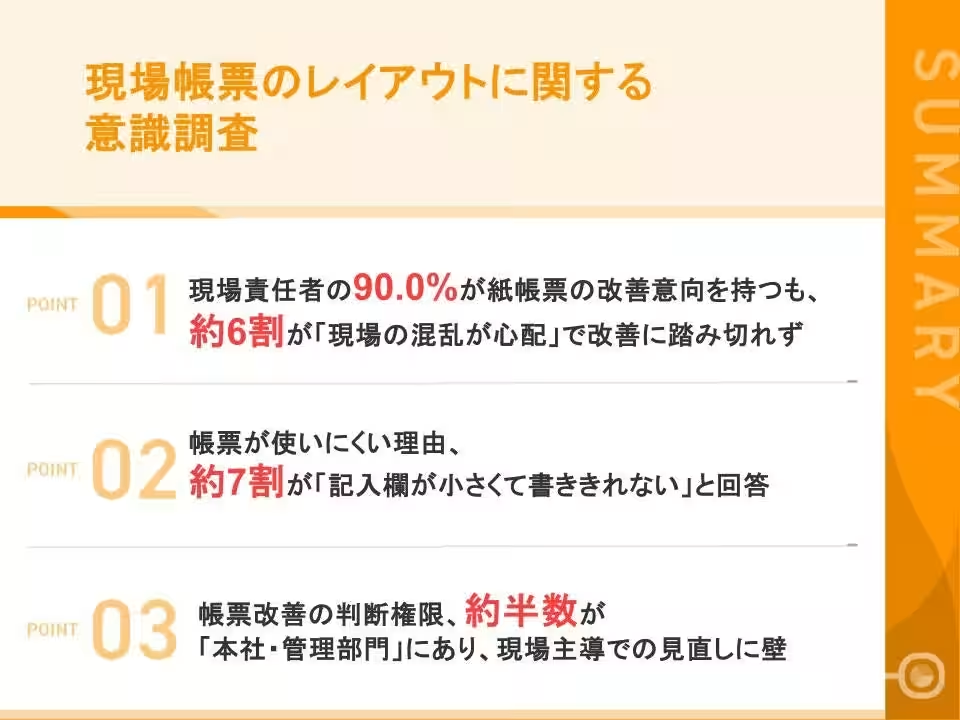
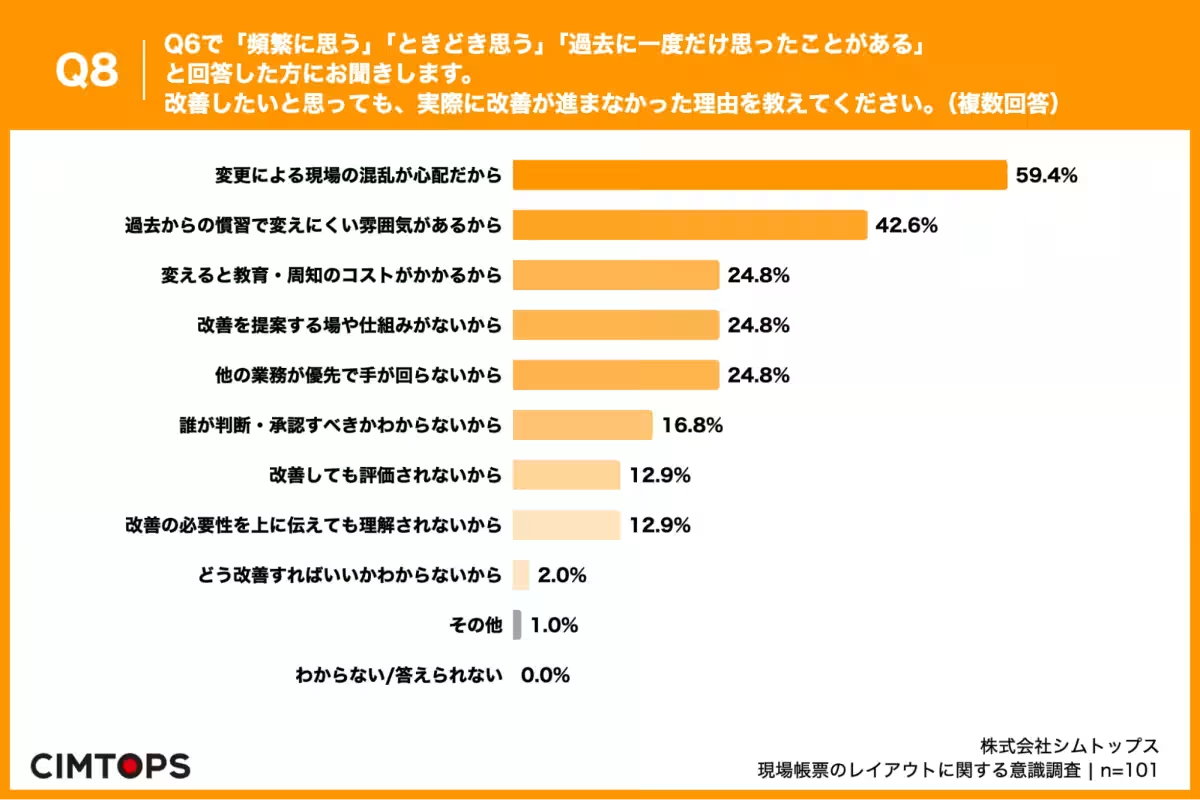
1. Concerns About Confusion: While 90% of site managers wish to improve paper report forms, nearly 60% are hesitant due to fears of chaos during the transition.
2. Specific Usability Issues: About 70% noted that the small writing spaces hinder their ability to fill out the forms completely.
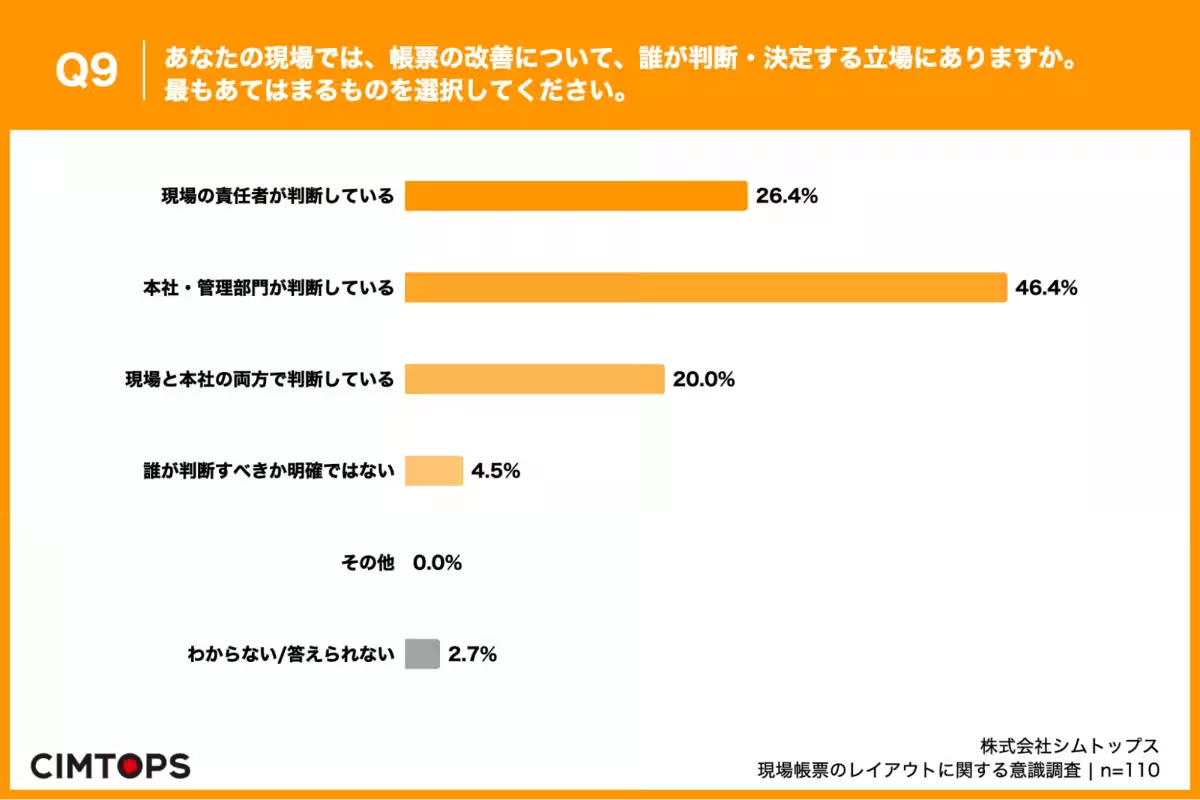
3. Authority for Changes: Nearly half stated that the decision-making power regarding form modifications lies within headquarters or management departments, creating obstacles for site-led changes.
A Closer Look at the Usability Ratings
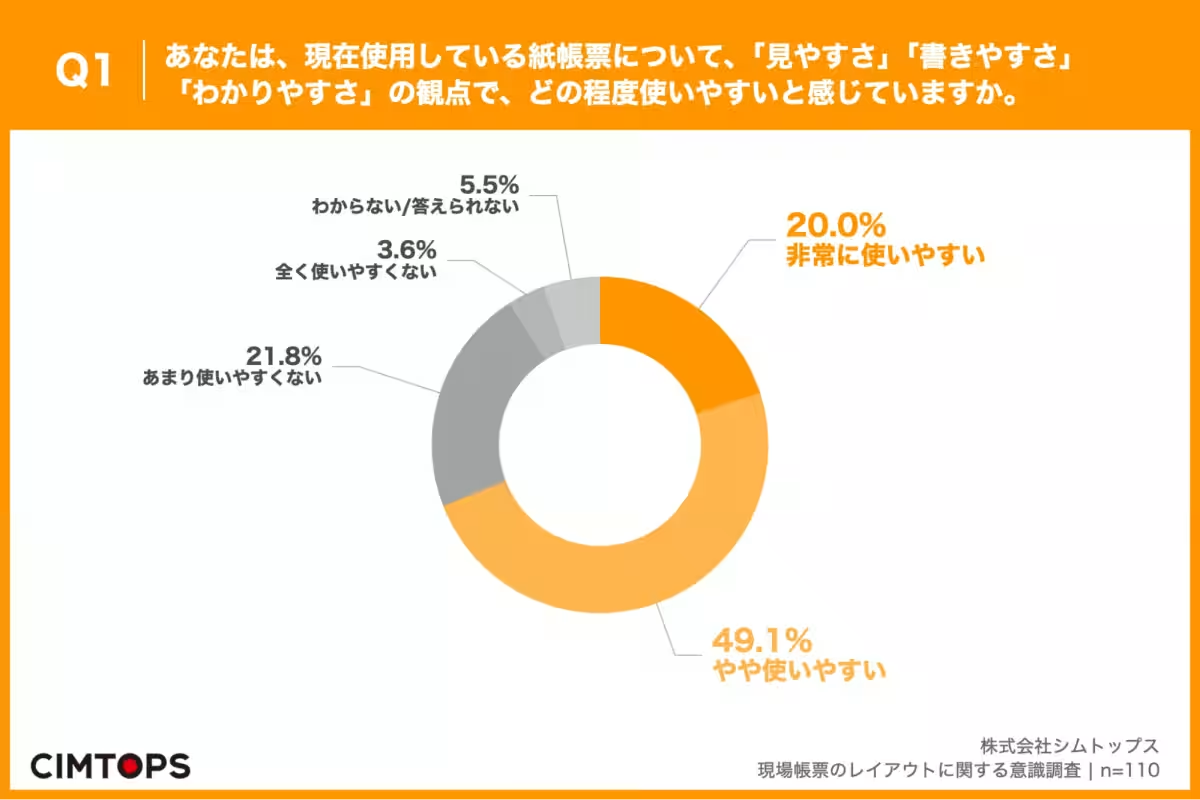
In terms of visual clarity, user-friendliness, and comprehensibility, the survey asked site leaders to rate their experiences with the forms:
- - 20.0% felt they were "very easy to use"
- - 49.1% rated them as "somewhat easy to use"
- - In total, 69.1% indicated the forms were indeed user-friendly.
These forms were refined over the years through ongoing user feedback and adjustments, leading to a direct correlation between the usability scores and the experience of site personnel.
Reasons for Ease of Use
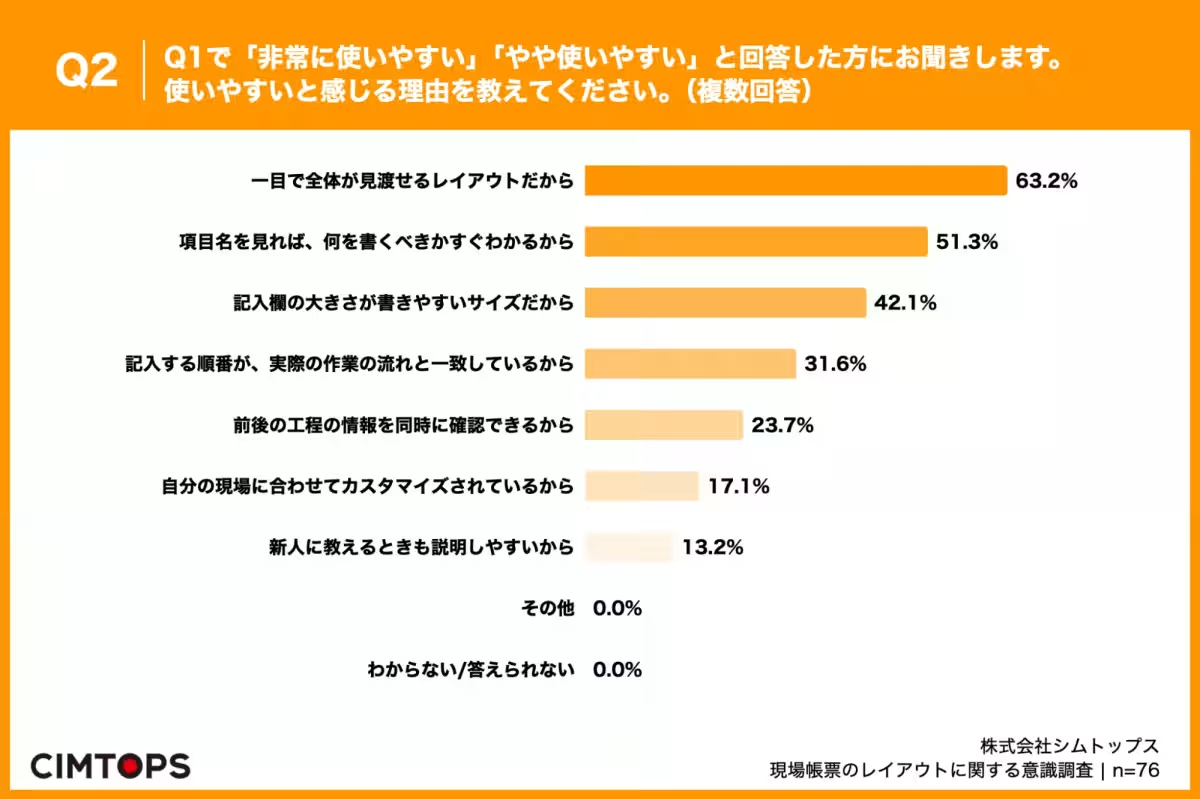
The primary reason cited for the usability of the forms by 63.2% of respondents was the layout, which allows for a comprehensive overview at a glance. Additional reasons included:
- - 51.3% appreciated clarity on what needs to be filled out based on item names.
- - 42.1% mentioned that the size of the writing area was suitable for entry.
We also observe that 23.7% valued the ability to check information across adjacent processes simultaneously, facilitating workflow continuity.
The Value of On-Site Reporting Forms
The unique value of on-site reporting forms lies in their holistic view and process-spanning characteristics. For instance, Yanmar Construction Machinery Co., Ltd. has embraced the digital transition using i-Reporter, highlighting its benefits in actual work settings.
In discussions about inspection processes, a systems manager stated that having multiple inspection items visible for simultaneous entry is crucial in their operations. For tightly coupled processes, the on-site forms become indispensable.
Moreover, many observed that the ability to replicate existing checklists directly on digital platforms significantly eased the adaptation for the workforce, minimizing the time required for new training and reducing worries of operational disruption.
Resistance to Change Despite High Usability Ratings
While there is clear evidence of usability and a strong desire for improvements in report forms, it is puzzling that 90% of site managers have thoughts on enhancing the current forms. The contradictions between feeling that the forms are usable yet wanting improvements often root from the desire to foster more effective processes without the fear of upheaval.
When asked about improvements, 46.5% sought changes in the order and structure of items on the forms, while subsequent priorities included adjusting the number of items (38.6%) and optimizing the size and layout of writing areas (33.7%). These findings suggest users have tangible visions for improvement related to layout design.
Challenges in Implementation
Curiously enough, challenges persist despite strong intentions to enact improvements. Main reasons preventing progress include:
- - Fear of Disruption: 59.4% worry about potential problems emerging from changes.
- - Cultural Resistance: 42.6% noted an entrenched culture that makes change difficult.
- - Costs of Transition: 24.8% cited the costs associated with training and informing the workforce as barriers.
Most importantly, the authority to modify forms is predominantly held by headquarters or management (46.4%), further complicating local initiatives toward improvement.
Conclusion
The survey clearly reflects that while on-site report forms are generally regarded as usable, the need for improvement is palpable. Manufactures do not fear changes per se, but rather the significant alteration of processes that have been built over time.
Ultimately, effective improvement should harmonize established practices while gently introducing enhancements. This balance will facilitate smoother transitions towards digital processes without overwhelming on-site personnel. The improvements must cater to enhancing operational efficiency while retaining core functionalities valued by users.
Moving Forward with Community Support
CIMTOPS operates a community called the "On-Site Report Form Improvement Club," drawing over 1,200 digital transformation advocates. This initiative aims to connect enterprises, sharing best practices, and facilitating a platform to collectively enhance reporting methodologies that adapt to industry changes while embracing continuous improvement.



Topics Consumer Products & Retail)








【About Using Articles】
You can freely use the title and article content by linking to the page where the article is posted.
※ Images cannot be used.
【About Links】
Links are free to use.