



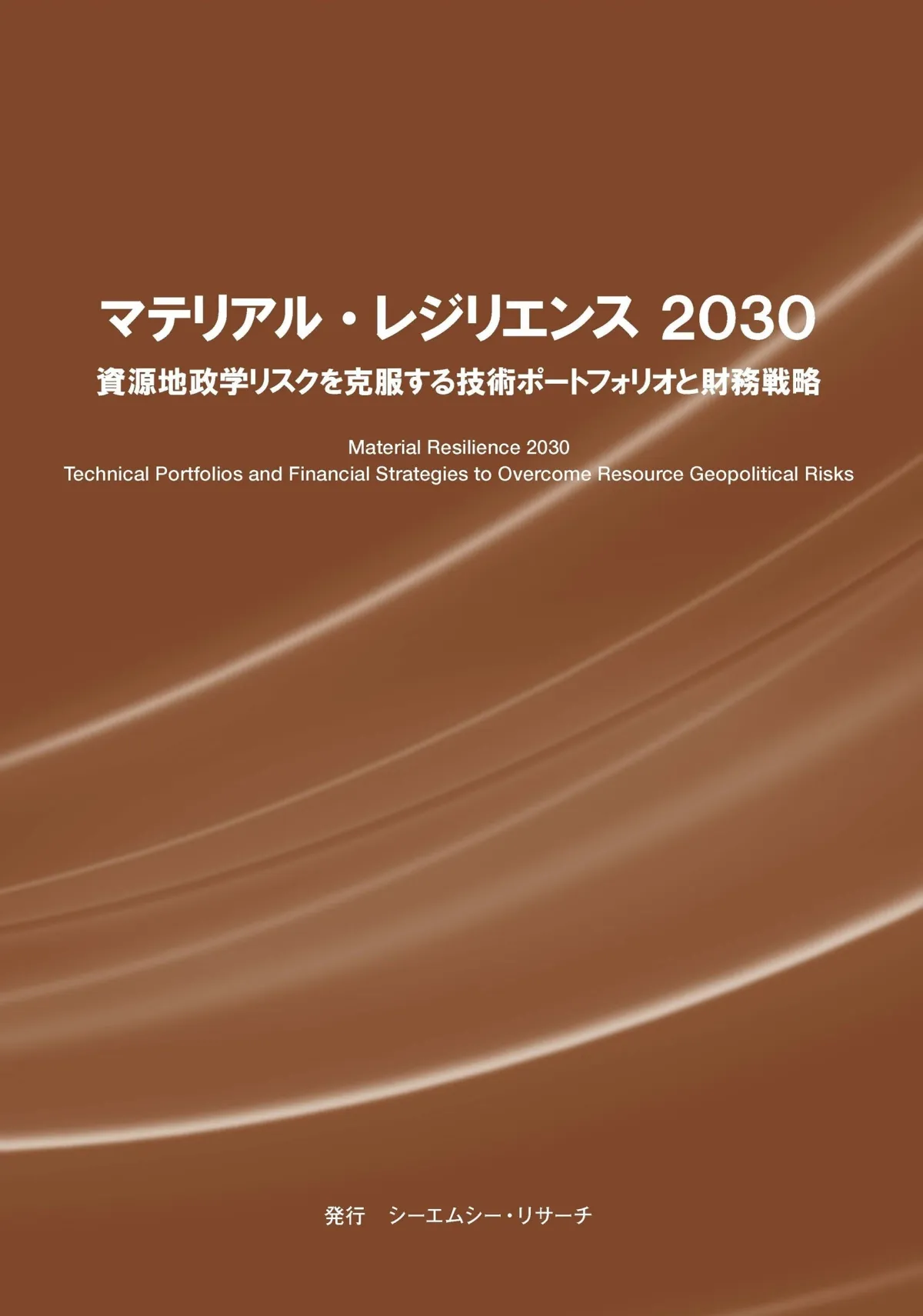
Exploring Material Resilience: Strategies to Tackle Geopolitical Resource Risks by 2030
Introduction to Material Resilience
The recently released book, "Material Resilience 2030: Technical Portfolios and Financial Strategies to Overcome Resource Geopolitical Risks," offers deep insights into how modern industries can navigate the complex landscape of geopolitical and resource-related challenges. Published by CMC Research, this compendium emphasizes the critical transformation from efficiency-focused practices to those prioritizing resilience in the face of evolving global circumstances.
Key Themes of the Book
From Efficiency to Resilience
As global manufacturing grapples with the implications of geopolitical tensions, resource nationalism, and stringent environmental regulations, the notion of efficiency is increasingly being supplanted by resilience. The book argues that industries must not only ensure the continuity of their supply chains but also innovate in resource acquisition and sustainability practices.
In-Depth Analysis of Core Industries
Focusing on pivotal sectors such as semiconductors, batteries, mobility, and robotics, it systematically breaks down the strategic points that will define success in the resource geopolitics era. Readers will find detailed discussions on cutting-edge topics such as Autonomous Labs and Material Informatics (MI), which are at the forefront of materials development and sustainability initiatives.
The Changing Landscape of Materials Development
The narrative highlights how traditional techniques reliant on human expertise are giving way to advanced AI and physical simulations. This shift is empowering laboratories to continuously refine and iterate on material development processes around the clock. Furthermore, the book presents the urgent need for jurisdictions to pivot towards a circular economy, emphasizing the importance of recycling and reclaiming materials as strategic resources rather than mere by-products.
Strategies for Japan's Resurgence
With comprehensive analyses of leading global companies—those already adopting these forward-thinking materials strategies—the book outlines a roadmap for Japanese firms to emerge as resilience hubs. It offers a crucial look at how Japan can leverage its historical strengths in materials science, coupled with modern digital innovations, to redefine its role in the global economy by 2030.
Financial Strategies and Benchmarking
Another remarkable aspect of this report lies in its rigorous approach to financial strategy and benchmarking. The inclusion of guidelines for integrating non-financial metrics into corporate value assessments provides readers with practical frameworks to turn compliance into competitive advantage. In an era where sustainability reporting is mandatory, corporations must quantify their resilience to ensure equity and long-term viability.
Conclusion
The book ultimately paints a picture of an industrial world transformed by resilience, where technological innovation and strategic economic frameworks work hand-in-hand to foster a sustainable future. Engaging with these insights will be imperative for stakeholders across industries as they navigate the implications of a rapidly changing landscape characterized by resource scarcity and regulatory upheaval.
To delve deeper into these topics and explore detailed case studies, readers are encouraged to view the full text of the book released on May 27, 2026. The innovative strategies discussed will not only equip professionals with the necessary tools to thrive in this new era but also position them to lead in the seamless integration of sustainability into the core of industrial operations.
Topics Consumer Products & Retail)
【About Using Articles】
You can freely use the title and article content by linking to the page where the article is posted.
※ Images cannot be used.
【About Links】
Links are free to use.