



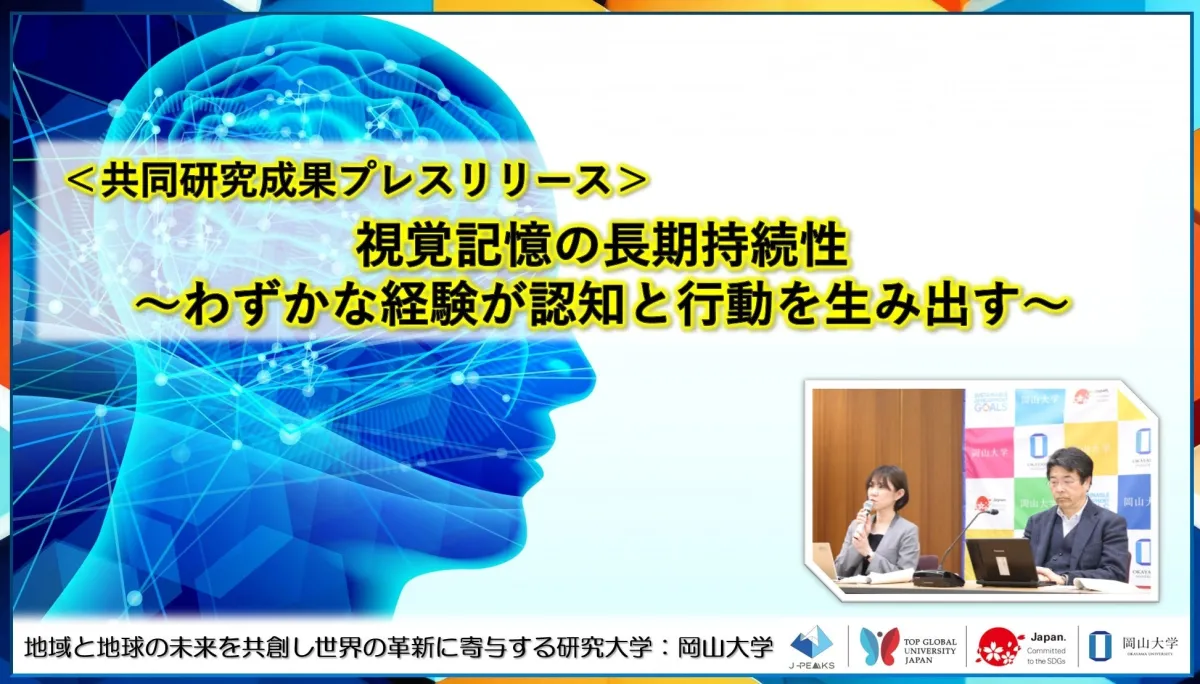
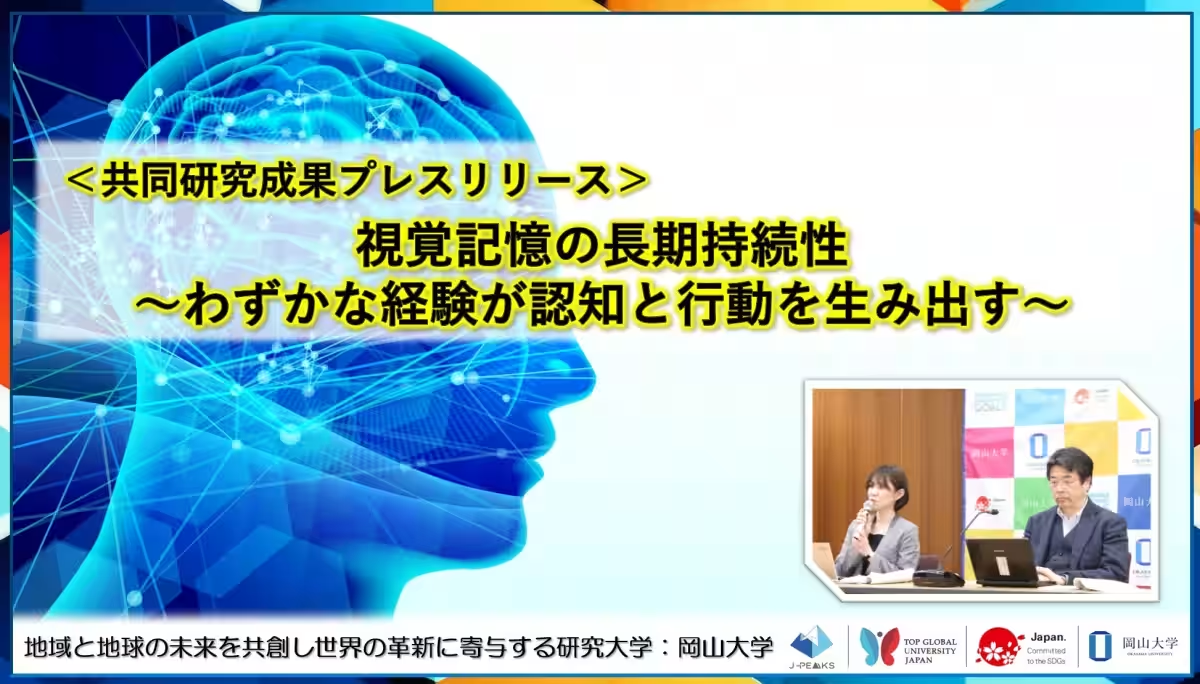
The Long-Term Retention of Visual Memory and Its Impact on Cognition and Behavior
Understanding Visual Memory Retention
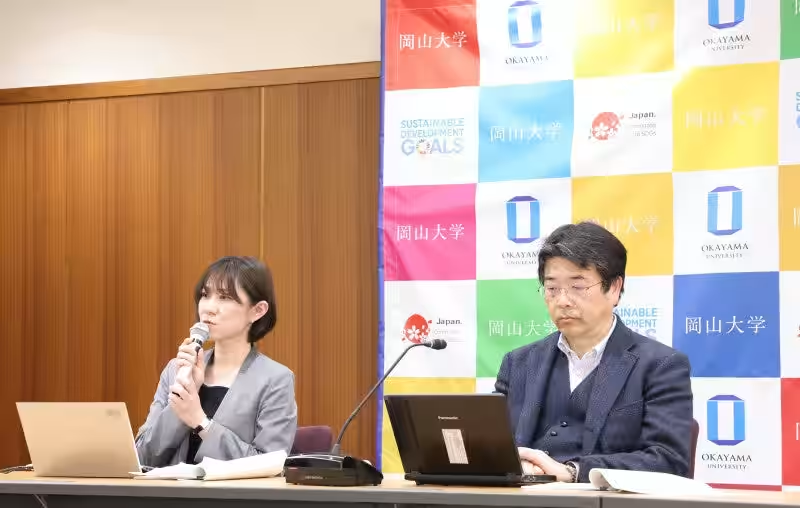
Recent research conducted by Okayama University and Hiroshima Red Cross University sheds light on the fascinating world of visual memory. This collaborative study, led by Professor Takafumi Terasawa and Lecturer Tomoe Masuoka, has significant implications for our understanding of how fleeting experiences can mold our cognitive processes and behavior.
Background of the Study
Every day, we are inundated with immense amounts of sensory information, primarily visual stimuli from objects, faces, and landscapes. How effectively can we retain this visual information, and how does it affect our mental patterns and actions? The research team set out to investigate the retention capacities of visual memory, particularly in relation to brief visual experiences.
Key Findings
Through systematic experimentation, the researchers discovered that individuals can remember visual information they were exposed to for only a few seconds with remarkable detail. Astonishingly, this memory can persist for at least three weeks, demonstrating a level of retention far beyond what was previously assumed.
These findings underscore the potential for seemingly insignificant sensory experiences to have lasting effects on our cognition and behavior. The study illuminates the critical role that transient experiences play in shaping our understanding of the world and in affecting our subsequent decision-making processes.
Implications of the Results
The implications of this research are profound. The study's results, accepted for publication in the renowned international journal "Attention, Perception, & Psychophysics," highlight the resilience of human memory and its ability to influence our actions based on past experiences. It provides empirical evidence to support the notion that brief, sensory experiences—often considered minor—can catalyze significant cognitive and behavioral changes.
Such insights are especially relevant in educational contexts, where experiential learning is highly valued. The findings address a fundamental question: Why are experiences crucial for learning? This study illustrates that even minimal experiences can shape current cognition and behavior, thereby enhancing the value of experiential learning.
Next Steps in Research
Building on the observed effects of visual memory retention, further research initiatives will explore the implications for visual processing and how memory influences recognition and judgment. The team aims to extend their research to better understand how visual memory interacts with other cognitive processes, contributing additional insights into the complexities of human memory and cognition.
Conclusion
As we delve deeper into the mechanisms of memory and its impact on our daily lives, studies like this one highlight the importance of understanding human sensory experiences and their lasting impacts. With further investigation, we can better comprehend the intricacies of our cognition and develop improved educational strategies that leverage sensory experiences for optimal learning.
Contact Information
For inquiries regarding the research, please contact:
- - Professor Takafumi Terasawa at Okayama University: [Contact Information]
- - Lecturer Tomoe Masuoka at Hiroshima Red Cross University: [Contact Information]
The study, launched on March 27, 2026, represents a significant contribution to our understanding of visual memory and its implications for cognition and behavior, emphasizing that every fleeting moment of sensory engagement can have profound implications for our future.
- ---
By shedding light on the intricate processes of memory retention, this study not only advances academic discourse but also poses intriguing questions for educators and psychologists about optimizing learning and behavioral outcomes.





Topics People & Culture)
【About Using Articles】
You can freely use the title and article content by linking to the page where the article is posted.
※ Images cannot be used.
【About Links】
Links are free to use.