



Fractal Workout Launches DX Program for Effective Employee Survey Management
Fractal Workout's Innovative Survey Operation DX Program
In today's competitive landscape, organizations strive to harness the power of their human capital. To facilitate this, Fractal Workout Inc., based in Shibuya, Tokyo, has recently unveiled their Survey Operation DX Program. This initiative aims to streamline the management of employee surveys, transforming how companies handle their human capital KPIs.
The Need for Change
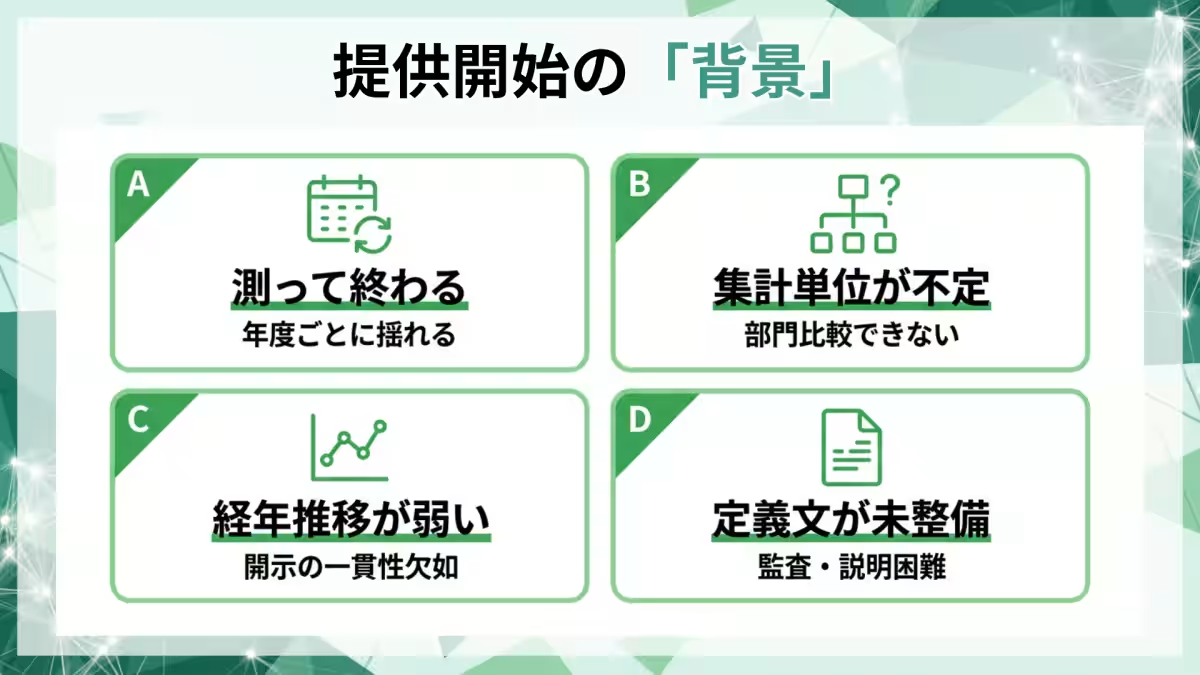
Many organizations set human capital KPIs but often end up in a cycle of measuring, creating, and concluding without true operational execution. Issues such as fluctuations in survey frequency and topics, inadequate aggregation for departmental comparison, and weak year-on-year transition management often hinder effective utilization. Fractal Workout's new program counters these challenges by establishing continuous monitoring mechanisms for employee surveys, ensuring that KPIs are managed in a sustainable and resilient manner.
Comprehensive Program Overview
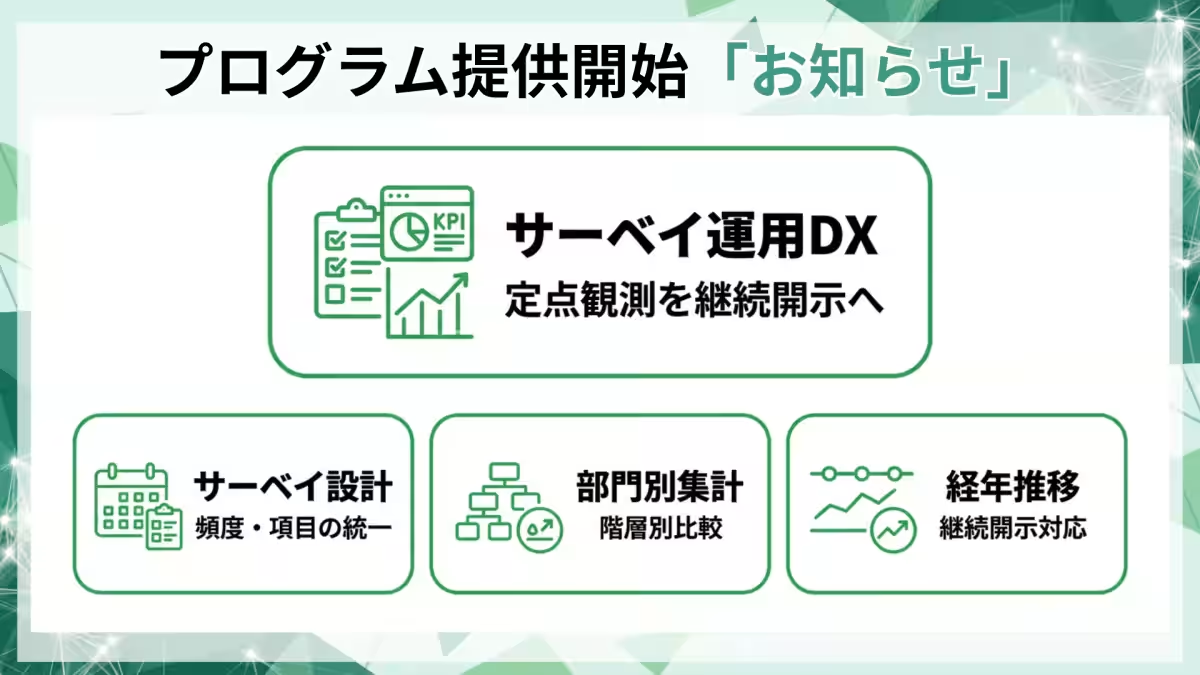
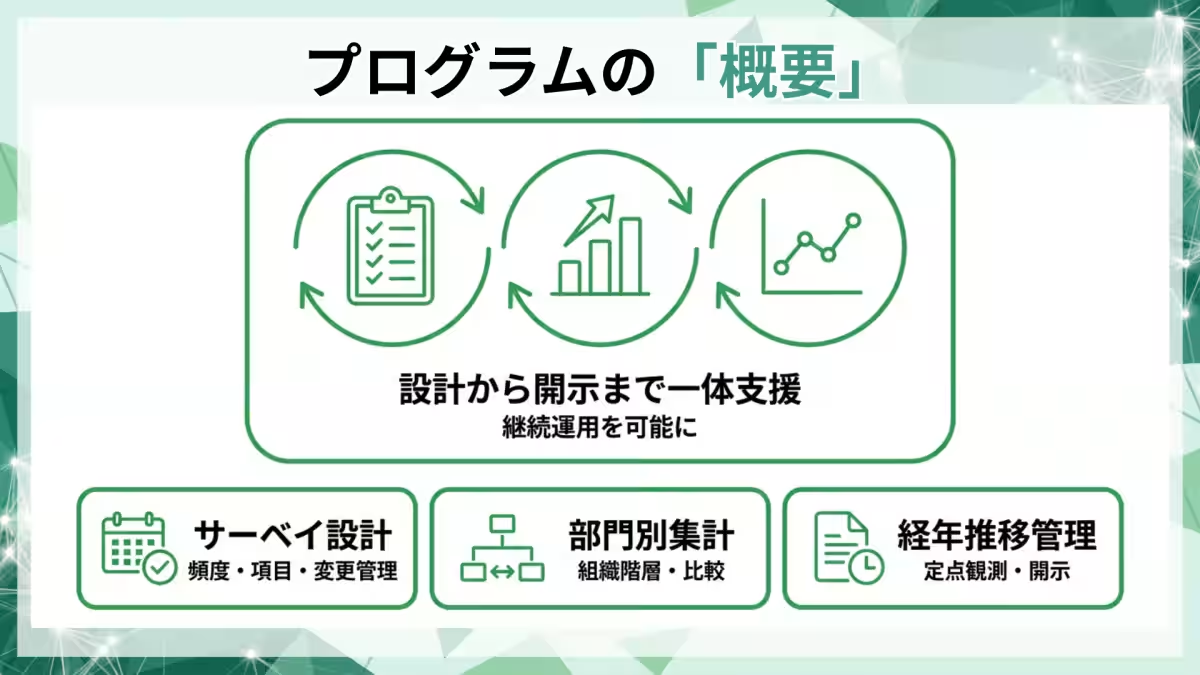
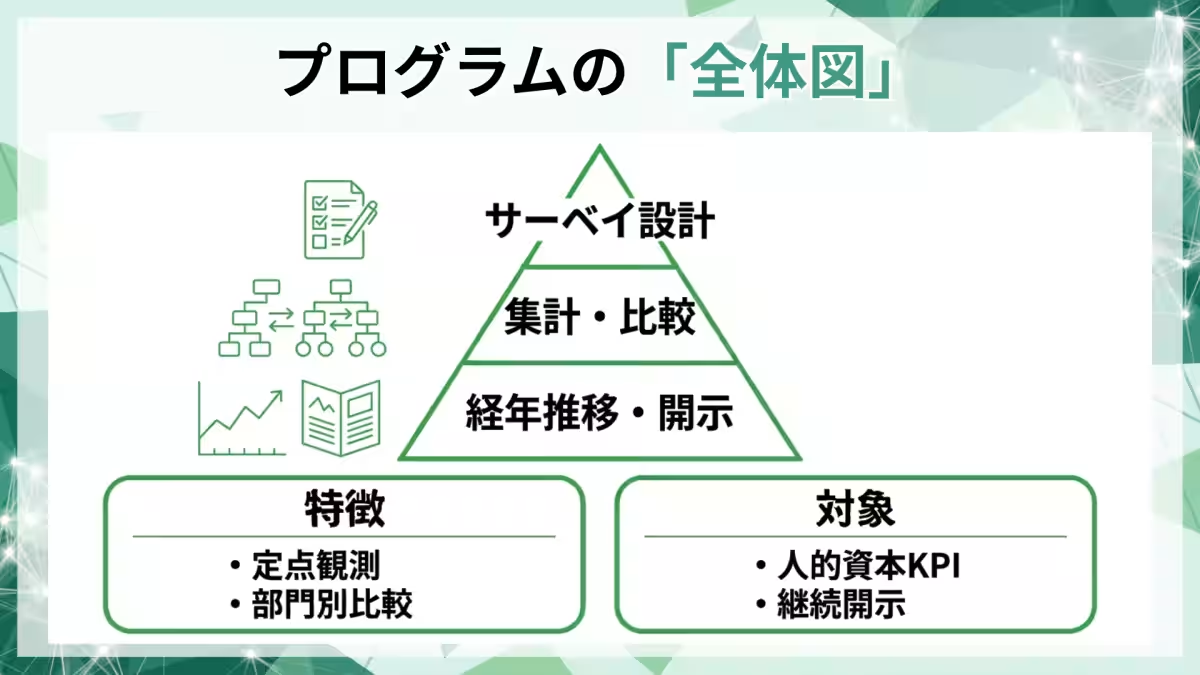
The Survey Operation DX Program integrates employee surveys with KPI management, covering everything from design to aggregation, comparison, and reporting. Here's a closer look at its key features:
1. Survey Design
- - Standardization: The program streamlines survey frequency and topic guidelines to ensure consistency.
- - KPI Structuring: It categorizes relevant topics as human capital KPIs, ensuring comparability and sustainability across evaluations.
- - Change Management: Clear management rules for changing or adding survey questions are established to maintain integrity in data collection.
2. Organizational Hierarchy Aggregation
- - Departmental Structuring: The program supports the aggregation of survey results according to organizational structure, facilitating an effective comparison of different departments.
- - Trend Analysis: It incorporates methods to identify and display trends within and between departments, offering insights into areas needing attention.
3. Year-on-Year Transition Management
- - Continuous Monitoring: Rather than delivering sporadic data points, the program fosters a system that tracks progress over time.
- - Change Tracking: Monitoring changes like previous differences and year-on-year variances allows organizations to substantiate improvements.
4. Report Generation
- - Stakeholder Relevance: It differentiates between executive summaries and operational insights to streamline information for different audiences.
- - Standardization of Reports: Formats ensure reports are ready for operational meetings, focusing on stability, comparison, and discussion points.
5. Definition Templates for Audits and Explanations
- - Template Provision: It includes comprehensive templates specifying definitions, measurement methods, aggregation units, and operational frequencies for clarity in reporting.
- - Consistency Assurance: Maintaining consistency in disclosures addresses internal and external informational needs effectively, minimizing workload during audits.
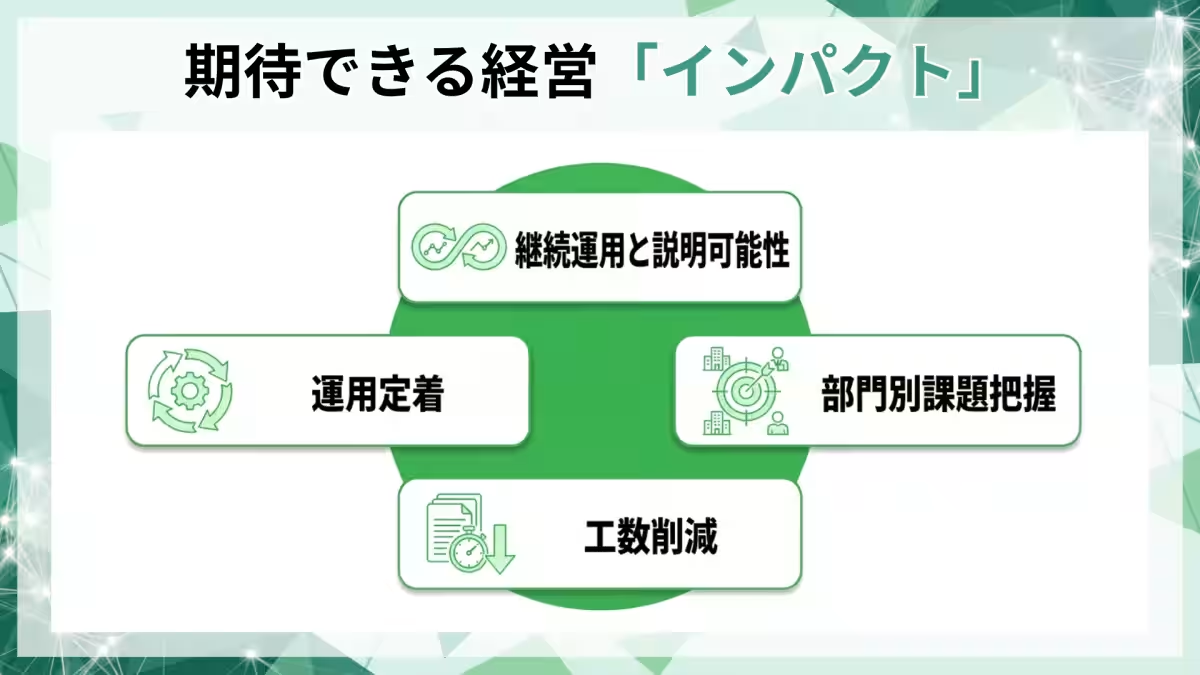
Anticipated Business Impact
The implementation of this program is expected to yield significant benefits, including:
- - Sustained KPI Management: Organizations can maintain continuous operations and enhance transparency for internal disclosures.
- - Focused Investments: Departmental comparisons reveal areas that require improvement and investment, leading to targeted decision-making.
- - Efficiency in Report Production: Standardization reduces individual dependence, easing the report creation, verification, and communication processes.
- - Establishing a Continuous Cycle of Improvement: By integrating reporting into operational meetings, organizations can foster an environment oriented toward continuous improvement.
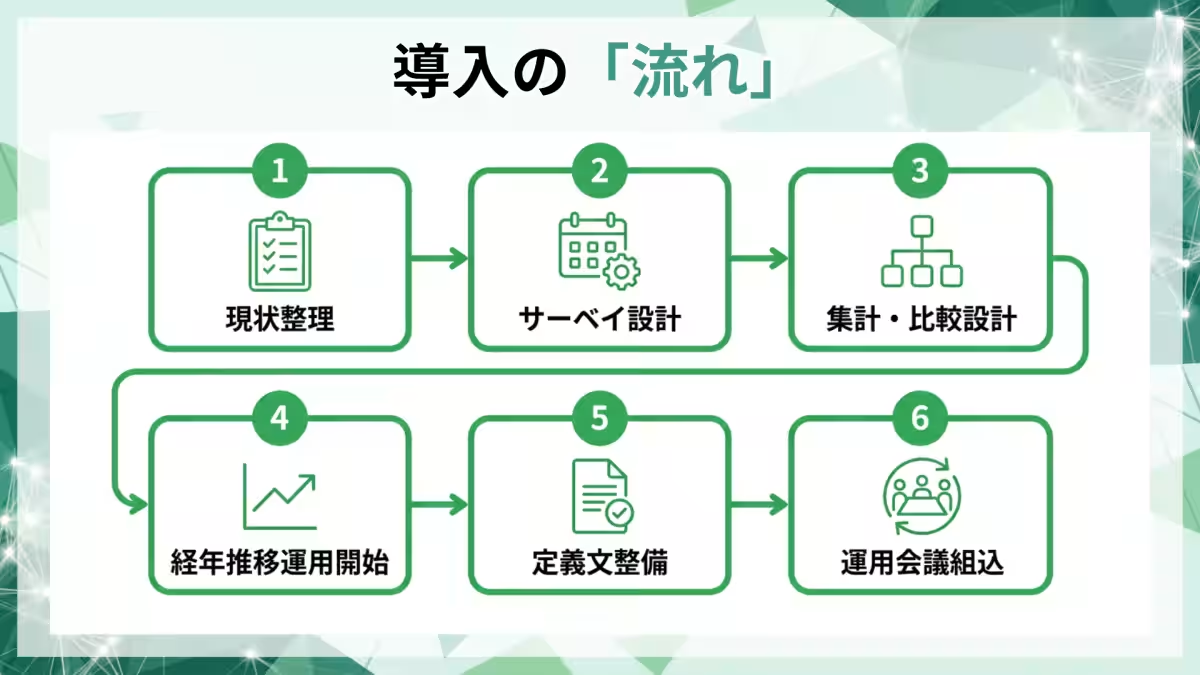
Implementation Steps
1. Current State Analysis: Understanding existing surveys, KPIs, and operational frameworks is essential.
2. Survey Design Initialization: Establish frequency, topics, and change management practices.
3. Aggregation Structuring: Organize survey results based on the organizational hierarchy for effective comparisons.
4. Operationalizing Year-on-Year Tracking: Launch mechanisms for continuous monitoring and report generation.
5. Template Development: Prepare definitions and templates for audits and consistency in explanation.
6. Incorporating into Meeting Structures: Ensure reports are utilized in decision-making processes for sustained improvement.
Conclusion
With the Survey Operation DX Program, Fractal Workout is set to transform employee survey management by making it an ongoing operational endeavor rather than a one-time exercise. Companies interested in enhancing their human capital management strategies can explore partnership opportunities with Fractal Workout for a future-proof solution. For more information, visit Fractal Workout.
Topics Business Technology)
【About Using Articles】
You can freely use the title and article content by linking to the page where the article is posted.
※ Images cannot be used.
【About Links】
Links are free to use.