



Innovative Mercury-Free Water Sample Sterilization Technique for Future Environmental Monitoring
Innovative Mercury-Free Water Sample Sterilization Technique for Future Environmental Monitoring
Hiroshi Takahashi, a senior researcher at AIST's Active Fault and Volcano Research Division, in collaboration with Professor Masayo Minami from Nagoya University's Institute for Space-Earth Environmental Research, has developed a new method for sterilizing water samples. This novel approach prioritizes environmental safety, avoiding the use of mercury in favor of benzalkonium chloride, a more environmentally friendly alternative.
Background
Carbon dioxide, a significant greenhouse gas, is predominantly absorbed by oceans, where it exists as dissolved inorganic carbon. The analysis of this carbon in seawater is crucial for monitoring and predicting changes in the Earth's environment. Traditional methods for this analysis involve the use of mercury as a sterilization agent, which, despite its effective antimicrobial properties, poses serious risks to both human health and the environment. Increasing global regulations are urging a shift away from mercury-based methods for the sake of preserving ecological health.
Development of a New Sterilization Method
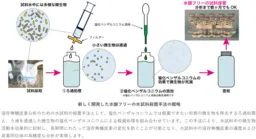
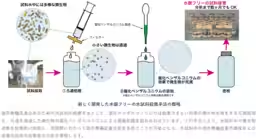
The new method integrates the use of filtration combined with benzalkonium chloride to efficiently sterilize a wide range of water samples, including both fresh and saltwater. This innovation marks a significant advancement in the quality and safety of water sample collection, facilitating international efforts to monitor climate-related changes more reliably.
Importance of the Research
Understanding the role of the ocean in carbon absorption is paramount to elucidating the global carbon cycle. Accurate assessments of dissolved inorganic carbon concentrations, especially radiocarbon (14C), require robust international collaboration among researchers. With mercury's usage being outlawed under the Minamata Convention, the development of alternative methods is critical for ongoing environmental studies.
Research Details
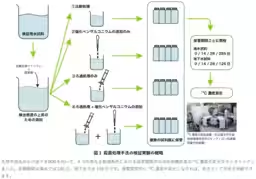
The efficacy of combining filtration with the addition of benzalkonium chloride was assessed by monitoring changes in dissolved inorganic carbon concentrations in both natural seawater and groundwater samples. The study rigorously adapted a system where water samples underwent four treatment conditions:
1. No treatment (control),
2. Addition of benzalkonium chloride only,
3. Filtration only,
4. Filtration followed by the addition of benzalkonium chloride.
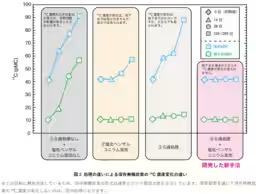
The results indicated that untreated samples exhibited significant increases in 14C concentrations due to microbial activity. While filtration alone showed some decrease, the combination method drastically reduced microbial interference and maintained stable carbon levels, thus proving its viability for preserving water samples over extended periods.
Next Steps
This promising sterilization methodology not only ensures the integrity of water samples but also stands as a significant step towards refining international standards for water sample preservation in environmental research. Continuous validation across diverse water conditions will further enhance the reliability of this method, supporting vital research into the Earth's changing climate. The implications of this advancement are substantial—expected contributions to global environmental monitoring efforts could shape future climate research protocols.
Publication Information
The results of this research are detailed in the paper titled: _Combining benzalkonium chloride addition with filtration to inhibit dissolved inorganic carbon alteration during the preservation of water sample in radiocarbon analysis_, published in Ocean Science.
Authors: Hiroshi A. Takahashi, Masayo Minami. DOI Link
This significant development highlights the pressing need to minimize environmental impact while ensuring optimal methods for scientific inquiry into our planet's critical systems.
Topics Environment)
【About Using Articles】
You can freely use the title and article content by linking to the page where the article is posted.
※ Images cannot be used.
【About Links】
Links are free to use.