



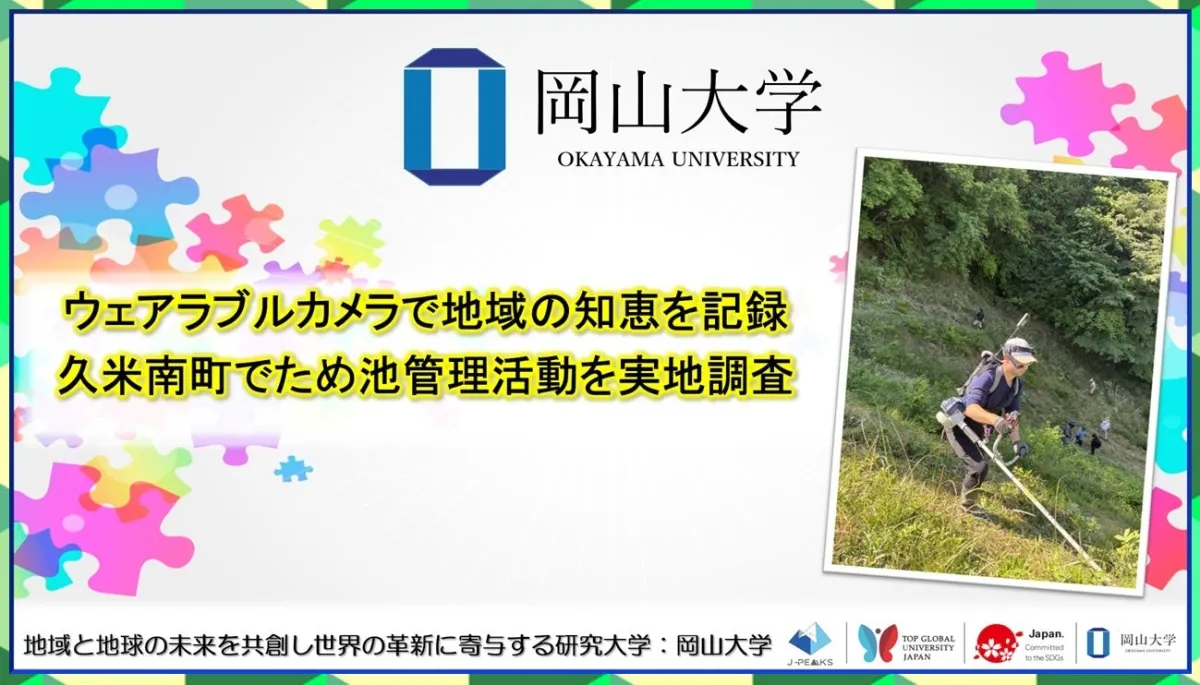
Okayama University Records Local Wisdom Through Wearable Cameras in Kumenan Town
Enhancing Local Agricultural Practices with Technology
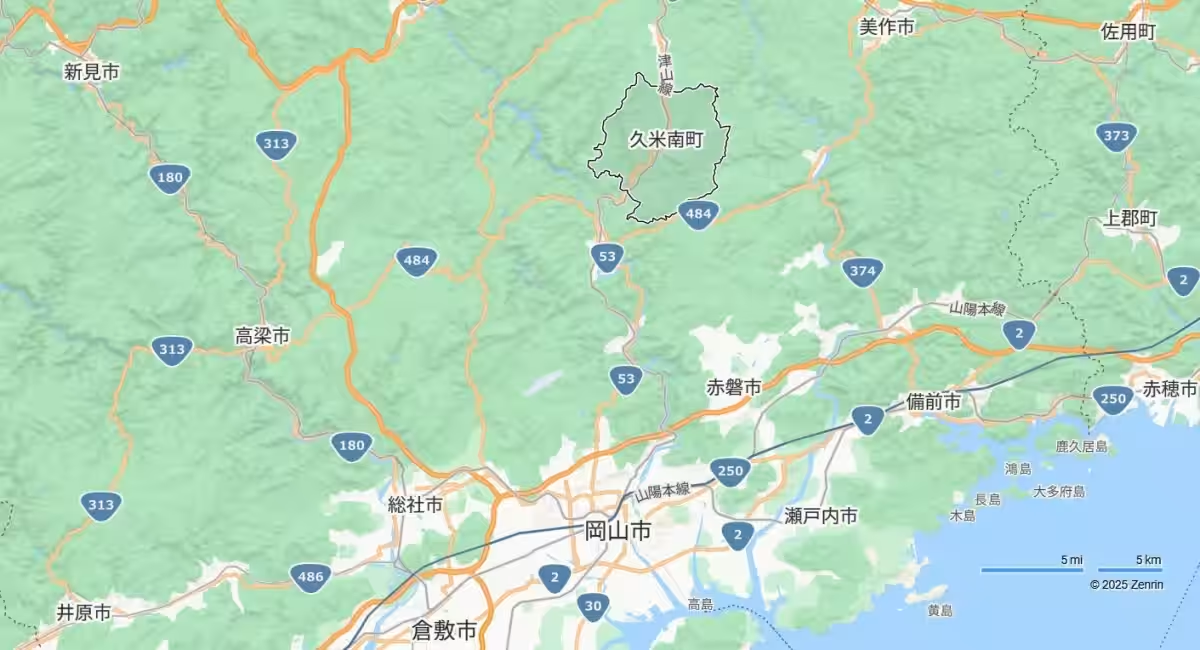
On May 17, 2026, a remarkable project organized by Okayama University in collaboration with Okayama University of Science took place in Kumenan Town, Okayama Prefecture. The initiative focused on cleaning and managing farm ponds and surrounding waterways, an essential component for maintaining local agricultural productivity and environmental safety. Under the auspices of the Toyota Foundation's program addressing population decline, experts from multi-disciplinary fields came together to examine vital community practices that are often overlooked due to demographic shifts and aging populations.
Goals of the Project
This endeavor seeks to understand and document the knowledge and methods necessary for sustainable resource management in rural areas facing depopulation. The project aligns with the broader objectives set forth by Okayama University to build new business models that support local communities through innovative practices. With continuous population decline in rural areas, ensuring the transfer of knowledge and securing participants in communal activities has become increasingly challenging.
Research Team Involvement
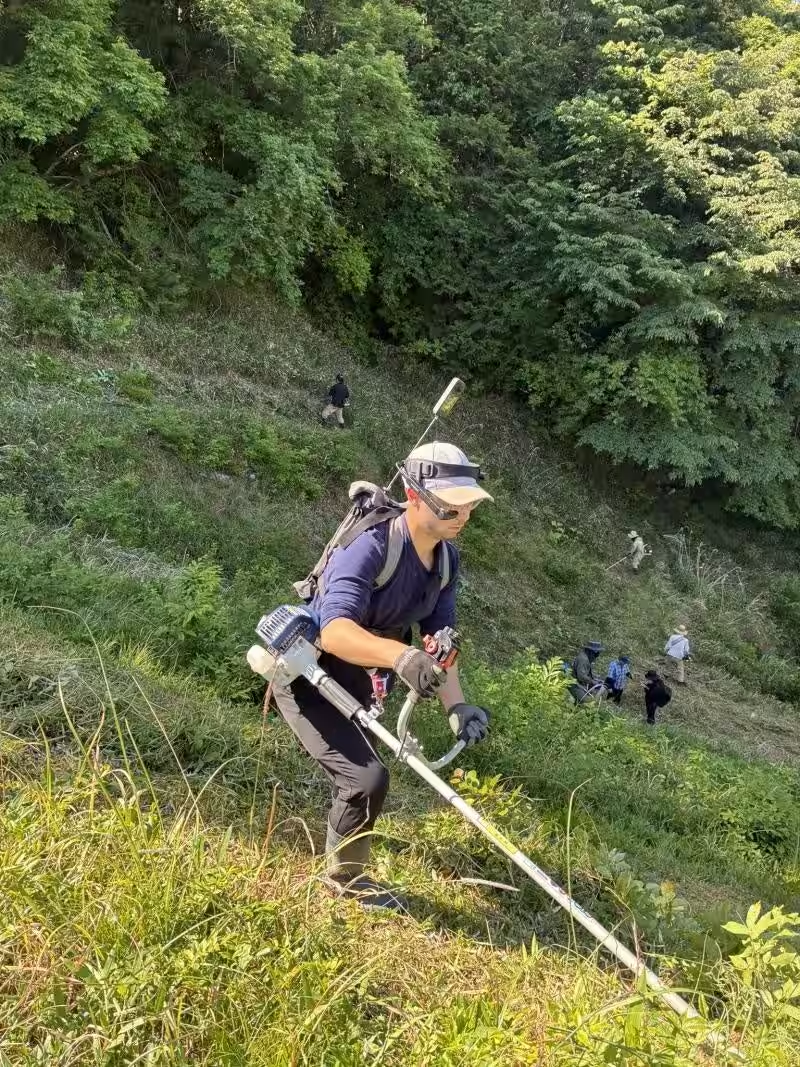
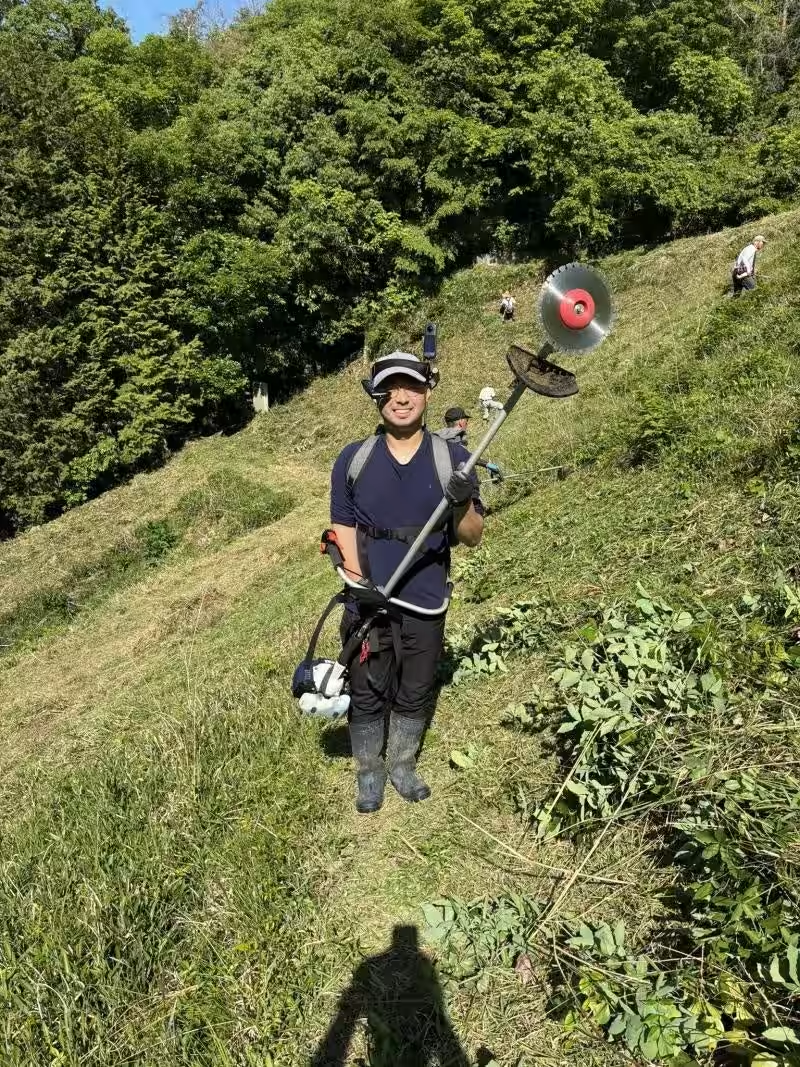
The project team included Okayama University’s Associate Professor Katsutoshi Onaka, Associate Professor Hisashi Datakai from the Faculty of Environmental Life Sciences, Professor Fumio Fukuda, and Assistant Professor Saku Onishi of Okayama University of Science. The research utilized cutting-edge technology, incorporating wearable cameras and 360-degree cameras to capture footage from the workers’ perspectives. This approach allows for multifaceted documentation of tasks such as grass cutting along pond banks and clearing weeds from waterways.
Importance of Waterway and Pond Management
Effective management of water resources is crucial for agriculture, disaster prevention, and quality of life. Through this project, researchers aim to transform the community's tacit knowledge—such as task execution procedures, role assignments, tool usage, and decision-making processes—into visual formats. This transformation enables better communication and understanding of local practices that are not easily conveyed through written materials alone.
Academic and Community Integration
This initiative promises to bridge academic knowledge with practical community challenges, aiming to foster sustainable development of rural areas while preserving the cultural heritage associated with these practices. Okayama University’s commitment through its J-PEAKS initiative emphasizes the vision of contributing to a sustainable future for both local and global communities. The gathered visual data will be analyzed, assisting in the creation of a digital archive and informing the development of comprehensive manuals for resource management activities.
Future Directions
Going forward, the research team plans to collaborate closely with local stakeholders, including Kumenan Town officials, to investigate sustainable resource management solutions tailored to depopulation challenges. The impact of this project is expected to catalyze the emergence of new facilitators and business models designed to support community resilience.
In conclusion, Okayama University invites everyone to look forward to more innovative partnerships as they continue to enhance community capabilities through modern technology and research collaboration. The integration of these tools not only documents vital agricultural practices but also serves to educate future generations on the importance of local knowledge preservation in the face of changing demographics.
Visual Documentation
The documentation efforts included various tasks, capturing the essence of labor executed in the fields. Images of team members utilizing the wearable cameras vividly illustrate the hands-on approach adopted in this project—an initiative that merges tradition with technological advancement to preserve the invaluable agricultural heritage of Kumenan Town.


Topics Consumer Technology)
【About Using Articles】
You can freely use the title and article content by linking to the page where the article is posted.
※ Images cannot be used.
【About Links】
Links are free to use.