



Unraveling the Mystery of Puberulic Acid: A Deep Dive into Administrative Decisions
Unraveling the Mystery of Puberulic Acid
The classification of Puberulic acid has recently sparked significant interest and concern among the public and regulatory bodies in Japan. The Consumer Affairs Agency made a disclosure decision on July 30, 2023, that left many questions unanswered regarding the origins of this classification. Nara City, Osaka, and the Ministry of Health, Labour and Welfare were involved in a spiral of documentation requests to clarify “who determined that Puberulic acid existed and on what basis.” Despite multiple approaches to uncover the truth, the current status of any administrative document outlining the reasoning behind this classification remains obscured.
The Administrative Maze
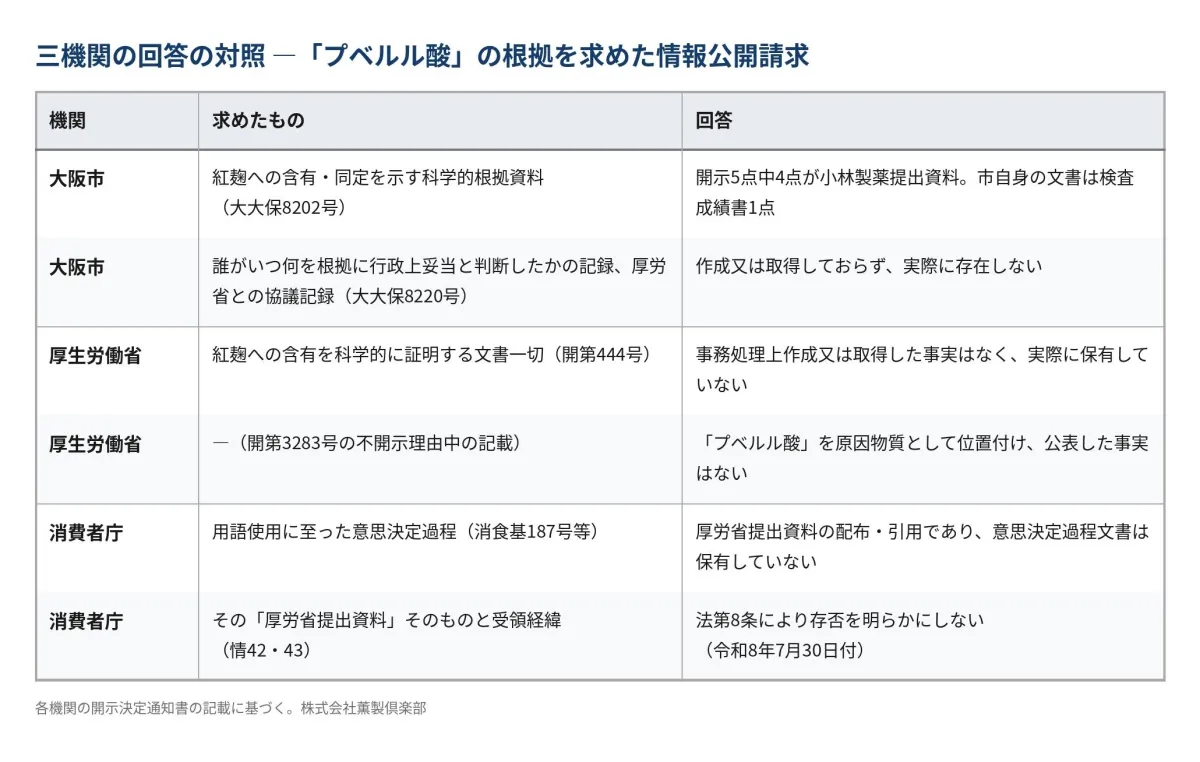
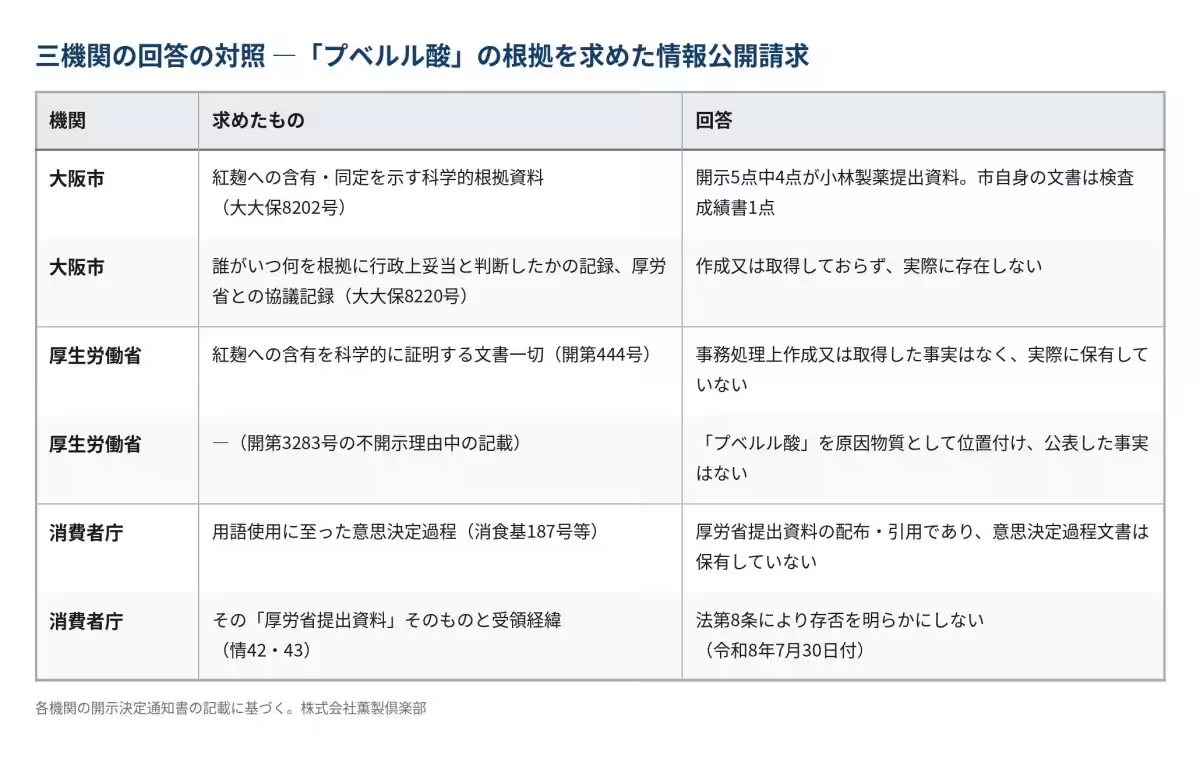
When the request for information was lodged, the Consumer Affairs Agency reported it was based on materials from the Ministry of Health. However, the Ministry countered that it holds no scientific evidence that Puberulic acid is present in red yeast rice, leading to a lack of clarity on the matter. This opened a Pandora's box of inquiries and disputes across three agencies: the Consumer Affairs Agency, the Ministry of Health, and Osaka City.
The Response from Agencies
Osaka City's response indicated that the documents it retained were submissions from the implicated company, Kobayashi Pharmaceutical Co., rather than independent studies or evidence. Of the five documents shared by the city, four originated from Kobayashi, which forwarded permissible results, leading to the realization that these were not independently verified. The singular document created by the city, titled 'Certificates of Inspection' dated March 31, 2022, fell short of scientific rigor, merely summarizing prior findings without definitive conclusions.
Simultaneously, agencies felt the pressure of requests to disclose additional documents pertaining to their discussions and results from Kobayashi. Still, they returned repeated answers indicating a lack of such records, asserting the absence of documentation indicating who determined the classification’s validity or facts underlying the decision itself.
Implications for Puberulic Acid’s Classification
The most intriguing part of this inquiry is how the designation of Puberulic acid came into being without sound scientific underpinning. During a research meeting in March 2022, it was noted that Kobayashi began discussing the existence of Puberulic acid. While their claims were represented through reports, it appears that the organizations failed to compile any substantial follow-up data to ascertain these claims scientifically.
The situation becomes even more puzzling when considering that, while there is a lack of administrative documentation, the Ministry of Health issued a report highlighting the toxicity of Puberulic acid through animal testing—a report that contradicts its earlier stance of having no evidence regarding its scientific relevance in red yeast rice, stating instead that the classification catapulted from Kobayashi's findings.
Ongoing Investigation and Future Steps
The ongoing investigation by the company Kunsei Club, located in Okayama Prefecture, highlights a critical point: the disconnect between government agencies’ reports and their operational standards for transparency and accountability. Kunsei Club has asserted that they will continue to demand clarity regarding the origins and validation of claims made about Puberulic acid.
With so much at stake regarding food safety and public health awareness, the focus remains on why no definitive document has established the classification of Puberulic acid to date. This matter underscores the intrinsic need for regulatory frameworks to ensure due diligence and thorough verification before any chemical or compound is classified in relation to consumer safety.
Conclusion
Throughout this intricate situation, it becomes clear that mere claims from one corporation cannot set the scientific precedent for regulatory actions without the backing of peer-reviewed research and governmental consensus. As the inquiry progresses, stakeholders demand the release of this information to restore public trust and solidify scientific integrity in regulatory decisions surrounding substances like Puberulic acid.
Topics Consumer Products & Retail)
【About Using Articles】
You can freely use the title and article content by linking to the page where the article is posted.
※ Images cannot be used.
【About Links】
Links are free to use.