



TM Forum Introduces a High-Reliability Solution Package for Core Networks and Defines a New Era for Autonomous Networks
A Landmark Development in Autonomous Networks by TM Forum
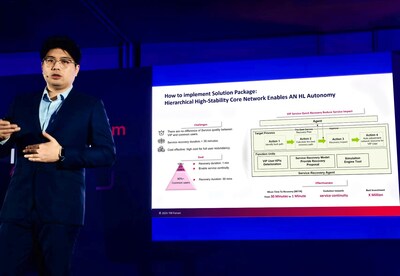
In a groundbreaking initiative, TM Forum has introduced a solution package designed to provide high reliability in core networks, heralding a new era for autonomous networks (AN). This pivotal move was showcased during the recent Innovate Asia Autonomous Networks masterclass, where Michael Wang, an expert from Huawei, discussed the intricacies of this new offering.
Understanding the Solution Package
The newly launched package focuses on key areas that are crucial for maintaining the stability of core networks. These include:
- - High-stability deployment architecture
- - Disaster recovery (DR) protocols for controlling and user planes
- - Infrastructure resilience
- - Resistance to surges in signaling traffic
- - Proactive risk assessment and service recovery strategies
This comprehensive framework leverages the Management Data Analytics Framework (MDAF) defined in the 3GPP TS 28.104 specification, facilitating systematic and robust network resilience. Additionally, by utilizing digital twin technology, the package enables closed-loop management that enhances network capabilities in extreme scenarios like signaling storms.
Addressing Signaling Storm Risks
A significant innovation within the solution package is its approach to evaluating the risk of signaling storms. By creating a virtual network environment through digital twin modeling, the package anticipates potential risks and implements proactive measures. Before a signaling storm occurs, it gathers traffic statistics, connection data, and device configuration parameters, using a simulation engine to model impacts. This process leads to accurate network capacity assessments and offers recommendations for optimization, helping operators preemptively eliminate potential failures.
Standardization Across the Industry
The solution package closely adheres to the IG1500 standards set by TM Forum, ensuring smooth integration with existing systems via standardized APIs. In his presentation, Michael Wang emphasized that this solution package provides a standardized technical implementation template, demonstrating its feasibility in ensuring core network stability within the Catalyst project. He also elaborated on optimization procedures based on one operator’s recovery strategy after a system failure. Key practices include:
- - Accurate identification of VIP users
- - Swift determination of recoverable routes
- - Quick creation of recovery solutions
These strategies aim to reduce recovery time for VIP users from 30 minutes to just 1 minute, while maintaining a 30-minute recovery timeframe for regular users. By employing differentiated service assurance policies, this solution increases network comfort for high-value users while effectively mitigating economic losses due to VIP defections.
Official Recognition of Operational Stability
By releasing this autonomous network solution package, the assurance of core network stability has officially become part of the standard scenarios outlined by TM Forum. Huawei's replicable and scalable approach to building highly stable networks equips operators with an effective tool to enhance resilience, while also offering critical support in monetizing network evaluations.
The introduction of this solution not only streamlines operational procedures within the telecom industry but also sets a new benchmark for managing the intricacies of modern network demands. As autonomous networks gain traction, TM Forum's initiative represents a significant step towards establishing robust infrastructures that can reliably meet user expectations even amidst growing complexities in network management.
Topics Telecommunications)
【About Using Articles】
You can freely use the title and article content by linking to the page where the article is posted.
※ Images cannot be used.
【About Links】
Links are free to use.