




Fukushima's Hiroo Future Pavilion Hosts Ryuichi Sakamoto's Piano Experiment
In the serene locality of Hiroo, Fukushima, a groundbreaking initiative is set to begin. The ‘Piano Returning to Nature Experiment - Part 2’ will be inaugurated at the Hiroo Future Pavilion on March 11, 2026, at 1 PM. This concept, spearheaded by Harutaro Yamazaki from Seitaro Design, commemorates the creative legacy of the late Ryuichi Sakamoto, a musician and artist who passed away in March 2023.
The experiment represents Sakamoto’s vision of social sculpture, exploring the cohabitation of nature and civilization. It aims to share Sakamoto's intellectual legacy while prompting a deeper reflection on various issues such as the recovery of Fukushima, the harmony with nature, and our coexistence with time and humanity.
Accompanying this initiative, a special website has been launched to engage the public and provide further insights into the project. As the project unfolds, there will be collaborative efforts with residents of Hiroo and local students, along with event opportunities for greater community involvement.
Title: Piano Returning to Nature Experiment - Part 2
Start Date: March 11, 2026, at 1 PM
Location: Hiroo Future Pavilion, Hiroo-machi, Fukushima Prefecture
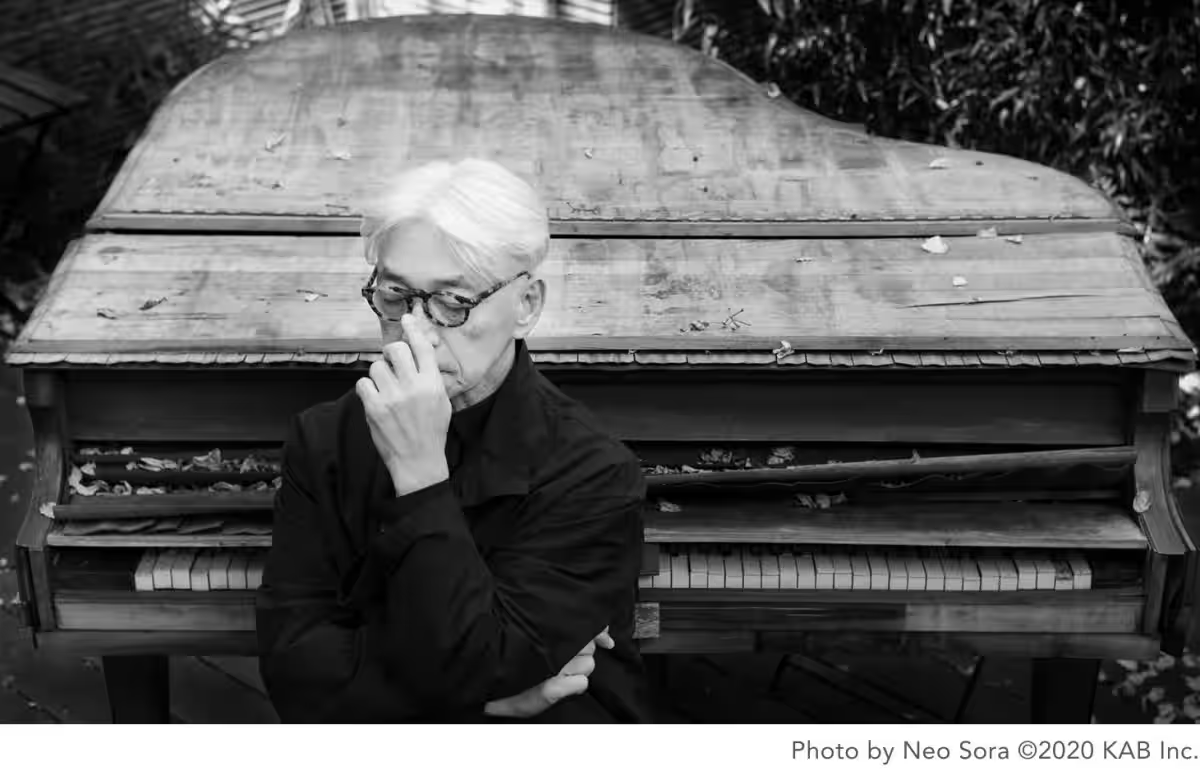
Details: The experiment is based on Sakamoto's earlier endeavor that began in Hawaii in 2014 with an old piano being placed in the garden of his New York home. Observing how the elements gradually affect the instrument over time, Sakamoto's original piano experiment is still ongoing at a friend’s home. Now, as we approach the 15th anniversary of the Great East Japan Earthquake, Yamazaki aims to further expand on Sakamoto's vision with a second piano.
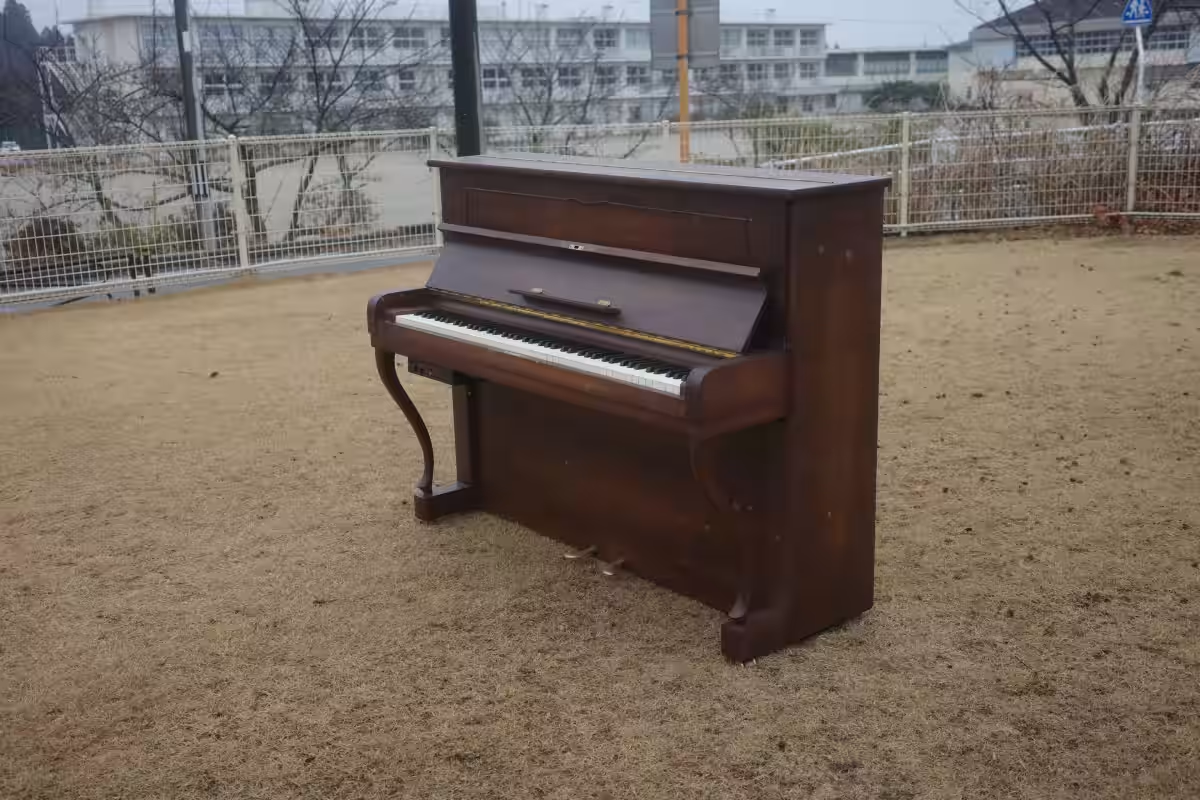
This new project will not only revive the creative dialogue Sakamoto initiated but will also serve social and public purposes, advancing cultural development for the future. The piano employed in this experiment is a 1960s STEINWAY&SONS Z114 model, which Sakamoto used for his final album, ‘12’. Placed in nature, this piano will be freed from its traditional tuning, adapting to the unique acoustics of Hiroo’s environment, ultimately returning to Mother Nature over time. This transformation should not be viewed as destruction but rather as the birth of a new 'beauty' that arises between civilization and nature.
Yamazaki expresses a desire to engage with the local community, especially with children and students, to rethink human interaction with nature over the extended duration of this process. This collaborative spirit aims to foster a shared understanding and appreciation of Sakamoto's legacy.
The experiment is organized by Seitaro Design and the Sakamoto Common organization, with cooperation from Hiroo-town, Fukushima.
The Sakamoto Common project embodies an attempt to share the legacy left by Ryuichi Sakamoto. The initiative aims to democratize his intellectual and material heritage for the benefit of future creators. For Sakamoto, the journey was more important than the destination; thus, rather than confining his works to museums, they should continue to evolve and cultivate new stories and processes long after his passing. This project is a step toward that evolving legacy.
Born in Tokyo in 1952, Sakamoto completed his graduate studies at the Tokyo University of the Arts before making his solo debut with 'Thousand Knives' in 1978. He was a founding member of YMO and received numerous prestigious awards for his contributions to music, including Academy Awards and Grammy Awards. Beyond his musical career, Sakamoto was also deeply committed to environmental and peace issues, founding the 'more trees' organization and supporting music activities for children in disaster-affected areas through initiatives like the Tohoku Youth Orchestra. His impact on both music and art continues to resonate globally.
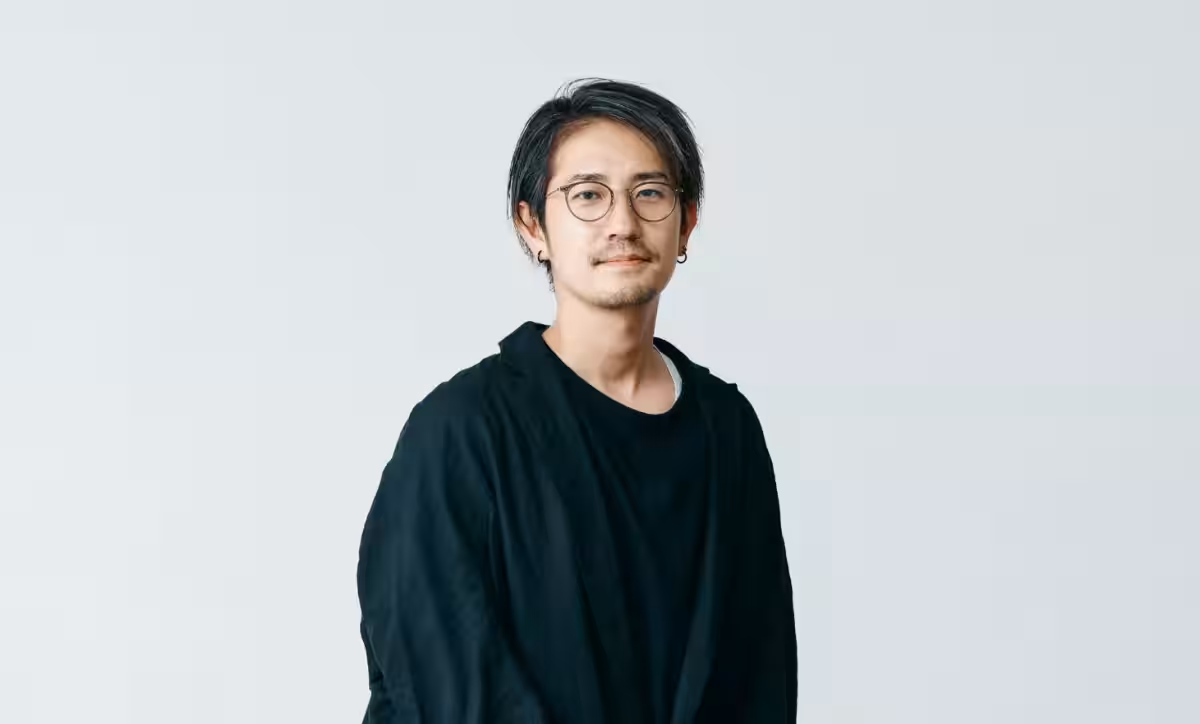
As the representative of Seitaro Design, Harutaro Yamazaki believes in the potential of design to transform society. His work spans various projects in collaboration with agencies and corporations, emphasizing the intersection of culture and community recovery, particularly in disaster-impacted areas. Yamazaki’s artistic endeavors challenge societal norms while questioning the value of silence and ambiguity in contemporary art. After creating the brand design for 'Hatago in Fukushima Hiroo,' he took the position of director for the 'Yohaku Art Fair Fukushima Hiroo,' further engaging in cultural reconstruction efforts.
The narrative unfolds further at the Hiroo Future Pavilion, inviting everyone to engage in a dialogue about reconciliation with nature and the cultural heritage of an extraordinary artist.


The experiment represents Sakamoto’s vision of social sculpture, exploring the cohabitation of nature and civilization. It aims to share Sakamoto's intellectual legacy while prompting a deeper reflection on various issues such as the recovery of Fukushima, the harmony with nature, and our coexistence with time and humanity.
Accompanying this initiative, a special website has been launched to engage the public and provide further insights into the project. As the project unfolds, there will be collaborative efforts with residents of Hiroo and local students, along with event opportunities for greater community involvement.
Overview of the Experiment
Title: Piano Returning to Nature Experiment - Part 2
Start Date: March 11, 2026, at 1 PM
Location: Hiroo Future Pavilion, Hiroo-machi, Fukushima Prefecture
Details: The experiment is based on Sakamoto's earlier endeavor that began in Hawaii in 2014 with an old piano being placed in the garden of his New York home. Observing how the elements gradually affect the instrument over time, Sakamoto's original piano experiment is still ongoing at a friend’s home. Now, as we approach the 15th anniversary of the Great East Japan Earthquake, Yamazaki aims to further expand on Sakamoto's vision with a second piano.
This new project will not only revive the creative dialogue Sakamoto initiated but will also serve social and public purposes, advancing cultural development for the future. The piano employed in this experiment is a 1960s STEINWAY&SONS Z114 model, which Sakamoto used for his final album, ‘12’. Placed in nature, this piano will be freed from its traditional tuning, adapting to the unique acoustics of Hiroo’s environment, ultimately returning to Mother Nature over time. This transformation should not be viewed as destruction but rather as the birth of a new 'beauty' that arises between civilization and nature.
Insights from Harutaro Yamazaki on the Project
Yamazaki expresses a desire to engage with the local community, especially with children and students, to rethink human interaction with nature over the extended duration of this process. This collaborative spirit aims to foster a shared understanding and appreciation of Sakamoto's legacy.
The experiment is organized by Seitaro Design and the Sakamoto Common organization, with cooperation from Hiroo-town, Fukushima.
About Sakamoto Common
The Sakamoto Common project embodies an attempt to share the legacy left by Ryuichi Sakamoto. The initiative aims to democratize his intellectual and material heritage for the benefit of future creators. For Sakamoto, the journey was more important than the destination; thus, rather than confining his works to museums, they should continue to evolve and cultivate new stories and processes long after his passing. This project is a step toward that evolving legacy.
Legacy of Ryuichi Sakamoto
Born in Tokyo in 1952, Sakamoto completed his graduate studies at the Tokyo University of the Arts before making his solo debut with 'Thousand Knives' in 1978. He was a founding member of YMO and received numerous prestigious awards for his contributions to music, including Academy Awards and Grammy Awards. Beyond his musical career, Sakamoto was also deeply committed to environmental and peace issues, founding the 'more trees' organization and supporting music activities for children in disaster-affected areas through initiatives like the Tohoku Youth Orchestra. His impact on both music and art continues to resonate globally.
About Harutaro Yamazaki
As the representative of Seitaro Design, Harutaro Yamazaki believes in the potential of design to transform society. His work spans various projects in collaboration with agencies and corporations, emphasizing the intersection of culture and community recovery, particularly in disaster-impacted areas. Yamazaki’s artistic endeavors challenge societal norms while questioning the value of silence and ambiguity in contemporary art. After creating the brand design for 'Hatago in Fukushima Hiroo,' he took the position of director for the 'Yohaku Art Fair Fukushima Hiroo,' further engaging in cultural reconstruction efforts.
The narrative unfolds further at the Hiroo Future Pavilion, inviting everyone to engage in a dialogue about reconciliation with nature and the cultural heritage of an extraordinary artist.
Topics Entertainment & Media)
【About Using Articles】
You can freely use the title and article content by linking to the page where the article is posted.
※ Images cannot be used.
【About Links】
Links are free to use.