



The Dual Role of AI and Human Interaction in Consumer Choices: Insights from JIPDEC's 2026 Survey
In a rapidly evolving digital landscape, the relationship between Artificial Intelligence (AI) and human interaction is coming to the forefront, especially in the realm of consumer decision-making. A recent study conducted by the Japan Information Economy Society Promotion Association, commonly known as JIPDEC, offers valuable insights into this dynamic, revealing that while consumers may lean towards AI for routine tasks, when it comes to emotionally significant decisions, they prefer human advice.
The JIPDEC survey gathered responses from 1,449 individuals, aged between 18 and 79, residing in Japan. The data show that more than 60% of respondents expressed a desire to consult humans for emotionally charged situations such as travel planning with loved ones or engaging in fandom activities—affectionately termed ‘oshi-katsu’ in Japanese culture. This suggests a clear delineation in consumer preference: AI is preferred for mundane tasks, while human input is sought for matters involving feelings. Such distinctions reveal a deeper psychological engagement with the decision-making process, highlighting the importance of emotional intelligence in areas where sentiment plays a crucial role.
Key Findings of the Survey
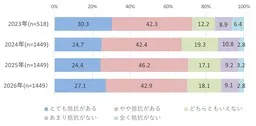
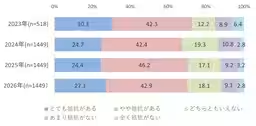
1. About 70% of respondents express discomfort in providing personal information. 35% reported they have stopped using services over privacy concerns.
2. Over 60% highlighted issues with the complexity and lack of trust in the process of providing personal information, indicating a need for simplification and clearer communication.
3. Nearly half of the respondents prefer AI for everyday decisions, but a significant number wish to rely on humans when planning important life events.
4. Notably, women in their 60s and 70s are more likely to choose AI for relationship advice, whereas their male counterparts prefer human advisors.
5. Concerns about AI mainly revolve around misinformation and a lack of established regulations, with fewer than 20% worried about job loss due to AI.
6. One in four individuals remains unaware of recent ransomware attacks, especially among younger demographics, indicating a generational gap in information awareness.
7. Internal security breaches and management failures are perceived as bigger threats to corporate trust than external attacks.
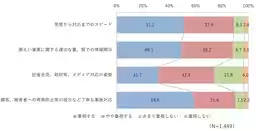
8. In case of data breaches, consumers prioritize prompt action and prevention measures over public relations responses for trust restoration.
9. Privacy technology, while contributing to enhanced consumer confidence, still faces challenges in understanding and accessibility.
These findings underscore the critical balance that consumers seek between technological assistance and human connection. There is an evident disparity in trust levels towards AI, which peaks under certain conditions—especially among older women when dealing with interpersonal issues. The survey further indicates that consumer concerns about personal information are not trivial; they reflect a substantial apprehension towards the systems handling their data.
For AI to be effectively integrated into more personal or emotional aspects of life, companies must address these privacy concerns. This necessitates creating straightforward and concise mechanisms for data sharing, improving user trust. Consumers are increasingly aware of the implications of their personal information and are keen on ensuring their data is handled responsibly. Even as they may resort to AI for everyday tasks, the emotional nuances tied to human judgment remain indispensable in guiding essential life choices.
JIPDEC's survey thus paints a detailed picture of consumer consciousness regarding digital life, emphasizing the need for clarity and trust in the use of AI technologies alongside the irreplaceable value of human connection. Those navigating this evolving landscape will need to prioritize user understanding and emotional integrity in their strategies moving forward.
About JIPDEC
Founded in 1967, the Japan Information Economy Society Promotion Association (JIPDEC) plays a pivotal role in the promotion of information technology within Japan. The organization focuses on addressing technical and legal challenges, particularly in cultivating safe environments for information utilization. They oversee the Privacy Mark system and assess trust services related to data management and information security. For more information about their activities, please visit JIPDEC's website.
This survey, conducted from January 14 to January 16, 2026, reflects the current sentiment of consumers in Japan towards AI usage in everyday life and the intricate relationship between social dynamics and technology.
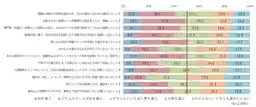
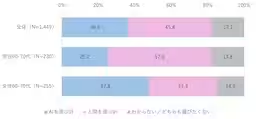
The JIPDEC survey gathered responses from 1,449 individuals, aged between 18 and 79, residing in Japan. The data show that more than 60% of respondents expressed a desire to consult humans for emotionally charged situations such as travel planning with loved ones or engaging in fandom activities—affectionately termed ‘oshi-katsu’ in Japanese culture. This suggests a clear delineation in consumer preference: AI is preferred for mundane tasks, while human input is sought for matters involving feelings. Such distinctions reveal a deeper psychological engagement with the decision-making process, highlighting the importance of emotional intelligence in areas where sentiment plays a crucial role.
Key Findings of the Survey
1. About 70% of respondents express discomfort in providing personal information. 35% reported they have stopped using services over privacy concerns.
2. Over 60% highlighted issues with the complexity and lack of trust in the process of providing personal information, indicating a need for simplification and clearer communication.
3. Nearly half of the respondents prefer AI for everyday decisions, but a significant number wish to rely on humans when planning important life events.
4. Notably, women in their 60s and 70s are more likely to choose AI for relationship advice, whereas their male counterparts prefer human advisors.
5. Concerns about AI mainly revolve around misinformation and a lack of established regulations, with fewer than 20% worried about job loss due to AI.
6. One in four individuals remains unaware of recent ransomware attacks, especially among younger demographics, indicating a generational gap in information awareness.
7. Internal security breaches and management failures are perceived as bigger threats to corporate trust than external attacks.
8. In case of data breaches, consumers prioritize prompt action and prevention measures over public relations responses for trust restoration.
9. Privacy technology, while contributing to enhanced consumer confidence, still faces challenges in understanding and accessibility.
These findings underscore the critical balance that consumers seek between technological assistance and human connection. There is an evident disparity in trust levels towards AI, which peaks under certain conditions—especially among older women when dealing with interpersonal issues. The survey further indicates that consumer concerns about personal information are not trivial; they reflect a substantial apprehension towards the systems handling their data.
For AI to be effectively integrated into more personal or emotional aspects of life, companies must address these privacy concerns. This necessitates creating straightforward and concise mechanisms for data sharing, improving user trust. Consumers are increasingly aware of the implications of their personal information and are keen on ensuring their data is handled responsibly. Even as they may resort to AI for everyday tasks, the emotional nuances tied to human judgment remain indispensable in guiding essential life choices.
JIPDEC's survey thus paints a detailed picture of consumer consciousness regarding digital life, emphasizing the need for clarity and trust in the use of AI technologies alongside the irreplaceable value of human connection. Those navigating this evolving landscape will need to prioritize user understanding and emotional integrity in their strategies moving forward.
- ---
About JIPDEC
Founded in 1967, the Japan Information Economy Society Promotion Association (JIPDEC) plays a pivotal role in the promotion of information technology within Japan. The organization focuses on addressing technical and legal challenges, particularly in cultivating safe environments for information utilization. They oversee the Privacy Mark system and assess trust services related to data management and information security. For more information about their activities, please visit JIPDEC's website.
This survey, conducted from January 14 to January 16, 2026, reflects the current sentiment of consumers in Japan towards AI usage in everyday life and the intricate relationship between social dynamics and technology.
Topics Consumer Products & Retail)
【About Using Articles】
You can freely use the title and article content by linking to the page where the article is posted.
※ Images cannot be used.
【About Links】
Links are free to use.