



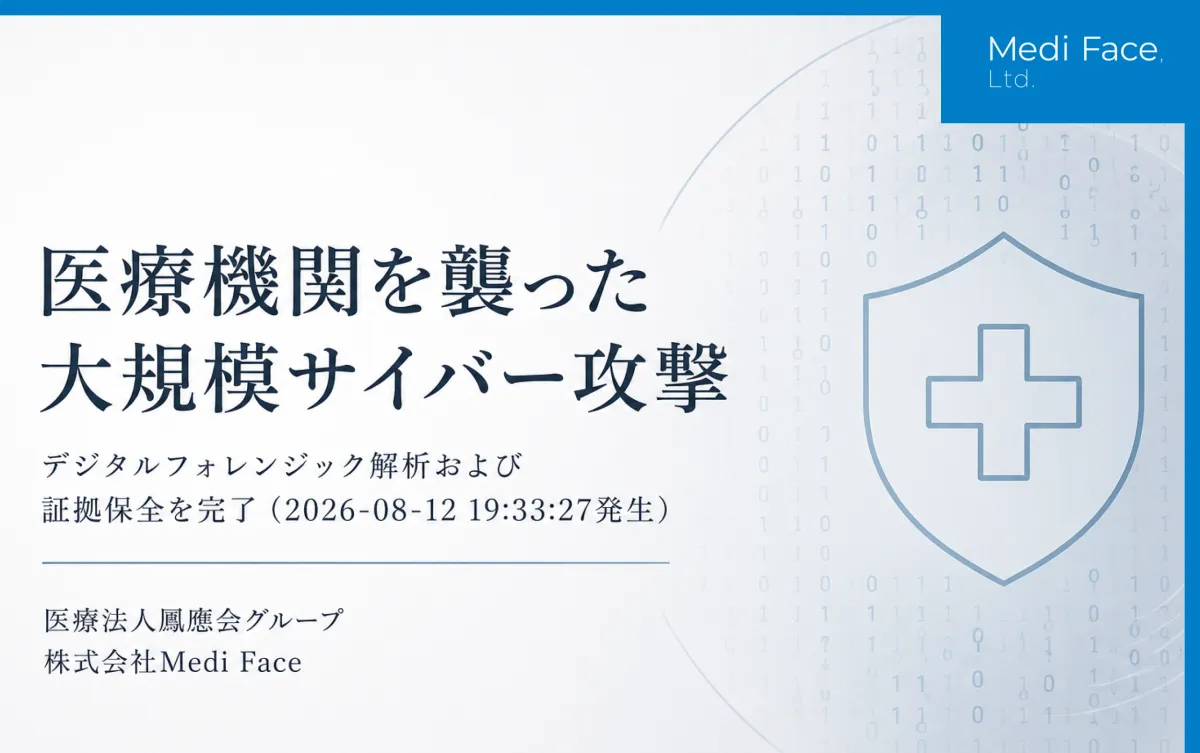
Organized Cyberattack Targets Medical Institutions in Japan: Medi Face Group Responds
Large-Scale Cyberattack on Medical Institutions
On August 12, 2026, the Medi Face Group, affiliated with the Oukou Medical Institution in Japan, detected a sophisticated cyberattack targeting its web infrastructure. This attack, initiated at 19:33 JST, involved a coordinated assault on the company's digital assets, raising concerns over the security of medical information services in the region.
Details of the Attack
The assault has been characterized as an organized cybercrime targeting not merely financial gain, but rather the social credibility and search infrastructure related to healthcare services. Medi Face has conducted prompt digital forensic analysis, managing to preserve critical evidence and technical data regarding the incident.
The perpetrators are believed to have exploited a range of malicious techniques, including the unauthorized launching of a PHP web shell and a multi-layered kill chain attack strategy that involved sophisticated measures such as:
- - Establishing ownership of Google Search Console privileges
- - Creating counterfeit pages using Cloudflare
- - Employing triple API geo-cloaking to evade detection
These maneuvers reflect a well-planned and executed operation that has been ongoing for approximately four months. The analysis revealed that this is not a case of simple ransomware or random vulnerability exploitation. Rather, it shows a targeted approach aimed at undermining the social trust associated with medical institutions and healthcare services overall.
Forensic Analysis and Legal Response
As part of the response to the attack, the group successfully completed a digital forensic analysis, overcoming attempts by the attackers to destroy evidence through file deletion. Through meticulous work, the forensic team was able to recover file system metadata and access log data that links the attack back to specific IP addresses identified within Tokyo.
Legal actions are now being prepared, including potential criminal charges for violations related to unauthorized access and corporate disruption. Moreover, the Medi Face legal team is exploring international cooperation to address the involved parties who orchestrated the attack from abroad, notably through Indonesian hosting infrastructures.
Public Report Objectives
The primary aim of publishing the details of the attack is a commitment to public safety and the prevention of further harm within the medical industry. It is crucial for stakeholders to understand the tactics employed by cybercriminals, especially in a sector so vital to public health. This report aims to serve as a resource for improving cybersecurity across the medical landscape in Japan and worldwide.
Technical Specificity of the Attack
Extensive planning has marked this cyberattack, involving more than 120 days of information gathering prior to execution. Notable tactics included:
- - Geo-cloaking via mobile access from Indonesia: Criminals ensured that only certain IPs were guided to malicious content while shielding other access.
- - Utilizing Cloudflare Pages for creating spam sites: They masqueraded under trusted brand names to mislead users searching for medical information.
- - Coordinated communications through encrypted channels: The attackers shared updates and tasks within secure environments to manage the assault effectively.
Such behaviors represent a severe breach of trust, targeting healthcare infrastructure at its core.
Call to Action for Security Experts
Given the meticulous planning behind this attack, it is plausible that the same group may target additional healthcare institutions in Japan and beyond. The Medi Face team seeks collaboration with global security experts to investigate related cases of cybercrime and share knowledge on defensive strategies. Input on the attack’s mechanics and potential weaknesses are welcomed.
Contact Information
For additional insights or to report related observations, please reach out via email: [email protected], and reference report number MF-2026-0812. Contributions for protective research, education, or defensive strategies are encouraged and welcomed, with proper citation required if shared.
In summary, this incident highlights the urgent need for cybersecurity awareness and preparedness within the healthcare sector, underscoring the importance of maintaining integrity and safety in medical information systems.
Topics Health)


【About Using Articles】
You can freely use the title and article content by linking to the page where the article is posted.
※ Images cannot be used.
【About Links】
Links are free to use.