



Quanmatic and ROHM: Enhancing Semiconductor Manufacturing with Quantum Technology
Quanmatic and ROHM Revolutionize Semiconductor Production
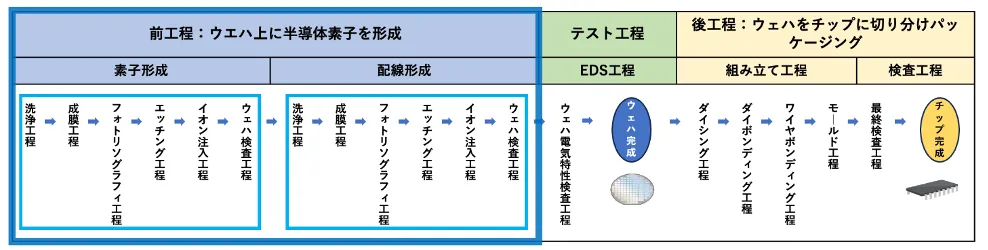
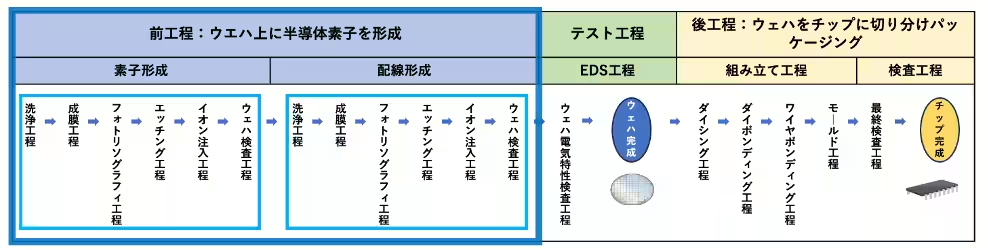
The collaboration between Quanmatic and ROHM marks a significant advancement in semiconductor manufacturing, specifically in the upstream processes. Starting January 2026, a new optimization calculation system powered by quantum technology will be operational at ROHM's Lapis Semiconductor facility in Miyazaki, Japan. This implementation has successfully improved production efficiency by 3%.
Building on EDS Process Success
In previous collaborations, Quanmatic and ROHM focused on optimizing the EDS (Electrical Die Sorting) process, which is crucial for ensuring the reliability and yield of semiconductor devices. Their efforts led to the reduction of setup losses by a remarkable 40%, demonstrating the potential of quantum technology in the manufacturing pipeline. Drawing from these experiences, the companies worked on extending the application of quantum technology to more complex upstream processes, which they began exploring with a prototype in 2025.
The Challenges of Upstream Processes
One of the major challenges in upstream semiconductor processes is the higher number of operational steps involved compared to the EDS process. Additionally, the variability in conditions across different manufacturing phases adds layers of complexity. As such, achieving overall optimization within these processes has been a formidable task, often leading to bottlenecks.
Overview of Quantum Technology Implementation
In the upstream production phase, decisions must consider hundreds of factors, including equipment, processing conditions, order of operations, deadlines, and volumes. Automating this complex decision-making process allows for timely production planning, significantly enhancing efficiency. Moreover, the semiconductor manufacturing process often features intricate steps that are not visually verifiable, making it essential to have strict management of various constraints. The newly designed optimization system integrates a wide range of conditions, leveraging ROHM's accumulated knowledge and data to formulate the best production plans for the Miyazaki facility.
Starting in January 2026, this technology will be utilized fully, aligning closely with operational realities.
Impact and Future Expansion
The introduction of the optimization calculation system enables the factory to automatically compute the best processing sequences of lots and equipment, adjusted at regular intervals based on changing conditions. This innovation has reduced waiting times caused by human and material delays, resulting in a 3% increase in wafer production.
Looking ahead, ROHM and Quanmatic aim to expand this quantum technology implementation to other processes and facilities within the ROHM Group, focusing on improving productivity and reinforcing stable supply chains in semiconductor manufacturing.
About Quanmatic
Founded in Tokyo, Japan, Quanmatic is a startup that employs advanced algorithms combining quantum and classical computing to solve intricate business challenges. With Professor Nozomu Togawa from Waseda University as the Chief Scientific Officer, the company capitalizes on intellectual property derived from quantum and classical computing research, providing practical optimization solutions independent of hardware. Their software, characterized by high scalability, is designed for cross-industry application, accelerating the societal implementation of quantum technology while supporting industrial advancement and innovative decision-making.
Topics Consumer Technology)
【About Using Articles】
You can freely use the title and article content by linking to the page where the article is posted.
※ Images cannot be used.
【About Links】
Links are free to use.