



New Insights into Dry Eye Treatment: NEt-3IB Compound from Okayama University Shows Promise
New Possibilities for Dry Eye Treatment at Okayama University
A collaborative research team between Baylor College of Medicine in Houston, USA, and Okayama University in Japan has made significant strides in developing a new treatment for dry eye. The focus of their study revolves around a novel rexinoid compound named NEt-3IB which has demonstrated the ability to suppress inflammation and possibly restore the stability of the ocular surface when exposed to dry, windy environments that induce dry eye symptoms.
The Mechanism of Action
The NEt-3IB compound is known to activate the retinoid X receptor alpha (RXRα) pathway, which plays a crucial role in mediating the anti-inflammatory effects within the macrophages present on the eye's surface. By activating this pathway, the resident macrophages maintain their nature, thereby preventing the expression of inflammation-related genes and preserving the corneal barrier function. Additionally, the compound promotes an increase in the area of conjunctival goblet cells, which are integral to maintaining moisture on the ocular surface.
This innovative approach marks a departure from conventional treatments, such as steroidal medications, by potentially introducing a new mechanism of action that could greatly improve the outcomes for patients suffering from dry eye syndrome.
Clinical Implications
NEt-3IB's unique qualities stem from its design aimed at overcoming the challenges posed by previous rexinoid compounds, which typically had high lipid solubility but limited solubility in water. The careful development of NEt-3IB signifies a noteworthy advancement in eye drop formulation, addressing the crucial gap of water solubility, which is vital for effective therapeutic application.
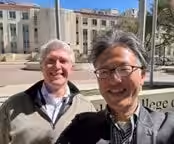
Hiroki Kakuta, a research professor at Okayama University, expressed his excitement about this research. He stated that it began when Professor Pflugfelder and Dr. Alam from Baylor College of Medicine showed interest in their compound for collaborative research. Kakuta emphasized the challenges and importance of developing reliable eye medications through this experience and acknowledged the significant contributions of his team, including Dr. Yuta Takamura, who facilitated obtaining the compound used in this research.
Recent Publications
The research findings have been documented in a published paper titled "Rexinoid NEt-3IB Promotes Resident Macrophage Gene Expression and Mitigates Desiccation-Induced Ocular Surface Disease" in the journal Investigative Ophthalmology & Visual Science. The research team comprised authors from both Baylor College of Medicine and Okayama University, validating an international effort in addressing ocular health issues.
As environmental stresses, aging, and malnutrition can compromise the body's inherent regenerative and anti-inflammatory mechanisms, the results of this study present a groundbreaking treatment strategy for combating dry eye syndrome.
Future Research Directions
The implications of this study could extend beyond dry eyes to other ocular surface diseases associated with inflammation, pointing towards a versatile application of NEt-3IB in ophthalmic treatments. As further research ensues, there is hope that NEt-3IB can pave the way for new therapeutic options that are more effective and accessible to patients suffering from various ocular surface conditions.
This discovery, made public on July 31, 2026, aligns with the continuing advancements in medical research that aim to enhance the quality of life of individuals suffering from chronic ailments. The collaborative effort between Okayama University and Baylor College of Medicine exemplifies the global pursuit of innovative solutions in healthcare.
For more detailed information about ongoing research or inquiry, please visit the respective university websites.
Topics Health)
【About Using Articles】
You can freely use the title and article content by linking to the page where the article is posted.
※ Images cannot be used.
【About Links】
Links are free to use.