




Strategic Funding Approaches to Combat Wage-Related Bankruptcy in Japan
Strategic Funding Approaches to Combat Wage-Related Bankruptcy in Japan
In 2026, small and medium-sized enterprises (SMEs) in Japan are grappling with unprecedented wage increases amidst soaring inflation, creating a dual cost burden that presents serious challenges. The recent survey conducted by the Financial Agency Support PLC, operating out of Minato City, Tokyo, targeted 306 business owners across the nation who secured funding within the last three years. The findings reveal critical insights into how companies can navigate these turbulent waters.
The Funding Landscape: A Closer Look at Business Needs
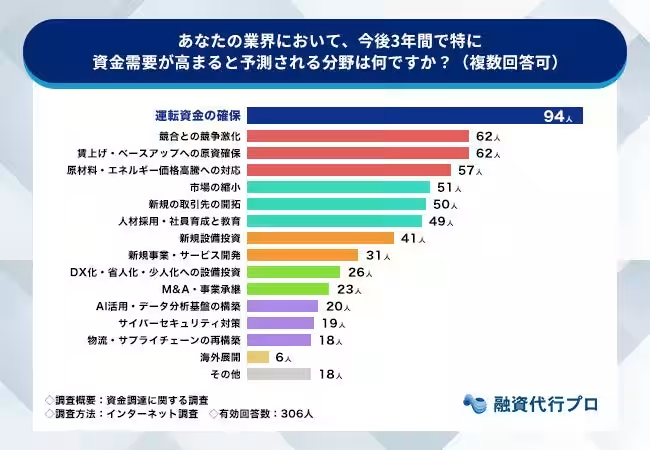
The survey demonstrated that over 20% of the respondents indicated an urgent need for funding to cover wage increases and base salary adjustments, a figure surpassing the 18.6% who are primarily concerned with rising energy prices. This shift highlights a significant challenge confronting many firms in the current economic environment. Compounding the issue, many business leaders report a lack of positive evaluation regarding their future growth potential, creating hurdles in securing necessary funding.
1. The Impact of Rising Labor Costs on Key Industries
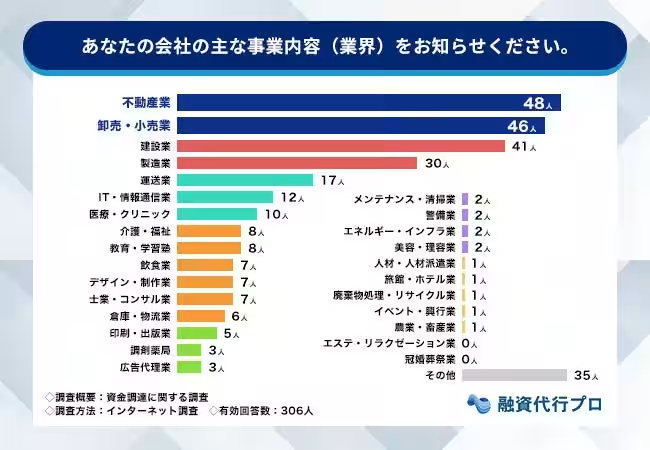
The sectors that were most represented in the survey include real estate (15.7%), wholesale and retail trade (15.0%), and construction (13.4%), collectively accounting for 44.1% of the total participants. These industries frequently combine capital-intensive operations with labor-intensive requirements. As minimum wages rise and labor shortages exacerbate, the impact of increasing labor costs is particularly pronounced, threatening the viability of many SMEs.
2. Significant Funding Demands for Wage Adjustments
A striking 20.3% of respondents foresee that the need for funding will be predominantly directed towards supporting wage increases and base pay adjustments over the next three years. Notably, this figure eclipses the concern for raw material and energy price surges, emphasizing a widespread awareness of the need to preemptively address labor costs. Many businesses, particularly in the construction and retail sectors, fear staff attrition if wage adjustments are not made, underlining the precariousness of their situations.
3. Discrepancies in Evaluation Criteria as Barriers to Funding
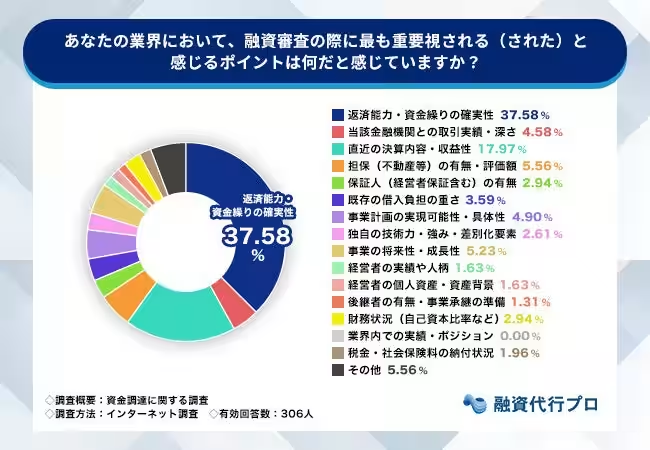
Wage increases should ideally be regarded as investments in future growth, yet current lending standards often fail to adequately consider long-term growth potential. The survey indicated that 37.6% of business leaders prioritize the evaluation of repayment capacity during loan assessments, while a mere 5.2% feel that their growth potential is being properly evaluated. This dissonance serves as a roadblock, especially for industries like construction, where the benefits of investments in human capital may not be realized until much later.
4. Shifting Evaluation Criteria in 2026
An anticipated solution is the implementation of the “Law for Promoting Business-Focused Lending” set to take effect in May 2026. This legislation will allow lenders to assess business value based on criteria such as technology, know-how, customer base, and human resources instead of relying solely on property collateral or personal guarantees. This legislative shift is expected to validate wage increases as essential investments rather than expenditures.
However, a significant number of business leaders (27.1%) highlighted that preparing the necessary documentation for evaluations is a substantial hurdle. Properly articulating and quantifying future business potential is critically challenging.
5. A New Era of Lending
The changes in the lending landscape can be likened to a transition from traditional examination methods that focus rigidly on results to more holistic measures that consider potential. If a company can present a compelling narrative about its operations, similar to a self-recommendation for a university, it stands a better chance of securing the needed funding, regardless of past performance metrics.
Conclusion
Kotaro Okajima, CEO of Financial Agency Support PLC, encapsulates the urgency of the situation: "Wage increases are no longer just aspirational goals; they are vital for business continuity. However, throughout the lending process, historical financial data tends to overshadow future investment prospects, resulting in a troubling paradox. The upcoming legislative changes should help shift perspectives towards valuing business potential. It's essential for businesses to transparently convey their worth to financial institutions. Many entrepreneurs face significant challenges alone, with some reporting a lack of advisors. Early engagement with expert perspectives to construct a strategic funding framework is crucial to stave off wage-induced bankruptcies."
This article sheds light on the pressing need for shifts in funding practices to ensure that companies can invest in their greatest asset—human resources—while managing the financial complexities of our modern economic landscape.



Topics Business Technology)
【About Using Articles】
You can freely use the title and article content by linking to the page where the article is posted.
※ Images cannot be used.
【About Links】
Links are free to use.