



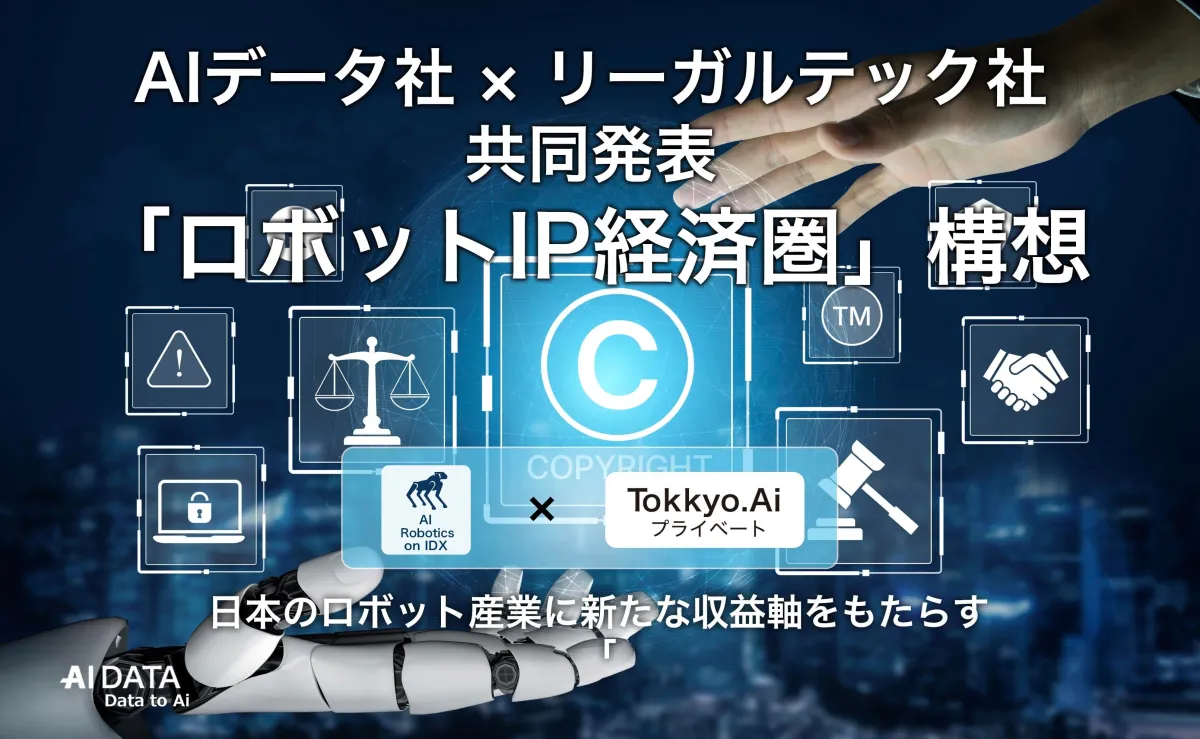
AI Data and Legal Tech Unveil New Revenue Model for Japan's Robotics Industry
AI Data and Legal Tech Join Forces
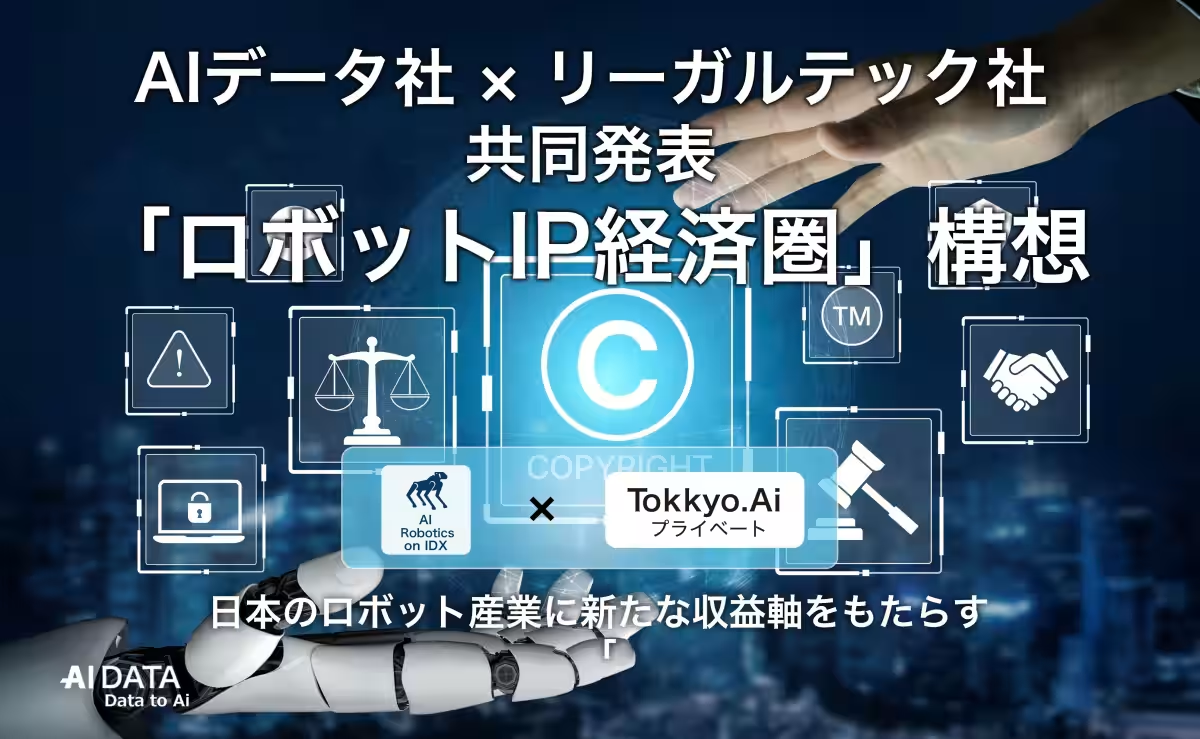
In a groundbreaking collaboration, AI Data Corporation and Legal Tech Corporation announced their ambitious project, the "Robot IP Economy." This initiative is set to revolutionize Japan's robotics industry by providing a new revenue model through the integration of AI, intellectual property, and SaaS technology.
The essence of the Robot IP Economy lies in its innovative approach to leveraging AI for extracting insights, standardizing intellectual property templates, and providing SaaS licensing. The goal is to transform robotics technology into a sustainable revenue-generating asset.
The Background
Japan stands as a powerhouse in robotics, renowned for its advanced control systems and implementation capabilities. Despite this, many robotics companies have struggled to systematically organize their accumulated technical know-how as intellectual property—resulting in a failure to capitalize on these valuable assets.
Key intangibles such as control algorithms, operation manuals, design templates, and training data often remain confined to in-house use, making it difficult to organize them as intellectual property. Recognizing these challenges, AI Data and Legal Tech shared a vision for creating a comprehensive framework that incorporates AI insight extraction into the intellectual property process, leading to the introduction of the Robot IP Economy.
Identifying the Challenges
Several challenges plague the evolution of robotics technology into intellectual property assets:
- - Lack of monetization of advanced robotics technologies and insufficient conveyance of their value.
- - Difficulty in expanding developmental achievements into a service model.
- - Obstacles in organizing and reusing intangible assets, making direct revenue generation challenging.
- - A heavy burden associated with organizing documentation needed for technical evaluations and due diligence.
The Solution: Key Features of the Model
To address these issues, the following key components of the Robot IP Economy have been identified, allowing robotics technology to be sustainably utilized as a revenue-generating asset:
- - AI Kōmei on IDX: This system organizes development records and operational logs, aiding in the structuring and abstraction of vital knowledge materials.
- - Tokkyo.Ai: It furnishes support in developing control algorithms and design templates as standardized intellectual property templates, facilitating patenting when necessary.
- - VDR Trace Management: It ensures the secure management of usage records for client companies, creating an environment conducive for technical evaluation and comparative assessments.
- - ROI Visualization: This aspect organizes the useful performance data and profitability of templates to serve as explanation material for investors and financial institutions.
- - Technical Evaluation Data Room: It allows safe sharing of technical information with precautions against contamination, suitable for uses in M&A, financing, and technical due diligence.
By incorporating these features, the Robot IP Economy will establish an IP life cycle where once-developed control technologies can be repeatedly utilized.
Anticipated Outcomes
The anticipated outcomes from the implementation of this project are significant:
- - Consolidation and templating of proprietary robotic technologies will lead to the formation of reusable intellectual property assets.
- - By enabling SaaS-type external services, it will foster a new revenue model for medium and small robotics firms.
- - The systematic organization of necessary information for technical evaluations and due diligence will alleviate the burdens associated with financing and collaborations.
- - Progress will be made in accumulating standardized operations and control know-how specific to different industries, leading to an overall enhancement in the efficiency of robotic development.
Target Industries and Future Development
The Robot IP Economy framework will gradually extend to the following robotics sectors:
- - Collaborative robots for the automotive parts manufacturing.
- - Monitoring robots in hospitals and caregiving facilities.
- - Transport and inventory robots in warehouses and logistics centers.
- - Inspection and cleaning robots for plant facilities.
- - Service and delivery robots in dining establishments.
Each sector will be provided with suitable templates, assisting the commercialization of robotics through SaaS licensing. The intention is to continue implementing these frameworks domestically while preparing for potential expansions into international markets.
About AI Data Corporation
Company Overview:
- - Name: AI Data Corporation
- - Established: April 2015
- - Capital: 1 billion yen (with a capital reserve of 1.525 billion yen)
- - CEO: Takahito Sasaki
- - Location: Toranomon 5-1-5, Metro City Kamiya-cho Building 4F, Minato-ku, Tokyo
- - URL: https://www.aidata.co.jp/
AI Data has developed its business by protecting and utilizing companies' and individuals’ data assets for over two decades. Trusted by over 10,000 companies and 1 million customers, it has achieved the No.1 sales volume for 16 consecutive years as recognized by the BCN Awards. Its data ecosystem business encompasses aspects such as data sharing, backup, recovery, migration, and deletion.
About Legal Tech Corporation
Company Overview:
- - Name: Legal Tech Corporation
- - Established: March 2021
- - Capital: 3.8 billion yen (including capital reserve)
- - CEO: Tomoyuki Hirai
- - Location: Toranomon 5-13-1, Toranomon 40 MT Building 4F, Minato-ku, Tokyo
- - URL: https://www.legaltech.co.jp/
Legal Tech specializes in the development and provision of platforms such as the patent research and invention extraction platform "MyTokkyo.Ai," the in-house AI platform "AI IPGenius," and joint development support platform "Legal Tech VDR." This collaboration marks an exciting step toward redefining the financial landscape of Japan's robotics industry.
Topics Consumer Technology)
【About Using Articles】
You can freely use the title and article content by linking to the page where the article is posted.
※ Images cannot be used.
【About Links】
Links are free to use.