



NTT East and Tokyo Form Strategic Partnership for Wi-Fi Expansion in Public Phone Booths
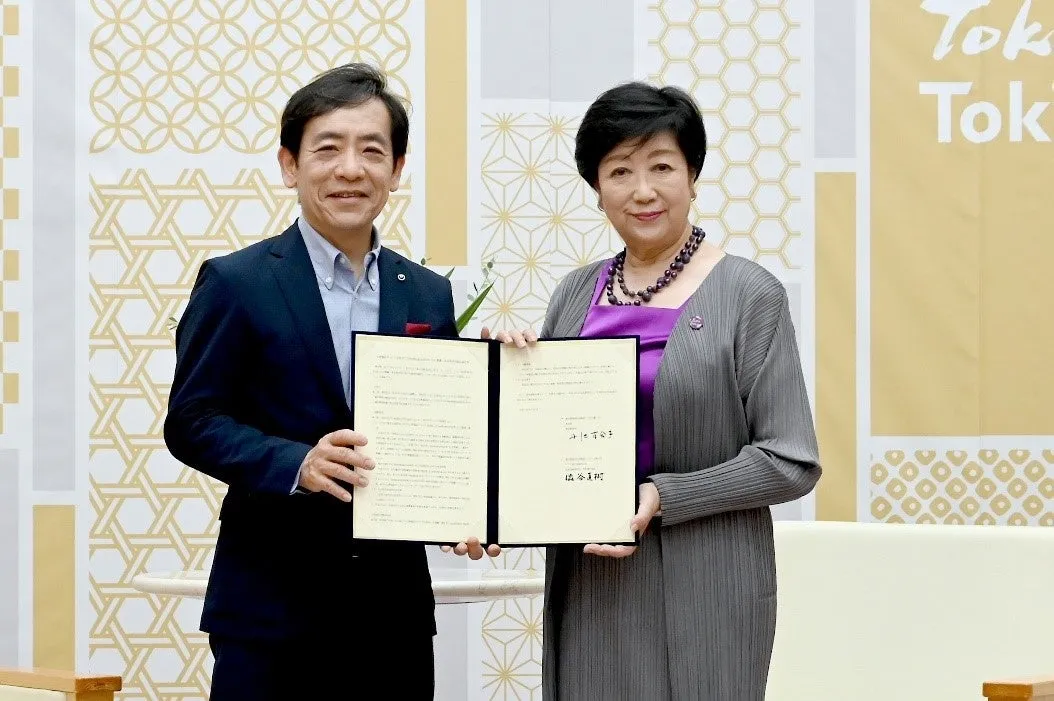
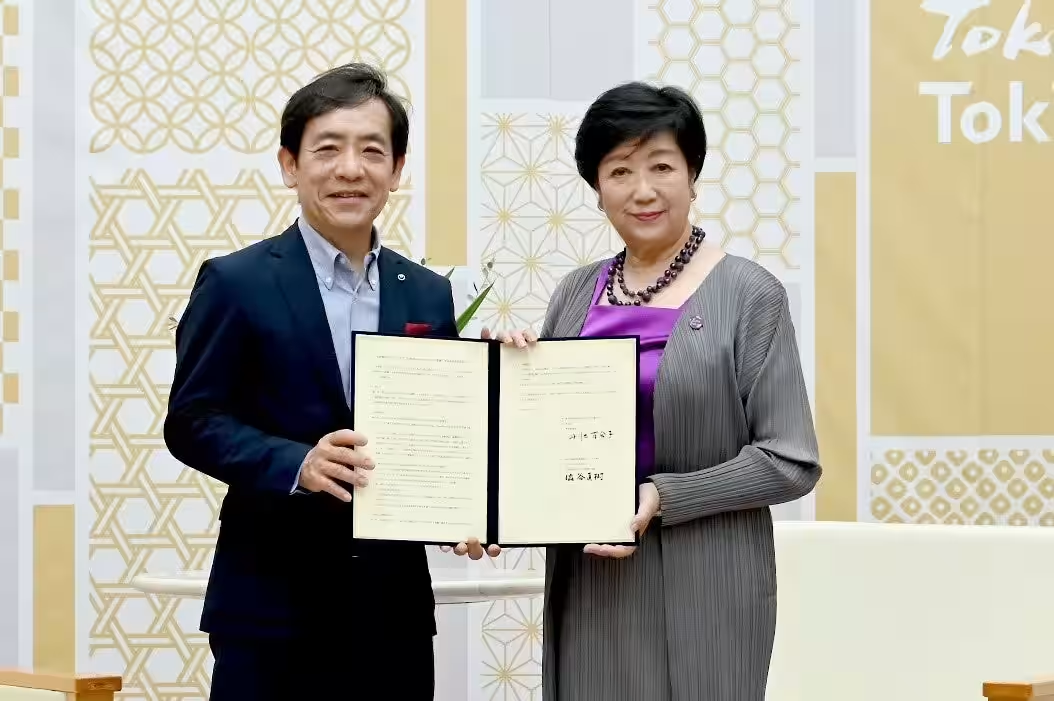
In a significant advancement for urban connectivity, NTT East Japan Corporation has entered into a strategic partnership with the Tokyo Metropolitan Government. This collaboration focuses on enhancing Wi-Fi access in public phone booths, specifically implementing the OpenRoaming standard, which ensures secure and seamless connectivity for users. The agreement, officially signed on August 27, 2025, by Tokyo's Governor Yuriko Koike and NTT East's President Naoki Shibuya, aims to expand Wi-Fi services across Tokyo from 2025 to 2028 under the 'Connected Tokyo' initiative.
The primary goal of this partnership is to enhance the Wi-Fi infrastructure in Tokyo by utilizing existing public phone booths. Here's what the agreement entails:
Governor Koike highlighted the importance of this collaboration as part of Tokyo's broader 'Connected Tokyo' plan. She stressed that having Wi-Fi in public phone booths could play a crucial role in maintaining communication during disasters and facilitate better service for visitors to the city. Koike mentioned that this effort would grow the total number of Wi-Fi installations managed by the Tokyo Government to about 3,600, effectively tripling the current infrastructure.
On the corporate side, President Shibuya emphasized the significance of repurposing public phone booths beyond their traditional role. They will now serve as vital communication hubs not only in times of emergencies but also in everyday scenarios. The OpenRoaming compliance will offer a more comfortable and effective communication environment for all users.
This initiative goes hand in hand with the 'Tokyo 2050 Strategy', which encompasses digital transformation as one of its key pillars. The project is not just about connectivity but also symbolizes a forward-thinking approach to urban development, blending technology with public service. The integration of OpenRoaming into the public space will potentially make Tokyo a leading example of smart urban environments, meeting the needs of a digitally connected society.
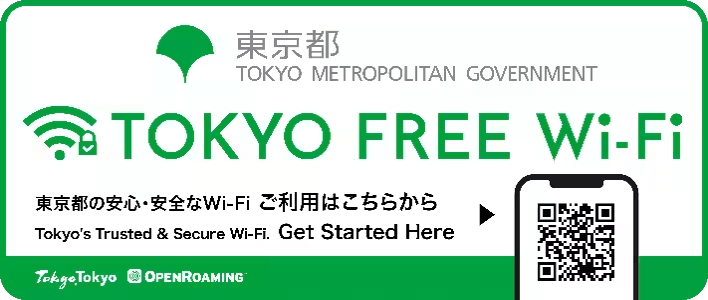
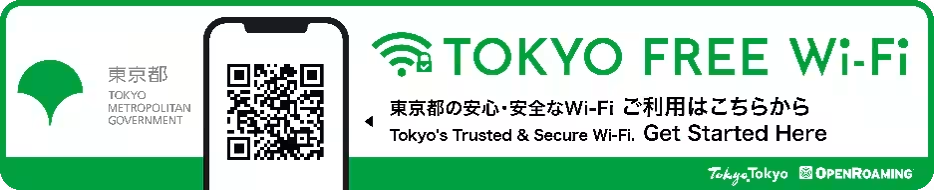
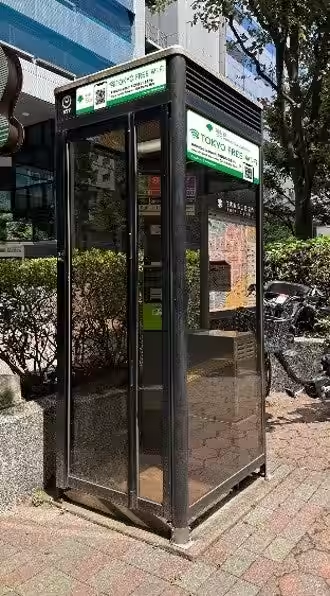
The stickers indicating the OpenRoaming Wi-Fi availability on the public phone booths will serve as a visible reminder of this initiative. Users can easily identify these locations and enjoy the benefits of high-speed internet access, ensuring that Tokyo remains a connected and accessible city for all its residents and visitors.
As part of its ongoing efforts, the Tokyo Digital Services Bureau will continue to monitor and enhance the deployment of these services. A dedicated team is in place to support any inquiries and provide assistance to those interested in leveraging these new Wi-Fi spots.
By transforming public phone booths into modern communication hubs, the partnership between NTT East and the Tokyo Government aims to not only enhance connectivity but also foster a safer and more informed community, ready to meet the challenges of the future.

Objectives of the Agreement
The primary goal of this partnership is to enhance the Wi-Fi infrastructure in Tokyo by utilizing existing public phone booths. Here's what the agreement entails:
- - Wi-Fi Installation: Over the next three years, around 1,500 public phone booths will be equipped with OpenRoaming-compatible Wi-Fi, primarily in areas with high foot traffic such as major stations and parks. This will significantly expand the existing public Wi-Fi network across the city.
- - Awareness Campaign: The Tokyo Metropolitan Government will undertake promotional efforts to educate the public about the availability and benefits of OpenRoaming Wi-Fi, focusing on both disaster preparedness and tourism.
- - Disaster Response Enhancement: NTT East will leverage its disaster research capabilities to improve communication resilience in emergency situations, ensuring reliable connectivity during crises.
Significance of the Partnership
Governor Koike highlighted the importance of this collaboration as part of Tokyo's broader 'Connected Tokyo' plan. She stressed that having Wi-Fi in public phone booths could play a crucial role in maintaining communication during disasters and facilitate better service for visitors to the city. Koike mentioned that this effort would grow the total number of Wi-Fi installations managed by the Tokyo Government to about 3,600, effectively tripling the current infrastructure.
On the corporate side, President Shibuya emphasized the significance of repurposing public phone booths beyond their traditional role. They will now serve as vital communication hubs not only in times of emergencies but also in everyday scenarios. The OpenRoaming compliance will offer a more comfortable and effective communication environment for all users.
Future Implications
This initiative goes hand in hand with the 'Tokyo 2050 Strategy', which encompasses digital transformation as one of its key pillars. The project is not just about connectivity but also symbolizes a forward-thinking approach to urban development, blending technology with public service. The integration of OpenRoaming into the public space will potentially make Tokyo a leading example of smart urban environments, meeting the needs of a digitally connected society.
The stickers indicating the OpenRoaming Wi-Fi availability on the public phone booths will serve as a visible reminder of this initiative. Users can easily identify these locations and enjoy the benefits of high-speed internet access, ensuring that Tokyo remains a connected and accessible city for all its residents and visitors.
As part of its ongoing efforts, the Tokyo Digital Services Bureau will continue to monitor and enhance the deployment of these services. A dedicated team is in place to support any inquiries and provide assistance to those interested in leveraging these new Wi-Fi spots.
By transforming public phone booths into modern communication hubs, the partnership between NTT East and the Tokyo Government aims to not only enhance connectivity but also foster a safer and more informed community, ready to meet the challenges of the future.
Topics Telecommunications)
【About Using Articles】
You can freely use the title and article content by linking to the page where the article is posted.
※ Images cannot be used.
【About Links】
Links are free to use.