



Ad-Dice and T2 Launch Innovative Experiment to Combat Driver Drowsiness
Innovative Collaboration to Enhance Driver Safety
The logistics sector has been grappling with a significant shortage of drivers, a situation exacerbated by increasing demand for transportation services. To tackle this issue, Ad-Dice and T2 have teamed up to conduct a pivotal experiment aimed at monitoring driver drowsiness using advanced AI technology. This initiative not only seeks to improve safety but also highlights the integration of cutting-edge technology in the transportation industry.
The Partners
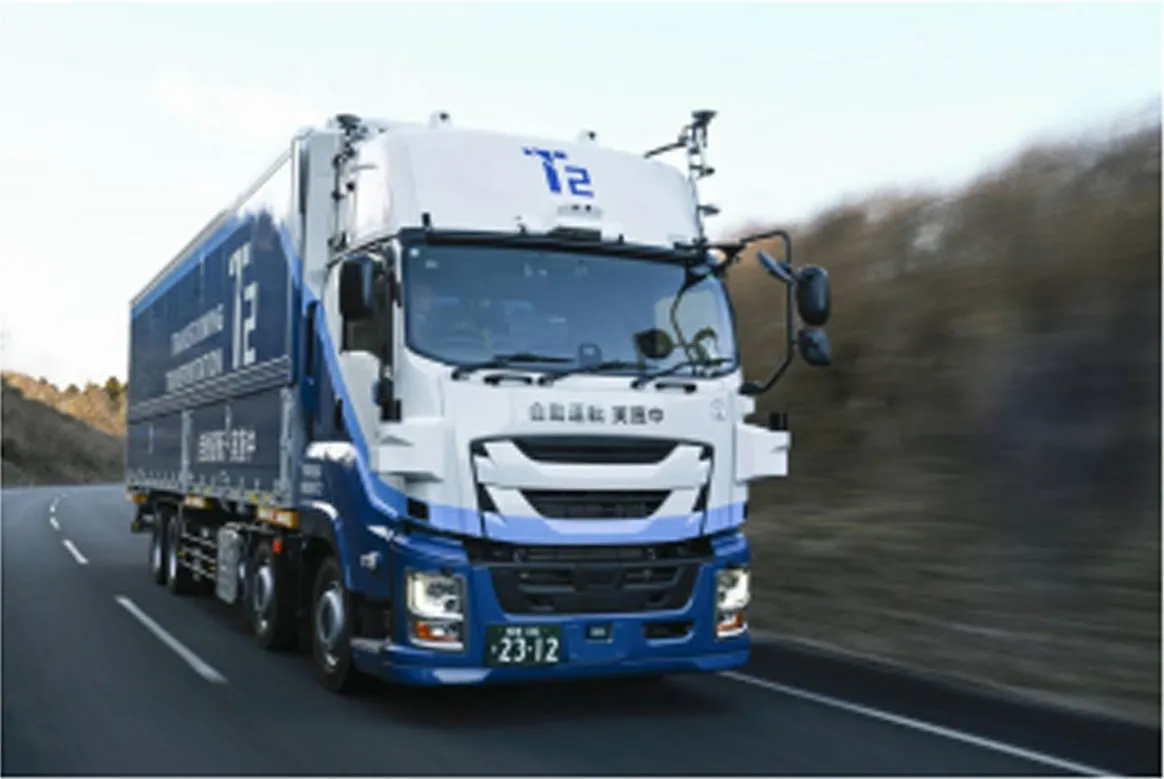
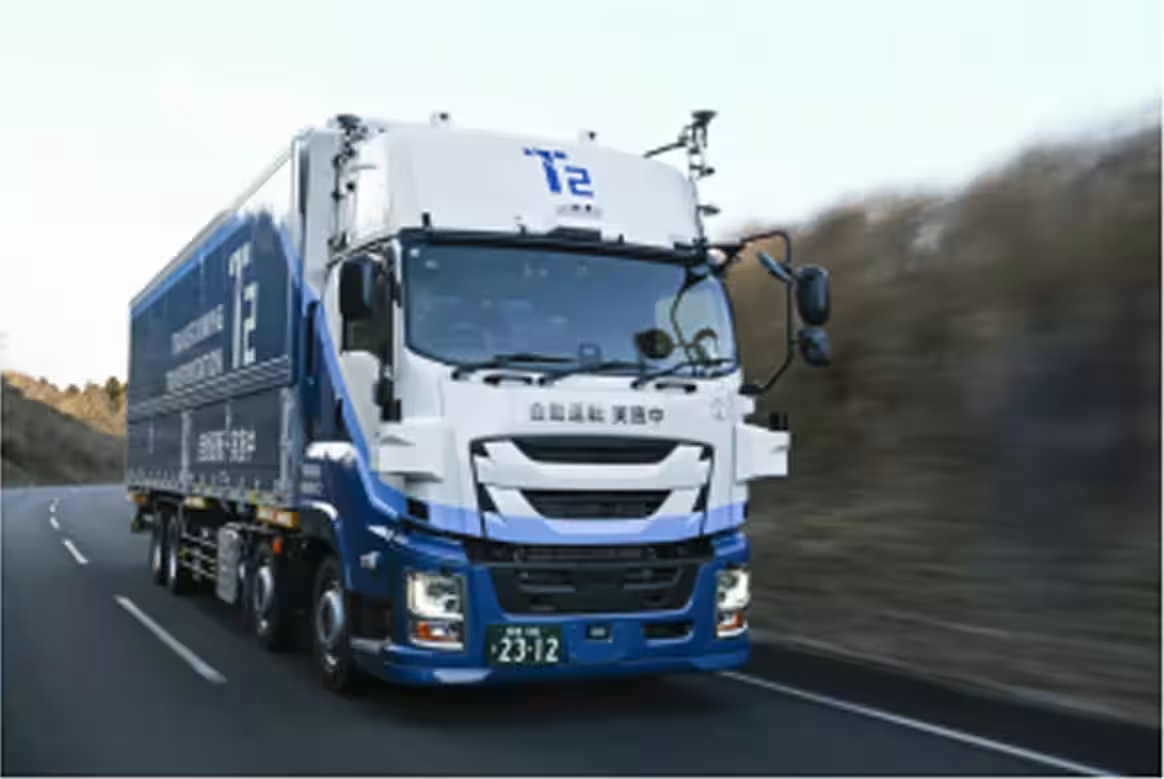
Ad-Dice Inc. is headed by CEO Daisuke Ito and is renowned for its proprietary technology known as the Premonition Control AI. This innovative system is designed to capture latent risks associated with individuals and objects. On the other hand, T2 Inc., led by CEO Seijo Morimoto, focuses on developing autonomous trucks, particularly for trunk transportation services. Together, these companies are embarking on a project set to redefine safety standards for long-distance transport.
Goals and Background
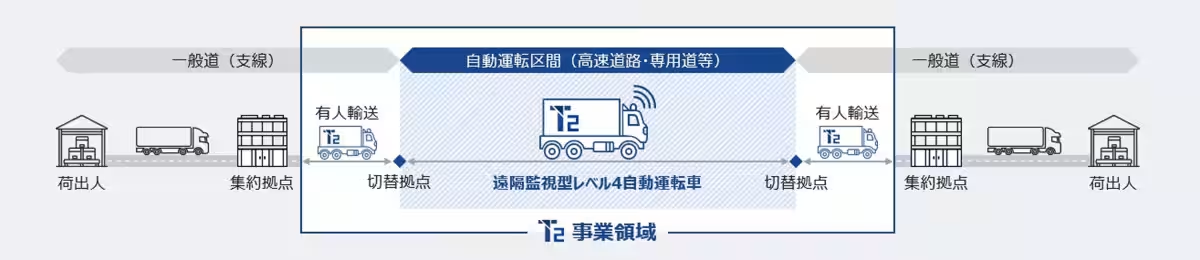
The primary aim of the experiment, commencing in March 2025, is to leverage Ad-Dice’s AI system to predict drowsiness risks among drivers operating T2’s Level 2 autonomous trucks. The logistics industry in Japan faces a critical driver shortage, and this collaboration seeks to not only assist in addressing that shortage but also in preventing accidents caused by drowsiness. By 2027, T2 plans to develop Level 4 autonomous trucks for trunk transportation, underscoring the urgent need for reliable health monitoring of drivers, even in fully automated scenarios where some human oversight will still be essential.
The Experiment Setup
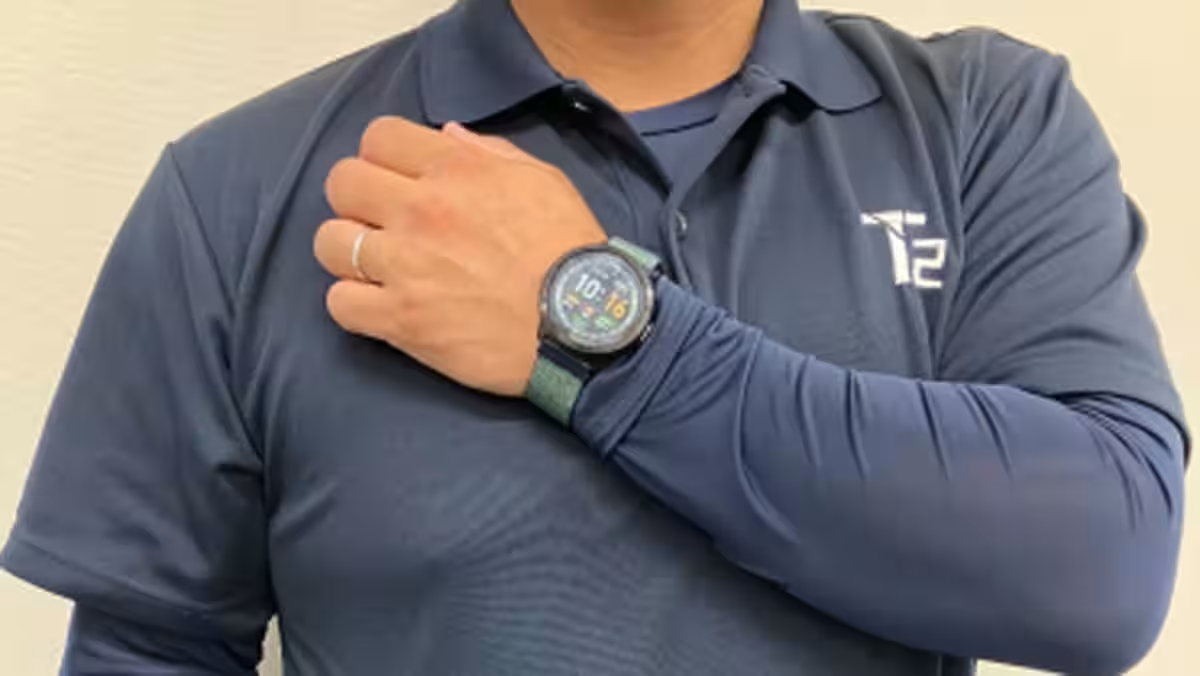
The experiment will be conducted over a two-month period, where drivers will wear smartwatches designed to capture vital signs such as heart rate. Ad-Dice’s AI technology will analyze this data to predict drowsiness levels up to 30 minutes in advance, providing real-time alerts to both drivers and fleet managers. The test routes will cover sections of approximately 500 kilometers of highway from Kanto to Kansai, highlighting the practical application of this technology in real-world settings.
Methodology
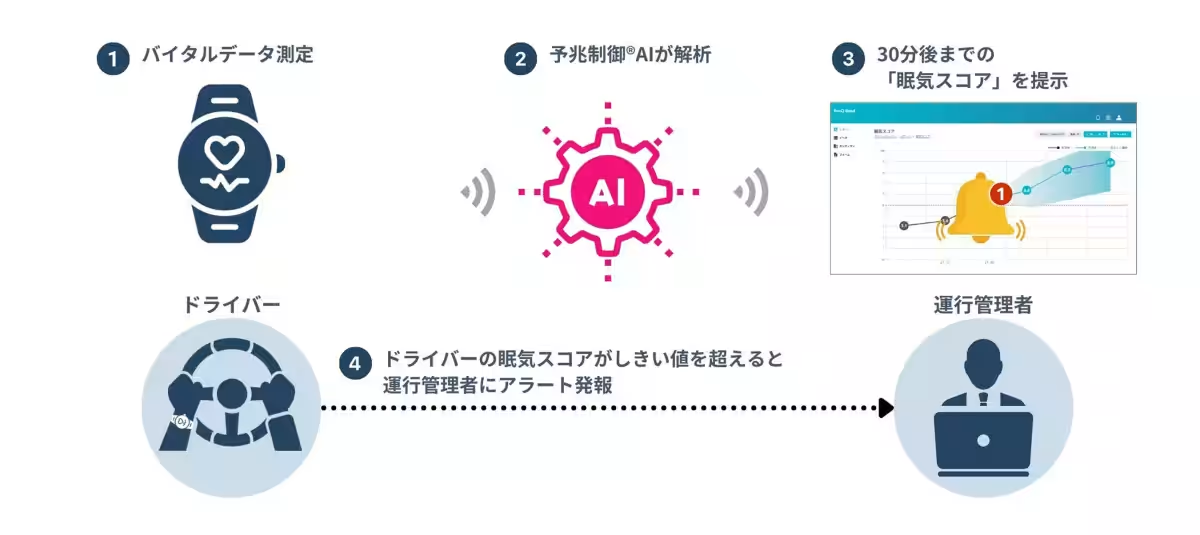
The data collection process will follow a structured flow:
1. Driver Preparation: T2 drivers will wear measurement devices while operating autonomous trucks.
2. Data Analysis: The AI will analyze vital data such as heart rate to assess drowsiness risks.
3. Alert Mechanism: If a driver’s drowsiness score exceeds a predetermined threshold, alerts will be sent to both the driver and the operations manager, prompting preventive action to ensure safety.
4. Data Accumulation: The collected data will be evaluated to refine and optimize the AI’s predictive capabilities, aiming for higher accuracy in understanding drivers' conditions in an autonomous driving environment.
Expected Outcomes
Both companies anticipate that this pilot program will yield critical insights into drowsiness detection accuracy and facilitate necessary adjustments for improving operational safety. T2 management highlights the potential benefits, underscoring that having predictive insights about when drivers might feel drowsy will lead to proactive interventions, thus preventing potential accidents.
Future Implications
This collaboration not only marks a significant milestone in addressing logistics-related challenges but also showcases the innovative intersection of AI technology and human health monitoring in autonomous driving contexts. T2 has expressed optimism regarding further optimizations and expects to refine their predictive models based on user feedback to closely align with real-world experiences.
Corporate Overview
- - Ad-Dice Inc.
- CEO: Daisuke Ito
- Established: January 2005
- Website: Ad-Dice
- - T2 Inc.
- CEO: Seijo Morimoto
- Established: August 2022
- Website: T2 Auto
In conclusion, as these two companies navigate the future of logistics, their innovative approaches towards integrating health monitoring with advanced autonomous driving systems are set to establish new standards in driver safety and operational efficiency.


Topics Consumer Technology)
【About Using Articles】
You can freely use the title and article content by linking to the page where the article is posted.
※ Images cannot be used.
【About Links】
Links are free to use.