



Survey Reveals Impact of Lunch Guidance on Staff Retention in Preschools
The Effect of Lunch Guidance on Preschool Staff Retention
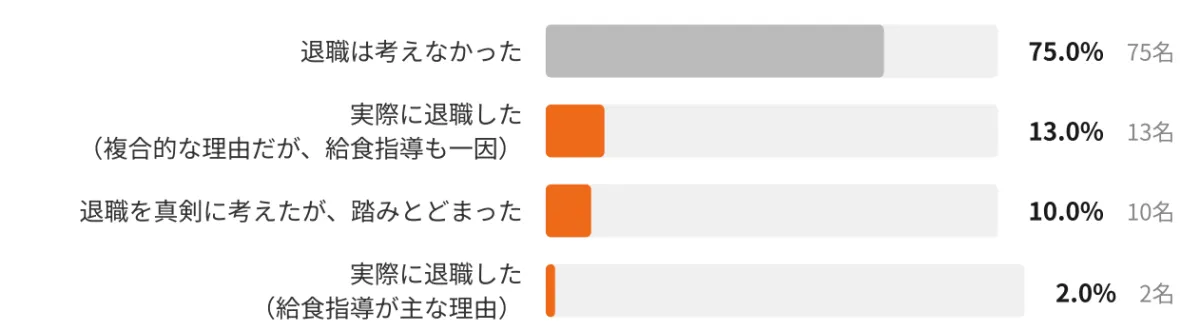
A recent survey conducted by Nippon Educational Materials Co., based in Shinagawa, Tokyo, has revealed alarming insights regarding the impact of lunch guidance policies on preschool and kindergarten teachers. The study, titled "The Real Opinions on Lunch Guidance," involved 100 participants who had experience working in childcare institutions. Shockingly, 25% of respondents admitted to either contemplating leaving their jobs or having actually left due to the lunch guidance policies enforced at their facilities.
Approximately 15% of these individuals confirmed that their departure was directly related to such guidance methodologies. This raises an essential question about how lunch strategies can be a significant factor in staff retention and recruitment.
The survey also examined a hypothetical scenario where one school emphasized a rigorous completion of meals with a salary increase of 10,000 yen, while another offered a 10,000 yen lower salary but had a more relaxed and supportive meal environment without the pressure of full completions. An incredible 99% of participants favored the lower-paying option, indicating a prevailing preference for a nurturing environment over monetary compensation.
This suggests a shift in perspective regarding lunch guidance, which has typically been focused on children's nutrition and education. It is now starkly evident that these policies impact not just young learners but also the educators responsible for their well-being.
Background of the Survey
With staffing in early childhood education being a pressing issue, the survey highlights significant trends and challenges faced by staff members. According to statistics released by the Child and Family Agency, the effective job offers-to-job seekers ratio for preschool teachers stands at an astonishing 3.88, vastly exceeding the national average of 1.27 for all professions. This reflects the competitive nature of this profession and emphasizes the need for retention strategies that address workplace culture.
Furthermore, a previous survey conducted in 2025 highlighted that over 82% of educators struggle with supporting children who have selective eating habits. Even though there is recognition of these challenges, this questionnaire aimed to uncover how such pressures influence the staff's job satisfaction and career decisions directly.
Key Findings from the Survey
1. Impact of Lunch Guidance on Turnover: A quarter of respondents (25%) reported that lunch supervision influences their career decisions, with 15% having already exited their positions.
2. Preference for Supportive Environments: When given a choice between two schools with differing meal guidance tactics and salaries, 99% chose the environment with no forced completions despite the lower wage.
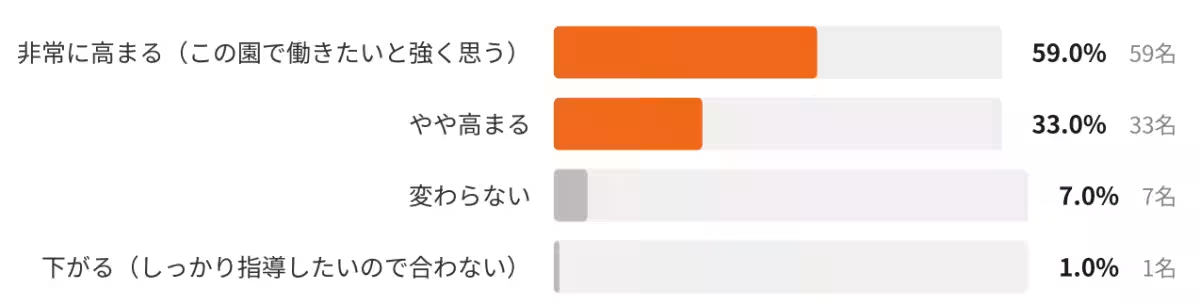
3. Increased Applications with Clear Policies: An overwhelming 92% indicated that they would feel more motivated to apply for positions in schools that are clear about their meal guidance policies.
4. Demand for Predictable Environment: Open-ended responses revealed a disconnect between institutional policies and their practical application in daily operations, hinting that the real problems may stem from the broader workplace environment rather than individual staff competencies.
This research not only highlights the pressing issues within the workplace but underscores the need for schools to develop and share clear meal guidance policies. As expressed by a respondent, the pressure to ensure children finish their meals can create an uncomfortable working atmosphere, resulting in adverse outcomes not just for the children but also for the educators.
Analysis by Kenta Yamaguchi
Kenta Yamaguchi, President of Nippon Educational Materials and editor of the monthly publication, argues that historically, the discourse surrounding lunch guidance has focused on the responsibilities of individual educators. However, when there is a lack of defined institutional policy, it leaves staff reluctant to challenge odd practices they may witness. In the feedback, many mentioned feelings of helplessness when they disagreed with the guidance implemented in practice, pointing to an ingrained culture that may need revision.
The findings of this survey reflect the reality of daily interactions during meal times, which affects the morale and commitment of preschool teachers. Addressing these issues by creating clear, open channels of communication around lunch guidance will not only ease the stress for staff but lead to a nurturing atmosphere for the children.
Conclusion and Future Plans
Moving forward, initiatives aimed at re-evaluating meal supervision practices in preschools will be critical. Additionally, data revealed in a forthcoming survey involving the parents of 350 children attending preschool suggests that both staff and parents are concerned about the emphasis on meal pressure in these environments. As such, policy reforms in these areas could create a more positive working and learning space.
For further information on this study and related issues, please visit Nippon Educational Materials.



Topics People & Culture)


【About Using Articles】
You can freely use the title and article content by linking to the page where the article is posted.
※ Images cannot be used.
【About Links】
Links are free to use.