



Genetic Research Shows Decline in Severe Risk of Scottish Fold Bone Deformity
Recent Findings in Genetic Research on Scottish Fold Cats
In a groundbreaking study conducted by Anicom Parfait Inc. in collaboration with Azabu University, the genetic mutation associated with bone deformities in Scottish Fold cats has been thoroughly analyzed. This research focused on the TRPV4 gene mutation, known as c.1024G>T, and its correlation with osteochondrodysplasia and the distinctive folded ear trait of the breed.
The Study Overview
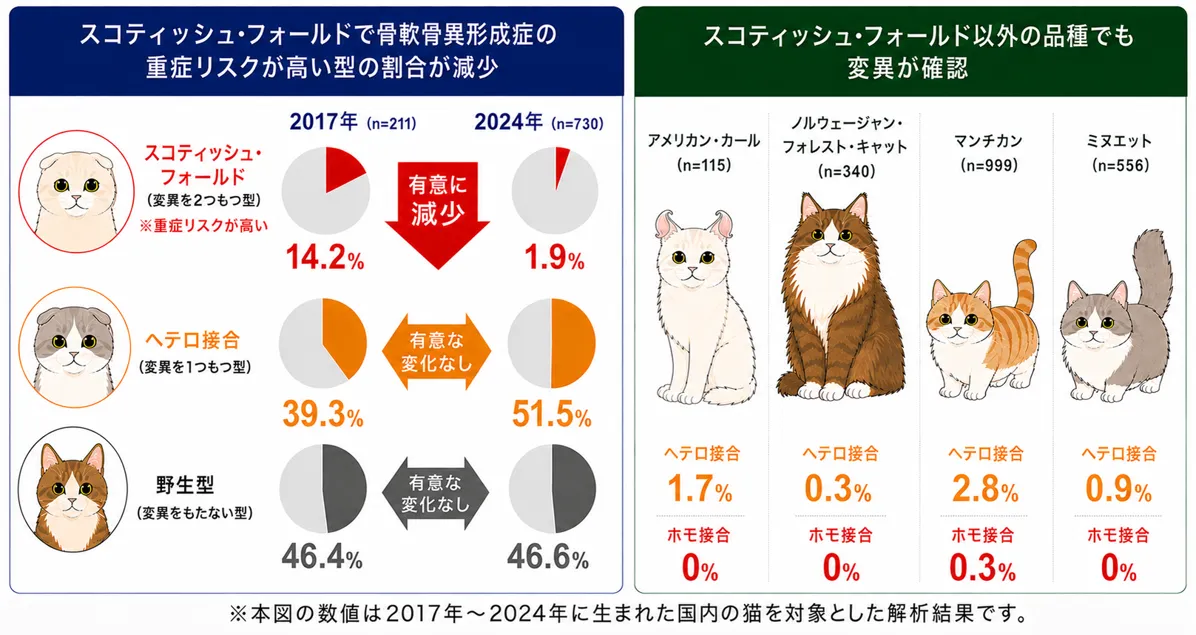
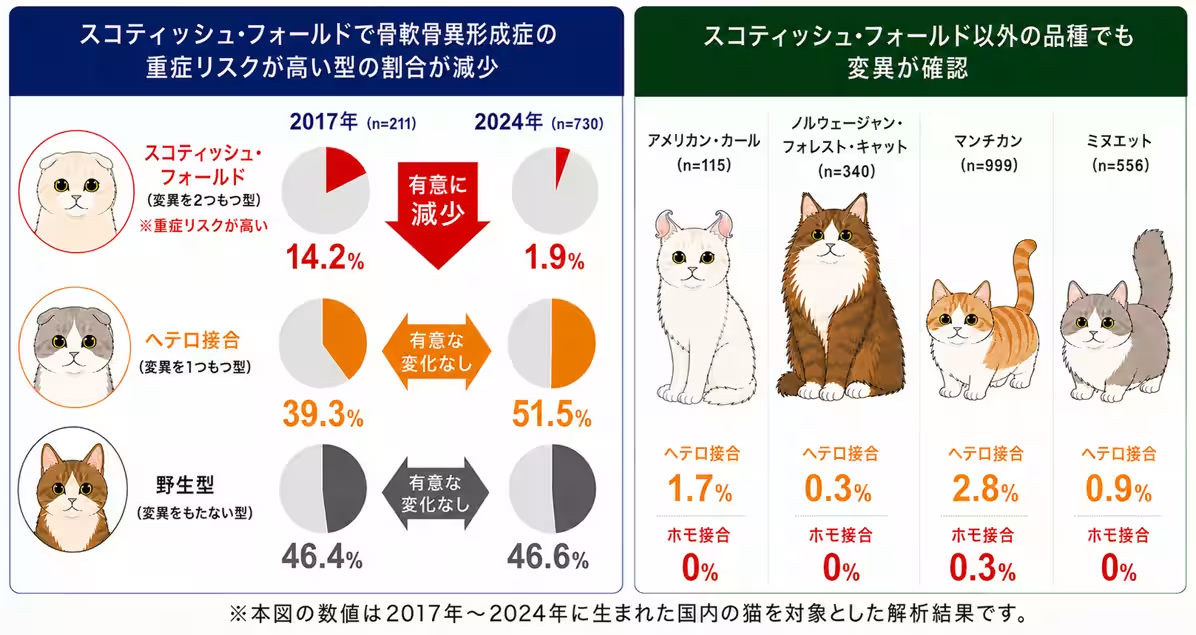
The team carried out a large-scale genetic analysis involving 8,610 domestic cats across various breeds. The analysis revealed a remarkable decline in the percentage of homozygous individuals for this mutation in Scottish Folds—from 14.2% in 2017 to only 1.9% in 2024. This significant drop indicates a shift in breeding practices, likely due to increased awareness and the implementation of genetic testing to evaluate breeding risks.
While the incidence of heterozygous and wild-type individuals showed no statistically significant change, the findings underline the importance of responsible breeding decisions derived from genetic testing. The TRPV4 mutation, while most prevalent in Scottish Folds, was also detected in other breeds such as American Curl and Munchkin, raising questions about crossbreeding practices in the past.
Understanding TRPV4 and its Genetic Implications
The TRPV4 gene plays a crucial role in the regulation of calcium flow in and out of cells, particularly affecting cartilage development in felines. The presence of the mutation can manifest clinical symptoms, varying in severity depending on whether an individual is homozygous or heterozygous. As homozygous individuals tend to exhibit severe symptoms, avoiding breeding practices that could result in these individuals is deemed essential for ensuring animal welfare.
In addition, as genetic testing becomes more accessible, it provides breeders with the tools necessary to make informed decisions, ultimately leading to healthier breeds and a reduction in hereditary health risks.
Surveying Changes Over Time
The analysis utilized a robust dataset that included over 100 individuals from 14 different breeds. This comprehensive approach allowed researchers to accurately assess the mutation's frequency and distribution. The findings point to a significant trend: as genetic testing became more popular, the proportion of high-risk homozygous individuals decreased. This indicates that breeders are likely changing their practices based on genetic insights.
Future Directions for Research
The implications of this study extend beyond the Scottish Fold breed. The identification of TRPV4 mutation in other breeds suggests a need for heightened vigilance in breeding practices across various cat breeds. As the historical intersection between these breeds becomes clearer, more studies are required to investigate the mutation's effects on clinical outcomes in these other breeds.
This research is essential not only for the Scottish Fold but also for advancing overall knowledge regarding hereditary diseases in cats. A greater understanding of genetic influences can improve breeding strategies and enhance the focus on animal welfare across the industry.
Conclusion
As this research highlights, the prudent use of genetic testing can significantly mitigate the risks of hereditary diseases like osteochondrodysplasia in Scottish Folds and other cat breeds. The study demonstrates that, through responsible breeding practices informed by scientific analysis, it is possible to improve the health and well-being of both individual animals and entire species. It reinforces the essential role of genetic research and testing in veterinary medicine and the importance of informed animal husbandry practices.
The paper detailing these findings is set to be published in the international journal Animal Genetics on May 10, 2026, a significant step towards acknowledging and addressing hereditary conditions among domestic cats.
Topics Health)
【About Using Articles】
You can freely use the title and article content by linking to the page where the article is posted.
※ Images cannot be used.
【About Links】
Links are free to use.