



Huawei's SPN Solution Transforms Yunnan Power Grid's High-Speed Network Infrastructure
Huawei's SPN Innovations for Yunnan Power Grid
In a significant technological advancement aimed at enhancing the energy supply and infrastructure of the Yunnan province, Huawei has partnered with Yunnan Power Grid Co., Ltd. to implement a state-of-the-art high-speed communication network. This modern network solution, known as SPN or Service Packet Network, addresses the increasing complexity and demand for efficient energy management in a challenging geographical landscape.
The Challenge of Transformation
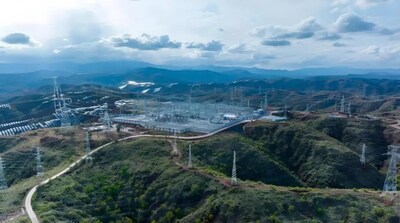
Yunnan Power Grid plays a pivotal role in southwest China's energy sector, responsible for the large-scale transmission of clean energy and the development of smart grid technologies. However, the difficult terrain and long transmission lines posed significant challenges to this transformation. With the explosion of production data and a surge in complex service scenarios, there was an urgent requirement for a robust, modern communication infrastructure.
To overcome these hurdles, Yunnan Power Grid adopted Huawei's SPN solution, which has been incorporated into their 14th and 15th Five-Year Plans. The large-scale deployment of this technology began across 16 cities, laying a foundational network that is set to serve them for the coming two decades.
Achievements and Outcomes
Since the pilot project initiated in 2022, Huawei's SPN has progressed from a technical experiment to a standardized architecture across Yunnan. The implementation in cities like Zhaotong and Puer has been transformative, yielding multiple benefits:
1. Elimination of Bandwidth Limitations: Previously constrained bandwidth issues have been corrected through the new SPN technology, which surpasses the traditional capacity limits of 155 Mbit/s to achieve speeds between 10 Gbit/s and 100 Gbit/s. This improvement allows access layer bandwidth—such as in substations and customer service centers—to optimally reach 1 Gbit/s, aligning with the standards of the Southern Energy Network of China.
2. Enhanced Efficiency for Inspections and Maintenance: The SPN solution allows for real-time monitoring of Service Level Agreements (SLAs) such as latency and packet loss, enabling quick fault localization within minutes, which significantly lowers the costs associated with equipment failures. In fact, inspection times in the Chuxiong energy office decreased dramatically from 30 minutes to just 3 minutes, while cycle maintenance times plunged from over 7 hours to 21 minutes, with a 45.54% reduction in on-site visits.
3. Intelligence Level Upgrade in Service Transmission: Huawei's SPN facilitates reliable transmission of various energy services. It supports low-latency teleprotection for control dispatch and high-data-rate video feeds. Features like FlexE slicing ensure strict separation of different services while effectively utilizing bandwidth. The dual network configuration supports both IPv4 and IPv6, allowing for seamless local transmissions and easy access to the Internet of Things for comprehensive monitoring and resource integration.
4. Long-term Investment Protection: The infrastructure's design has been oriented toward future scaling, making it easy to transition to speeds between 25 Gbit/s and 400 Gbit/s via cost-effective upgrades, thereby avoiding the need for building new structures from the ground up.
Conclusion
The collaboration between Huawei and Yunnan Power Grid marks a significant leap in smart grid evolution and efficient energy management in the region, promising robust infrastructure that meets the growing demands of the energy sector while ensuring cost reduction and enhanced service quality. As the power landscape continues to evolve, such innovations will form the backbone of sustainable energy distribution in China. For more detailed insights into the solutions offered, you can visit Huawei's official website.
Topics Energy)
【About Using Articles】
You can freely use the title and article content by linking to the page where the article is posted.
※ Images cannot be used.
【About Links】
Links are free to use.