



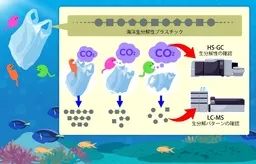
NITE Develops a New Method to Visualize Marine Biodegradable Plastics Decomposition
Understanding Marine Biodegradable Plastics Through NITE's New Analytical Method
In recent years, the environmental impact of plastic waste on marine ecosystems has raised significant concerns. As a response, the National Institute of Technology and Evaluation (NITE) has developed an innovative analytical method designed to enhance our understanding of how marine biodegradable plastics decompose through microbial action. This advancement is expected to accelerate the development and application of biodegradable materials in marine environments.
The Crucial Role of Marine Biodegradable Plastics
Marine biodegradable plastics are engineered to break down in the ocean through the actions of microorganisms, ultimately converting into natural substances such as carbon dioxide and water. As these plastics become a focal point in addressing ocean pollution, efficient evaluation techniques for numerous samples are increasingly essential. In the past, traditional methods often faced limitations due to extensive measurement times, which hindered effective analysis.
Recognizing this challenge, NITE has engineered a new evaluation technique that not only assesses the biodegradability of various samples but also offers detailed insights into the mechanisms of decomposition. This development is instrumental in advancing the field of biodegradable materials and understanding their impact on marine ecosystems.
Overview of the New Analytical Technique
NITE’s cutting-edge method measures carbon dioxide released during the microbial breakdown of plastics using gas chromatography. In addition, it analyzes remaining breakdown products in the liquid phase through liquid chromatography-mass spectrometry (LC-MS). By employing this dual-analysis approach, the new method efficiently assesses the biodegradability of multiple samples simultaneously while facilitating in-depth examinations of decomposition patterns.
Notably, the findings have illustrated that even within the same species of microorganisms, there exists considerable diversity in enzymatic degradation, metabolic uptake, and overall metabolism. Additionally, scientists have observed that the microbial communities (or 'plastisphere') that form on plastic surfaces in seawater engage in collaborative degradation processes, highlighting the complex interrelations among different microbial species.
Advancing Research and Development
With the implications of this analytical method, NITE anticipates a significant acceleration in developing marine biodegradable materials and products. Moreover, a deeper understanding of microbial relationships within the plastisphere will pave the way for accumulating knowledge about the degradation processes occurring in marine environments. This could potentially lead to breakthroughs in designing new types of environmentally friendly plastics.
In its ongoing efforts to promote marine biodegradable plastics, the NITE Biotechnology Center (NBRC) has been actively collecting extensive microbial community data and strains from four domestic marine regions. Since March of last year, the NBRC has begun distributing these microbial strains, providing users with valuable information derived from the new analytical technique. A detailed paper about this technology, titled "An analytical platform that facilitates the interpretation of the microbial degradation of biodegradable plastics in the marine environment," is set to be published on November 17, 2025, in the journal 'Polymer Degradation and Stability.'
Key Terminology
- - Marine Biodegradable Plastics: Plastics designed to break down in seawater through microbial activity, transforming into naturally occurring substances like carbon dioxide and water.
- - Plastisphere: Refers to the microbial communities (biofilms) that develop on the surface of plastic debris, creating unique ecosystems in the ocean.
Future Prospects
The promising results of this project stem from NEDO (New Energy and Industrial Technology Development Organization) initiatives focused on the social implementation of marine biodegradable plastics. Through continued research, development, and collaboration, NITE aims to facilitate significant advancements in combating marine plastic pollution. The commitment to utilizing microbiological resources enhances the potential for sustainable growth and addresses pressing societal challenges arising from plastic waste.
For further information and access to related resources, visit NITE’s official pages to learn more about their commitment to ecological preservation and innovation in materials science.

Topics Environment)
【About Using Articles】
You can freely use the title and article content by linking to the page where the article is posted.
※ Images cannot be used.
【About Links】
Links are free to use.