


2026 Survey: Insights into Car Life Across Japan's Prefectures
Understanding Japan's Car Culture: 2026 Driver's Survey Insights
In an intriguing look into the habits and costs associated with car ownership, AXA Japan recently released its comprehensive survey titled the "47 Prefectures Driver's Survey 2026." This study sampled 4,700 individuals aged 20 to 69 who own personal vehicles and drive at least once a month. Conducted between July 30 and August 10, 2026, the survey aimed to uncover the nuances of car life across Japan's 47 prefectures.
Car Ownership and Preferences
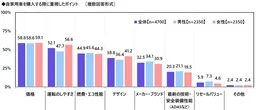
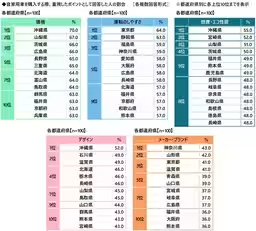
According to the survey, the top factors influencing people's choice when purchasing a vehicle vary from region to region. The most emphasized consideration was "price," notably significant in Okinawa, where 70% of respondents identified it as paramount. In contrast, urban areas like Tokyo prioritized "ease of driving," which was highlighted by 64% of respondents. Additionally, fuel efficiency and ecological performance emerged as pivotal factors, especially in southern regions like Miyazaki and Okinawa.
The research indicated that aesthetics play a role too, with design as a major factor for car buyers in Okinawa, and the brand of the vehicle holding sway in Kanagawa and Yamagata.
Monthly and Annual Costs of Car Ownership
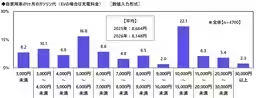
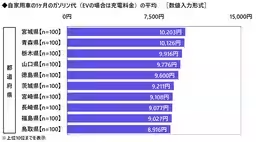
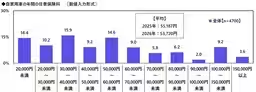
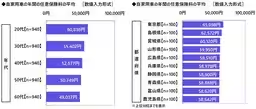
Moreover, the survey shed light on the financial aspects of driving. The average monthly gasoline expense across respondents was approximately ¥8,348, with Miyagi Prefecture's residents facing the highest costs at ¥10,203. As for insurance premiums, the overall average stood at ¥53,720 annually, peaking in Tokyo at ¥65,098, revealing a stark contrast in economic impacts across regions.
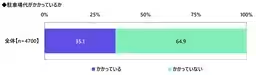
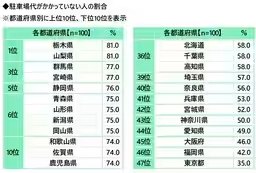
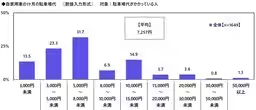
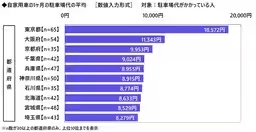
Parking fees also revealed significant variances. On average, car owners reported spending ¥7,257 on monthly parking fees, but in urban environments like Tokyo, this jumped to a staggering ¥18,572. Conversely, regions such as Tochigi and Yamanashi exhibited a 81% rate of individuals who did not incur parking costs.
Experiencing Near-Misses: The "Hiyari-Hatto" Phenomenon
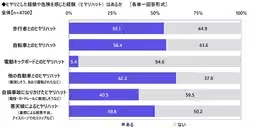
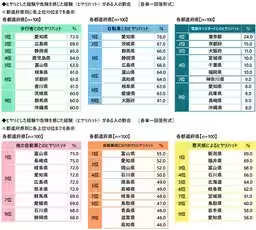
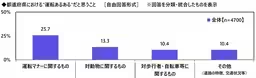
The term "Hiyari-Hatto" describes close calls that could lead to accidents. Approximately 55% of respondents admitted experiencing near misses with pedestrians, while 62% felt they faced similar encounters with other vehicles. Notably, Aichi Prefecture reported the highest rates of such experiences, highlighting a pressing need for awareness and safety measures in driving.
Regional Quirks and Car Culture
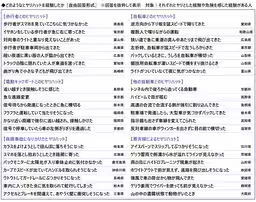
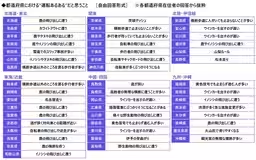
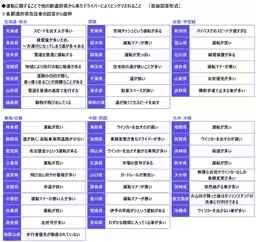
Perhaps the most captivating finding of the survey was the unique driving customs and quirks inherent to each local culture. For instance, many respondents noted challenges like encountering deer while driving in Hokkaido and Shizuoka. Others pointed out local driving behaviors such as the "Ibaraki Dash" in Ibaraki, adding a layer of cultural identity to driving in Japan.
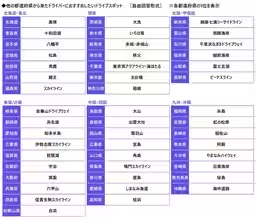
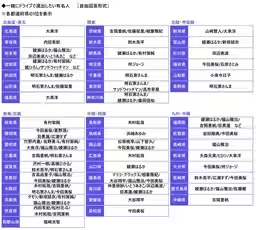
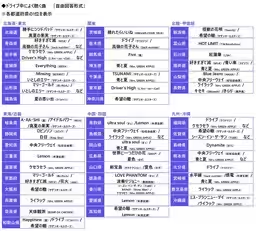
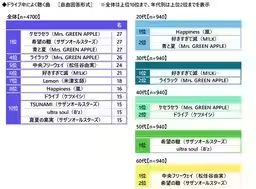
When asked about road trip companions, renowned figures like Yoshio Ozaki from Hokkaido and Haruka Ayase from Yamaguchi were the most desired company for a drive. Notably, driving playlists were also curated across prefectures, revealing popular songs that accompany many on their journeys.
Conclusion
As AXA continues to strive toward enhancing customer experiences, these insights into Japan's diverse car culture provide a valuable perspective for understanding driver behavior and regional preferences. The full survey report is available on AXA's official website, emphasizing their commitment to ensuring a safer and more fulfilling future for all drivers in Japan.
For further details, explore the complete findings at AXA Japan's Auto Insurance Page.
Topics Consumer Products & Retail)




【About Using Articles】
You can freely use the title and article content by linking to the page where the article is posted.
※ Images cannot be used.
【About Links】
Links are free to use.