



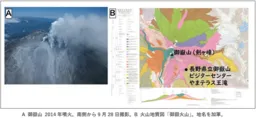
Ten Years of Research Culminate in the New Ontake Volcano Geological Map Release
A Decade of Research on the Ontake Volcano
After ten years of extensive research, the Geological Map of Ontake Volcano has been published by the National Institute of Advanced Industrial Science and Technology (AIST). This new map consolidates significant findings from geological investigations, particularly focusing on the eruptions that have shaped this active volcano in Japan.
Historical Context
Ontake Volcano is renowned for its historical eruptions, notably the catastrophic 2014 eruption that resulted in the loss of 63 lives and numerous injuries. This event was one of Japan's most devastating volcanic disasters in post-war history. Consequently, obtaining accurate and detailed eruption histories is crucial for effective volcanic risk management.
The lack of a comprehensive geological map that encompasses the entire Ontake area and incorporates eruption data from recent decades posed challenges in understanding its volcanic behavior. Recognizing this gap, researchers conducted meticulous geological surveys and sample analyses, which included radiometric dating to ascertain the timeline of past eruptions. The studies revealed that the most recent volcanic activity commenced around 100,000 years ago, showing a significant decline in eruption frequency in the last 30,000 years, although periodic enormous eruptions akin to the 2014 incident have occurred roughly every few hundred years.
Development of the Geological Map
The Geological Map of Ontake Volcano not only serves as a research foundation but also provides essential data useful for creating hazard maps and evacuation plans that aid in disaster mitigation. It is expected that this map will inform safety strategies for populations living in proximity to the volcano, enabling them to respond more effectively in case of future eruptions.
In addition to serving as a vital resource for emergency planning, the newly released geological map will support educational initiatives regarding the formation and historical activity of Ontake Volcano. As discussions on establishing Ontake as a national park progress, the map will also be invaluable for natural guides and interpretative materials concerning the region’s unique volcanic landscape.
Research Team Contributions
The dedicated team behind this significant work includes researchers from AIST's Active Fault and Volcano Research Department, such as Group Leader Teruki Oikawa, Visiting Researcher Yoshihiro Takeshita of Shinshu University, and Senior Researcher Seiko Yamazaki. Their collective expertise has significantly contributed to the advancements made in understanding the Ontake Volcano's geological history.
Accessing the Geological Map
Available for download from AIST’s Geological Survey Center website, the Geological Map of Ontake Volcano can be accessed here. It can also be purchased through various authorized vendors allied with AIST whose information is available here.
Understanding Geological Maps
To emphasize the importance of this geological map, it is necessary to understand what a geological map entails. Geological maps illustrate the variety of rock formations and sediment layers beneath the surface, and provide critical information for areas like construction, disaster management, tourism, and resource exploration. The Ontake Volcano Geological Map is particularly noteworthy as it accompanies data on the distribution of volcanic deposits from previous eruptions, offering unique insights into the volcano’s history and potential hazards.
In summary, the geological map of Ontake Volcano stands as a testament to a decade’s worth of research, offering invaluable data for disaster preparedness, education, and future studies, all while enhancing our understanding of this striking yet perilous natural phenomenon.
Topics Environment)
【About Using Articles】
You can freely use the title and article content by linking to the page where the article is posted.
※ Images cannot be used.
【About Links】
Links are free to use.