



Successful Demonstration of 30kg Daily CO₂ Capture Using MOF Technology by KOBELCO, Atomis, and Nagase Industry
Successful CO₂ Capture with MOF Technology: A Landmark Achievement by KOBELCO, Atomis, and Nagase Industry
In a groundbreaking collaboration, KOBELCO, Atomis, and Nagase Industry have successfully executed a proof of concept for a carbon dioxide capture system utilizing Metal-Organic Frameworks (MOFs), achieving a scale of 30 kilograms per day. This accomplishment represents a significant step towards making CO₂ capture technology practical on a larger scale. The three companies are now considering the next phase, which will involve scaling up to metric ton-level demonstrations, marking a first for Japan.
Background of the Collaboration
Based in Kobe, Japan, KOBELCO, under the leadership of CEO Yoshihiko Katsukawa, has been at the forefront of engineering and innovation in the metals sector. Atomis, also from Kobe and led by CEO Daisuke Asari, specializes in developing next-generation porous materials. Nagase Industry, headquartered in Chiyoda, Tokyo, under President Hiroyuki Kamishima, contributes by marketing and compliance expertise.
Together, these companies aim to address the critical challenge of carbon emissions, especially focused on industries that produce Scope 1 emissions—direct emissions from owned or controlled sources. The partnership brings together expertise in MOF material development, CO₂ capture technology, and market positioning for carbon-neutral practices.
Unique Properties of the MOF-Based CO₂ Capture System
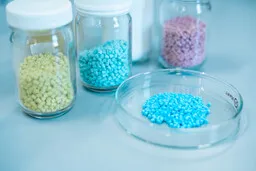
The innovation hinges on MOFs, porous materials that consist of metal ions and organic ligands. These extremely versatile materials boast over 120,000 structural variations, offering unprecedented flexibility in molecular design. The tested MOF-Pressure Swing Adsorption (PSA) system enables selective adsorption of CO₂ from exhaust gases produced by industrial processes like boilers and furnaces.
What sets this technology apart is its efficiency and compactness. Previous CO₂ capture methods, often using zeolite-based adsorbents, require additional pre-treatment to eliminate moisture—a process that complicates and enlarges equipment and elevates energy costs. In contrast, the MOF-integrated system simplifies this pre-treatment approach while effectively reducing the technology's size and energy requirements, making it adaptable in a variety of industrial settings. Importantly, it can also work with low-concentration CO₂ emissions, thus broadening its applicability.
The Proof of Concept Details
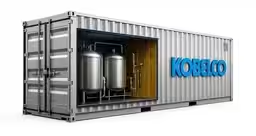
Set within KOBELCO's TAKASAGO GX Try Field in Hyogo, the demonstration began in November 2025. It aimed to evaluate the effectiveness (purity and recovery amount) of the CO₂ capture when subjected to city gas combustion exhaust. The initial results are promising, validating the system's capability to meet essential performance metrics.
As the project progresses, there is a strong focus on scaling the technology to perform at the metric ton level. This next step represents an unprecedented initiative in Japan, aimed at industrial applications that capitalize on MOF technology for CO₂ recovery.
Future Outlook and Sustainability Goals
The CO₂ collected through this innovative technology is intended not only for use in dry ice production but also for on-site utilization. This is a crucial step in transitioning reliance on imported CO₂ to a domestic recycling model, thus fulfilling both economic and environmental objectives.
KOBELCO, Atomis, and Nagase Industry are committed to accelerating their efforts toward commercialization and practical applications of this technology, contributing significantly to the roadmap for a decarbonized society—reinforcing Japan's leadership in innovative and sustainable industrial solutions.
As the world grapples with climate change impacts, the collaborative endeavor of KOBELCO, Atomis, and Nagase Industry represents hope and promise, laying the groundwork for future technological advancements in carbon capture and recycling. The potential of MOFs to revolutionize this sector cannot be understated, heralding a new era in environmental sustainability and industrial responsibility.
Topics Environment)
【About Using Articles】
You can freely use the title and article content by linking to the page where the article is posted.
※ Images cannot be used.
【About Links】
Links are free to use.