



Understanding the Role of Reactive Oxygen Species in Plant Morphogenesis and Growth Control
Understanding the Role of Reactive Oxygen Species in Plant Morphogenesis and Growth Control
Reactive oxygen species (ROS) have long been recognized for their toxic effects on cells, but recent research has uncovered their essential role as signaling molecules in various biological processes. Despite these insights, the crucial function of ROS in the fundamental development and morphogenesis of plants has remained relatively unclear.
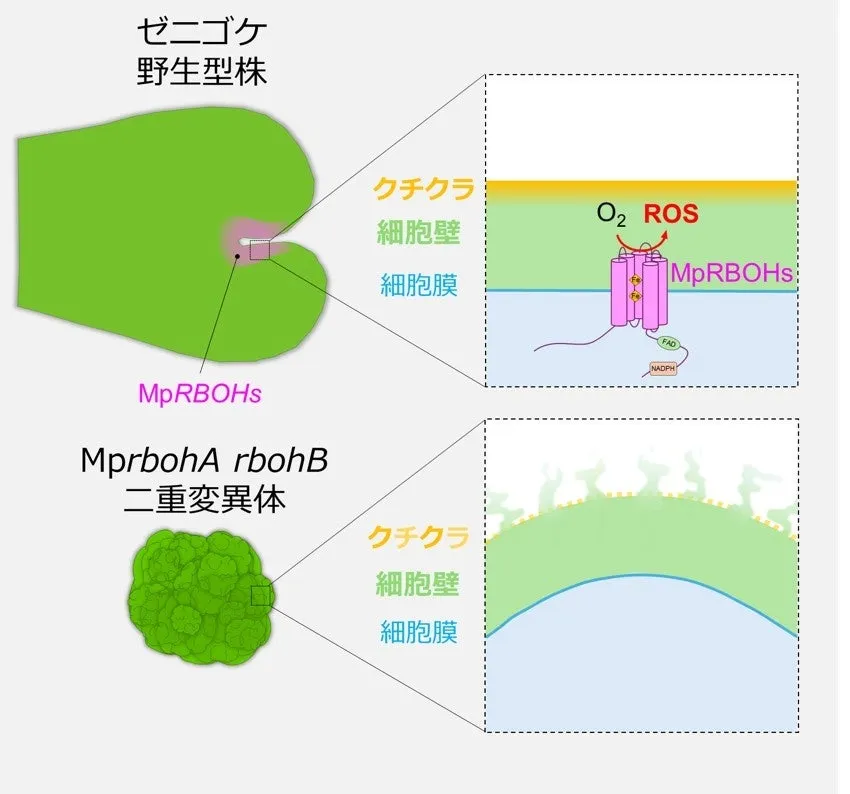
In a groundbreaking study conducted by a collaborative team from various Japanese universities, including Tokyo University of Science, the pivotal role of ROS in plant development has been elucidated through the research of the hornwort species Marchantia polymorpha. This model organism, known for its low genetic redundancy, presents a unique opportunity to study the effects of ROS on plant growth as it possesses only two types of respiratory burst oxidase homolog (RBOH) genes, critical for ROS production.
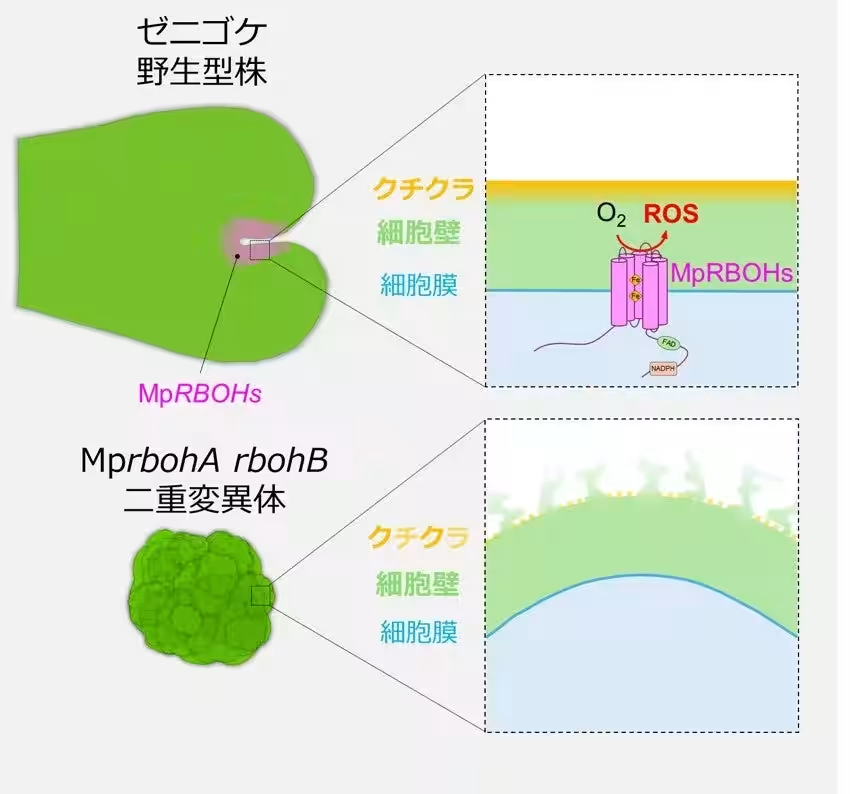
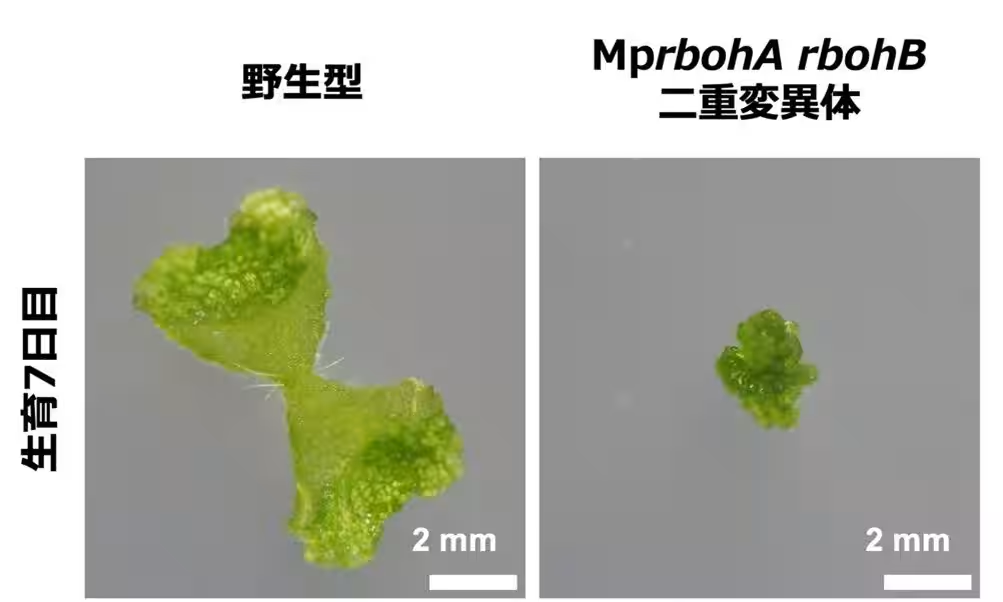
Researchers created double mutants by completely knocking out both RBOH genes in M. polymorpha, aiming to investigate the functional role of ROS during plant development. The results revealed that without these genes, normal morphogenetic processes were significantly disrupted from the early stages of development. Instead of forming organized structures, the double mutants exhibited chaotic growth, resulting in undifferentiated mass of cells.
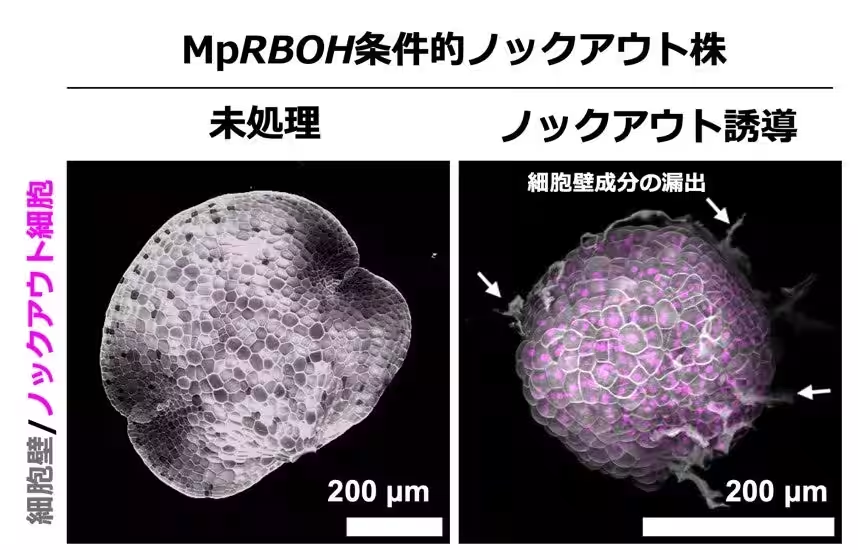
Further analysis, combining single mutant studies, conditional knockouts, and pharmacological inhibition, demonstrated that ROS derived from RBOH is integral in orchestrating three main developmental processes: 1. Promotion of Cell Division and Proliferation, 2. Maintenance of Extracellular Structures, such as the cuticle and cell walls, and 3. Activation of Cell Differentiation Programs. This indicates that ROS serves as a comprehensive regulatory factor essential for maintaining structured growth in plants.
Study Overview
This research team, including Professor Kazuyuki Kuchitsu and others, has shed light on the importance of ROS as not just a byproduct of metabolism but as an essential component of the regulatory framework that governs plant development and morphogenesis. Historically, the overwhelming presence of multiple RBOH genes in angiosperms has obscured the understanding of their fundamental role in development due to genetic redundancy. By switching focus to M. polymorpha, with its simpler genetic structure, the team could isolate the effects of ROS more effectively.
The study began by elaborating on how RBOH is a significant source of ROS in plants, known to engage in various critical functions, including growth at the cellular apex and responses to environmental stimuli. The researchers’ earlier work had already indicated that RBOH-derived ROS might provide a crucial regulatory mechanism in the growth and development of plants.
The initial phase of their experiments confirmed that knocking out both RBOH genes led to severe impairments in the creation of structured organs early in development. Rather than forming defined structures, the plant cells aggregated into a disorganized mass. This evidence pointed to a direct relationship between ROS production and normal morphological development in plants.
Mechanism of Action
Through careful comparative studies involving single and double mutants, the researchers established that MpRBOHA and MpRBOHB work collaboratively, particularly around the meristematic regions — the growth points in the plants. This cooperation among RBOH-derived ROS not only positively influences growth rate but is vital for the organization of cells within tissues. The absence of these ROS not only results in decreased growth rates but also a loss of organizational structure within plant tissues.
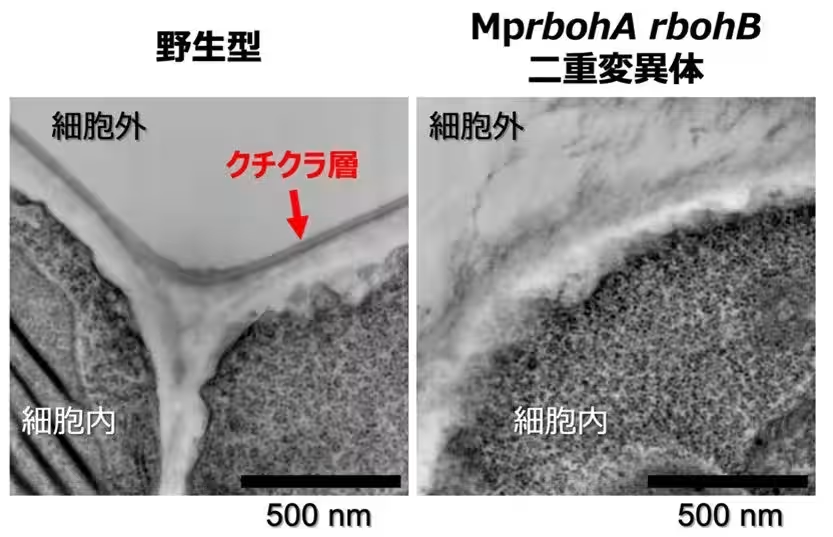
Moreover, the conditional knockout experiments showed a continuous need for RBOH function starting from initial development stages. The consequences of RBOH loss were evident through compromised integrity of the cuticle and cell walls—essential components that maintain external plant structures. These observations are instrumental in understanding how ROS can orchestrate the correct spatial arrangement and organizational structure throughout the organism's development.
In summary, this innovative research has revolutionized our understanding of ROS in plant development. It highlights that rather than mere harmful byproducts, ROS are essential elements that ensure plants grow systematically and maintain their physical structures, reinforcing the interconnectedness of cellular activities with overall plant health and structure. This research opens the door to future applications in sustainable agricultural practices, potentially leading to improved crop resilience and better growth strategies in varying environmental conditions.
Implications
The significance of this study lies in its demonstration that ROS are vital to three interconnected processes in plant development—cell division, structural maintenance, and differentiation. This reinforces the idea that ROS play a pivotal role in the formation of organized morphological structures, suggesting that regulating this factor could be key in enhancing agricultural outcomes and plant responses to stressors.
The publication of these findings in the esteemed journal Current Biology marks a significant milestone in botanical research, providing a foundation for future studies to further dissect the molecular dynamics governing plant morphogenesis.
Topics Other)

【About Using Articles】
You can freely use the title and article content by linking to the page where the article is posted.
※ Images cannot be used.
【About Links】
Links are free to use.