




Exploring Housing Solutions for Middle-Class Families in Tokyo's Rising Market
The Challenge of Home Ownership for Middle-Class Families in Tokyo
In recent years, owning a home in Tokyo has become increasingly challenging for average earning households. With the average annual income hovering around 6 million yen, the surge in new apartment prices to approximately 136 million yen in the 23 wards has raised many eyebrows. By 2025, the median price of new condominiums is projected to reach 136.31 million yen, while even second-hand apartments will see prices near 127.41 million yen for 70㎡ by mid-2026. This shift signifies that middle-class families are now confronted with a daunting gap between their earning potential and housing market prices.
Understanding the Numerical Gap
For a household with an annual income of 6 million yen, purchasing an average new condominium valued at around 136.31 million yen equates to roughly 22.7 times their annual salary, while for those earning 6.5 million yen, that figure still stands at around 20.9 times. This stark statistic underscores the reality that while interest in home ownership remains high, the ability to afford a home is widely out of reach.
Traditional solutions, such as choosing second-hand properties over new ones, are not sufficient to navigate this increasingly expensive landscape. The challenge now lies in not only evaluating current financial situations but also in recognizing the need for realistic expectations and approaches.
A Shift in Perspective: What Can Be Given Up?
The essence of finding a home in Tokyo for middle-class families will involve a practical trade-off strategy. As noted by MADRE Corporation, a company engaged in the renovation of second-hand apartments based in the Tama area, prospective homeowners should explore what can realistically be achieved rather than striving for an unattainable ideal.
Instead of aiming for luxurious new homes, they advocate for adopting a mindset that focuses on what to prioritize on— location, size, or price. This is where the brand's solution, Anabar!, comes into play. It proposes the notion of making informed choices that do not compromise one's quality of life.
International Comparisons Highlight Housing Disparities
When compared with other major global cities, Tokyo's crisis in housing affordability shares similarities with places like New York, London, and Hong Kong. The rising market prices in these cities stem from a concentration of wealth and employment opportunities in urban hubs, making affordable housing elusive for the average worker. Tokyo stands in a situation where its Price-to-Income Ratio, at 15.2 times, resonates closely with London’s 15.4 times, revealing a global pattern where economic growth does not equate to housing affordability.
Broader Horizons: Expanding Housing Considerations
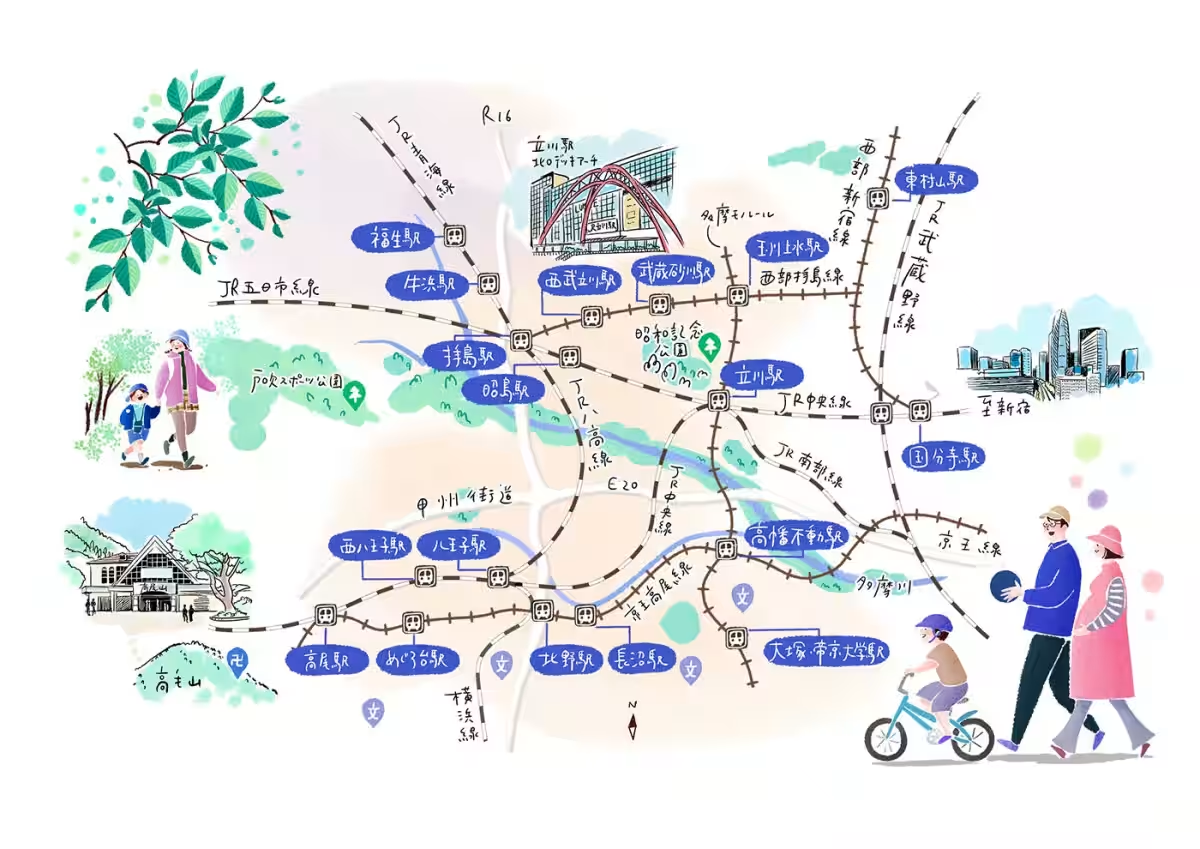
The future for middle-class families who wish to remain in Tokyo may depend on their willingness to broaden their search parameters. While the idea of settling in a trendy area like the 23 wards may seem appealing, the real solution might lie in expanding outwards to the outskirts, including locations around Tachikawa or along the Tama Monorail line. Here, homes can be more spacious and affordable, allowing families to retain quality of living without breaking the bank.
Notably, this approach embraces the necessity for a certain level of commuting, a compromise that countless residents face today. A considerable number of families in Tokyo already live outside the main urban areas, choosing reasonable housing that accommodates their financial situation without sacrificing proximity to city employment.
Finding Practical Solutions with Anabar!
Given the housing market's increasing volatility, Anabar! allows families to obtain insights into feasible options while advocating for realistic preferences. They encourage buyers to focus on the total cost of homeownership, including renovation and potential changes in life circumstances, recommending a budget of 50 million yen as a guideline, reflecting both affordability and practicality.
Ultimately, the endeavor of homeownership in Tokyo is an evolving conversation. As the city’s housing landscape continues to transform, so too must the strategies of those aspiring to live within it. The question remains: how can middle-class families successfully navigate these complex markets? Through thoughtful trade-offs and willingness to adapt priorities, there exists a pathway to home ownership that aligns with personal and financial specificities.
Concluding Thoughts
In conclusion, the message from Anabar! is clear: there is hope for middle-class families in Tokyo despite the daunting financial landscape. By relinquishing rigid expectations around location, size, and price, and embracing a mindset of considered choice—families can uncover a new approach to achieving their housing dreams. Anabar! stands ready to provide the necessary frameworks and advice to facilitate this important journey.





Topics Consumer Products & Retail)
【About Using Articles】
You can freely use the title and article content by linking to the page where the article is posted.
※ Images cannot be used.
【About Links】
Links are free to use.