



New Research Reveals Hidden Lymphoma Risks During Cancer Immunotherapy
New Research Uncovers Hidden Lymphoma Risks During Cancer Immunotherapy
In an illuminating recent study conducted by Okayama University, in collaboration with Ehime Prefectural Central Hospital and Kyushu University Hospital, significant insights have been revealed about the potential risks associated with cancer immunotherapy. This groundbreaking research sheds light on how certain immune responses might inadvertently support the growth of hidden lymphoma in patients undergoing treatment with immune checkpoint inhibitors (ICIs).
Key Findings from the Research
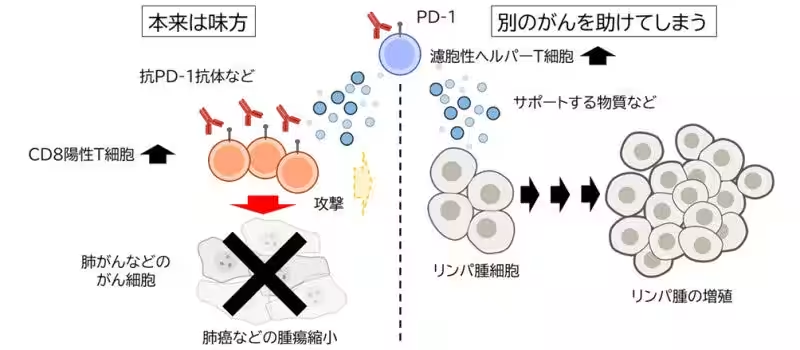
The research, spearheaded by Professor Yosuke Togashi of Okayama University's Advanced Medical Research Institute, found that during ICI therapy, activated immune cells, which are generally intended to target cancer, can instead aid in the proliferation of pre-existing lymphoma cells in some patients. This dual nature of immune activation poses a unique challenge and highlight a dimension of cancer therapy often overlooked.
Despite these findings, the researchers emphasize that the associated risks remain relatively minor when compared to the overall benefits of cancer immunotherapy. The study, which was published in the esteemed journal Clinical Cancer Research on May 18, 2026, reports on an analysis of a large database involving lung cancer patients treated with ICIs. It appears that while the occurrence of lymphoma during this treatment is rare, the likelihood of discovery is substantially increased in those receiving ICIs.
Understanding the Mechanism
One of the mechanisms identified in the study indicates that follicular helper T cells, typically friends in the immune response, can inadvertently stimulate the growth of dormant lymphoma cells. Essentially, while ICIs rev up the immune system to combat tumors, this same activation may lead to unintended consequences in some patients who harbor hidden lymphomas. Such a phenomenon underscores the complexity of immunotherapy and necessitates ongoing research and monitoring.
The Importance of Regular Check-Ups
Professor Togashi and his team advocate for patients undergoing cancer immunotherapy to engage in regular health checks, allowing for the swift detection of any such complications. By understanding this risk, healthcare providers can mitigate potential problems while continuing to utilize the therapeutic advantages of immunotherapy. As highlighted by Professor Togashi, the key takeaway from this research is to balance the treatment's substantial benefits against the manageable risks it presents.
Broader Implications for Cancer Treatment
The implications of this study extend beyond just lymphomas; they provide a critical lens through which the cancer treatment landscape can be viewed. With the surge of personalized medicine, understanding the intricacies of how immune responses can sometimes backfire is vital. This research not only contributes to the existing body of literature but also puts forth a clarion call for ongoing vigilance and research in the field of cancer treatment.
As we move forward into an era where immunotherapies become a cornerstone of cancer treatment, the findings from Okayama University and its collaborators underscore the importance of continuous research and patient education. This study demonstrates the necessity of refining therapeutic strategies that empower immune cells while being cognizant of the complex responses they might elicit.
With this new framework in understanding immunotherapy and its potential pitfalls, patients and clinicians alike can approach cancer treatment with renewed information and preparedness, ultimately enhancing the safety and effectiveness of cancer therapies in the future.






Topics Health)
【About Using Articles】
You can freely use the title and article content by linking to the page where the article is posted.
※ Images cannot be used.
【About Links】
Links are free to use.