



Major Challenges Faced by English Learners in 2025: Motivation Shifts to Self-Management
Challenges in English Learning: Insights from the 2025 Bizmates Survey
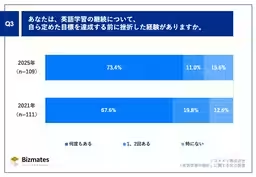
The 28th Bizmates survey on English learning reveals some striking trends among social professionals. Conducted among 109 employees who have experience learning English since entering the workforce, the survey shows that over 80% have faced setbacks in their learning journeys.
Key Findings
One of the most significant barriers to learning English remains 'continuation'. However, unlike previous years, the root causes have shifted from motivational issues to practical obstacles, such as self-management difficulties and the invisibility of progress. The survey results suggest that while motivation issues persist, they have evolved into more pragmatic challenges.
Overview of the Survey
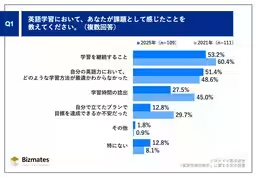
The survey was conducted online between June 26 and June 27, 2025, and builds upon a similar analysis from 2021. Findings show that while many learners identify continuing studies as a challenge—53.2% cite it as a major issue—issues surrounding time management have decreased significantly by 17.5 percentage points since 2021. This change is likely attributable to the rise of digital learning technologies that allow for more flexible learning environments.
Evolution of Learning Challenges
Despite advancements in technology facilitating easier access to learning materials, psychological barriers like motivation retention and selecting suitable study methods remain prevalent. In 2025, a majority of learners reported that gaps in their learning tools and feeling of inadequacy in applying their skills in real scenarios contributed to their setbacks.
Shift in Priorities
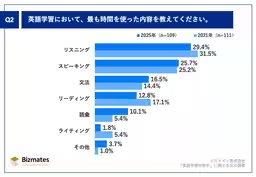
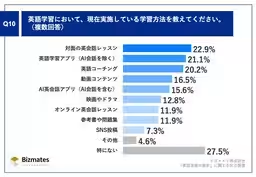
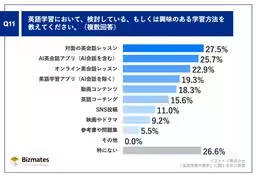
Looking at the types of learning methods employed, the survey indicates that learners are focusing more on the 'listening' (29.4%) and 'speaking' (25.7%) aspects of language acquisition. This reflects a clear shift toward developing practical skills, likely driven by the increasing availability of AI-driven language tools and audio-based learning resources. Learners appear to be enhancing their listening and speaking faculties, which are vital for real-world application of their skills.
Setbacks in Learning
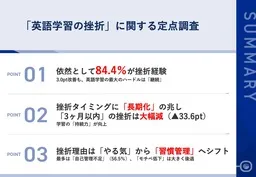
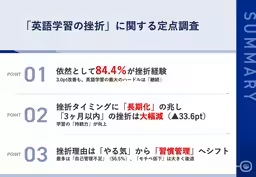
Alarmingly, 84.4% of participants reported experiencing setbacks in their English studies, with many feeling that achieving their learning goals had proven difficult. Although this figure reflects a minor improvement from 2021, it underscores the continuing struggle among learners to maintain their studies. Factors contributing to these interruptions include difficulty in experiencing tangible progress and challenges with daily integration of study practices into their lives.
Change in Learning Duration
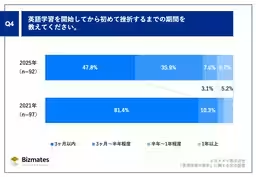
An interesting trend appears in the timeframe of setbacks, where the proportion of learners experiencing setbacks within three months dropped significantly by 33.6 percentage points, shifting from short-term to more prolonged learning efforts. As learners’ perspectives transition from short-term intensive courses to long-term skill development, the demand for effective support systems becomes clear.
Factors Contributing to Setbacks
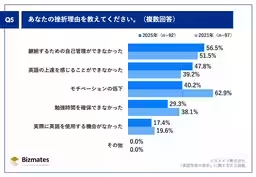
When asked about the specific reasons behind their setbacks, most respondents (56.5%) indicated issues with self-management as the leading cause, showing a notable shift from the motivational barriers that were more prevalent in the past. Additionally, 40.2% noted waning motivation as a contributing factor, representing a decrease from previous years, indicating a possible evolution towards more structured self-management practices.
Finding Solutions
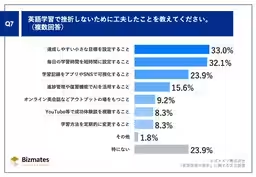
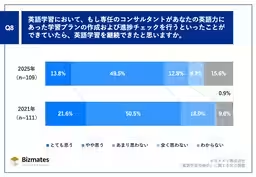
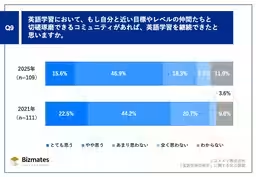
To combat these challenges, respondents have identified strategies such as setting manageable goals (33.0%) and maintaining shorter daily learning sessions (32.1%) as crucial adjuncts to their studies. Moreover, the necessity for mentorship and coaching is a common theme, with 63.3% of respondents expressing that dedicated support from a consultant could aid in sustaining their learning. The results reveal a strong inclining trend towards seeking individualized guidance and the importance of community support during the learning journey.
Conclusion
The Bizmates survey emphasizes a notable transformation in the approach to English learning among professionals in Japan. As English becomes an essential tool in the global business landscape, fostering an environment that supports continuous learning and development becomes increasingly vital. By addressing barriers to self-management and harnessing technology to facilitate sustained engagement, the path to effective English learning will continue to evolve.
For further information on the Bizmates learning platform and insights into the changing language learning landscape, please visit Bizmates.
Topics Consumer Products & Retail)
【About Using Articles】
You can freely use the title and article content by linking to the page where the article is posted.
※ Images cannot be used.
【About Links】
Links are free to use.