



The Importance of Early Preparation for University Entrance Exam Revealed by New Survey
Understanding the University Entrance Exam: Insights from New Research
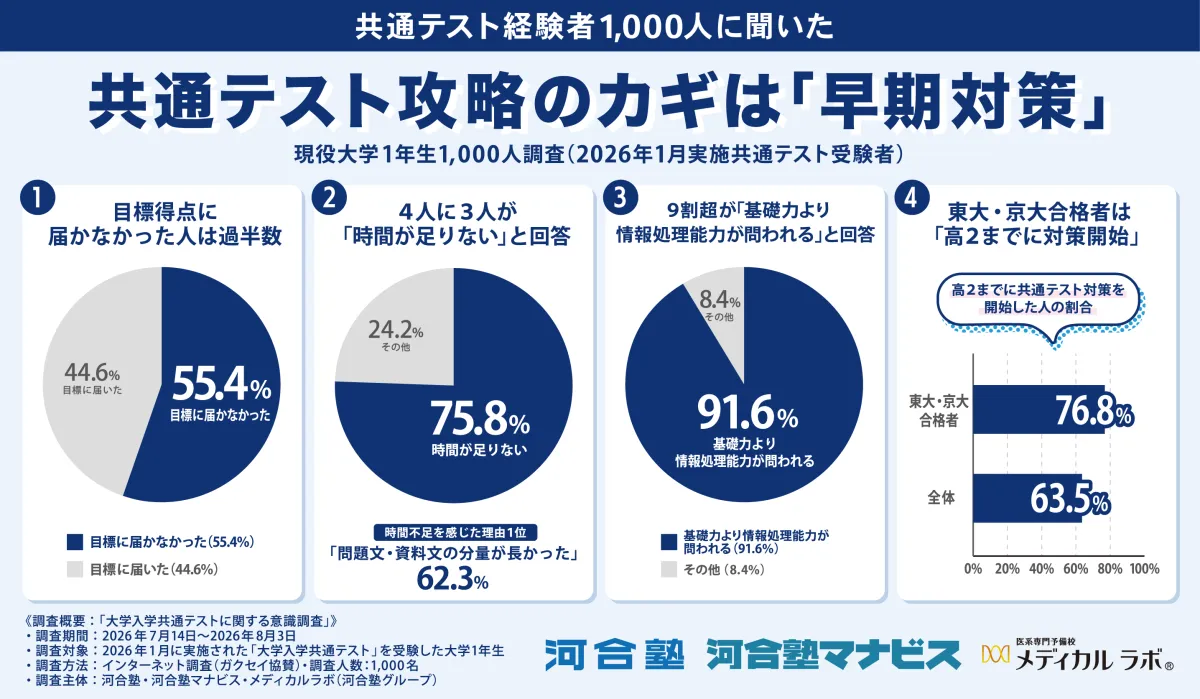
In January 2026, a comprehensive survey conducted by Kawaijuku, Kawaijuku Manavis, and Medical Lab gathered insights from 1,000 current first-year university students who experienced the University Entrance Exam. The findings unveil crucial aspects regarding the nature of the exam, specifically the prevalent sense of time pressure and the importance of early preparation in achieving success.
Background and Purpose of the Survey
With a new educational curriculum implemented from January 2025, university applicants have voiced concerns about the rigors of the entrance exam. Phrases such as “there is not enough time” and “the requirement to process information quickly is increasingly important” emerged in conversations among students. Additionally, students have noted discrepancies between past exams and the actual test format, which has further fueled anxiety.
To investigate the present-day attitudes of test-takers, this survey aimed to capture real experiences from first-year students after they completed the entrance exam. Emerging from these dialogues was an illuminating picture of how current students perceive and prepare for this important academic milestone.
Key Findings from the Survey
Challenges with Time Management
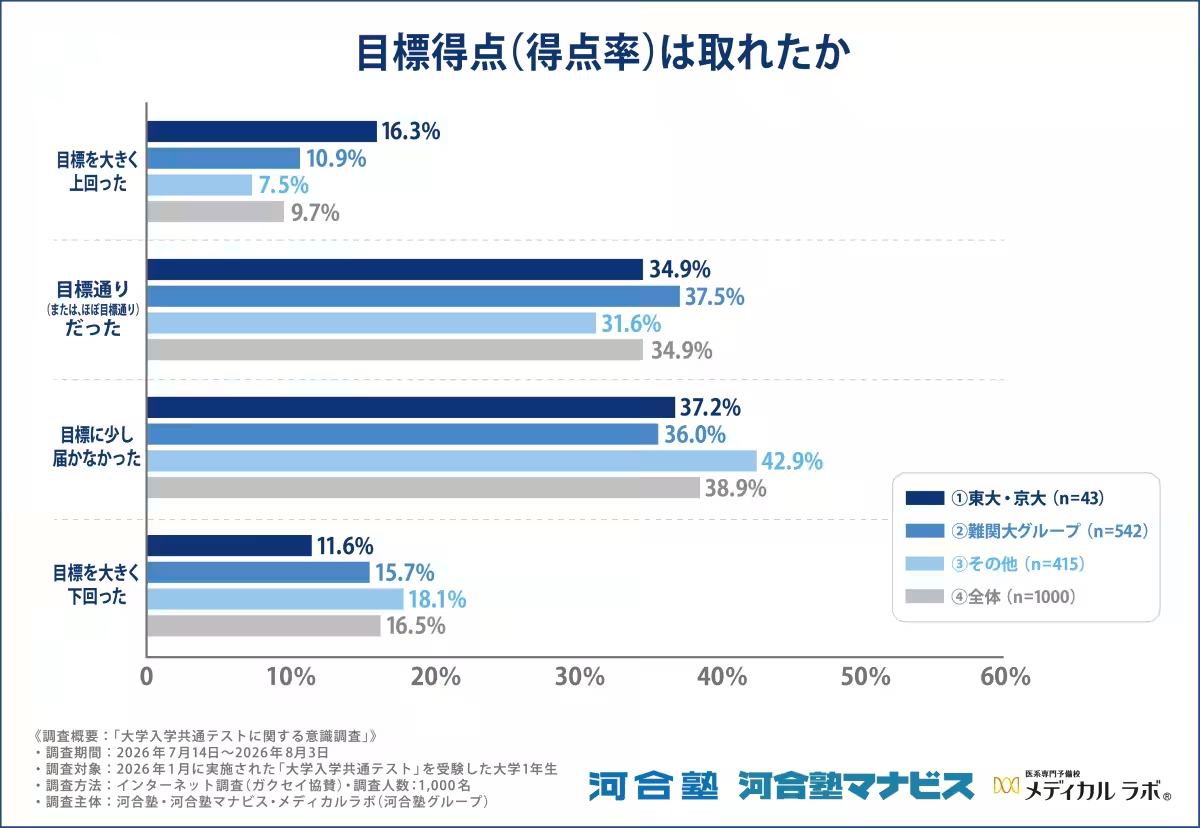
A staggering 55.4% of participants reported not achieving their target scores, illustrating a widespread struggle among test-takers—despite having reached prestigious universities. Alarmingly, 75.8% of respondents felt that time was insufficient throughout the exam, with the main culprit identified as the lengthy nature of problems and reading materials (62.3%). The burden of processing a significant amount of information was highlighted by 49.3% of students, further emphasizing the pressure they face.
The Call for Enhanced Information Processing Skills
An overwhelming 91.6% believed that the exam prioritized information processing skills over basic knowledge. Notably, among students who gained admission to universities like the University of Tokyo and Kyoto University, this sentiment peaked with 67.4% asserting the importance of information handling—substantially higher than the overall average.
Early Preparation Yields Better Outcomes
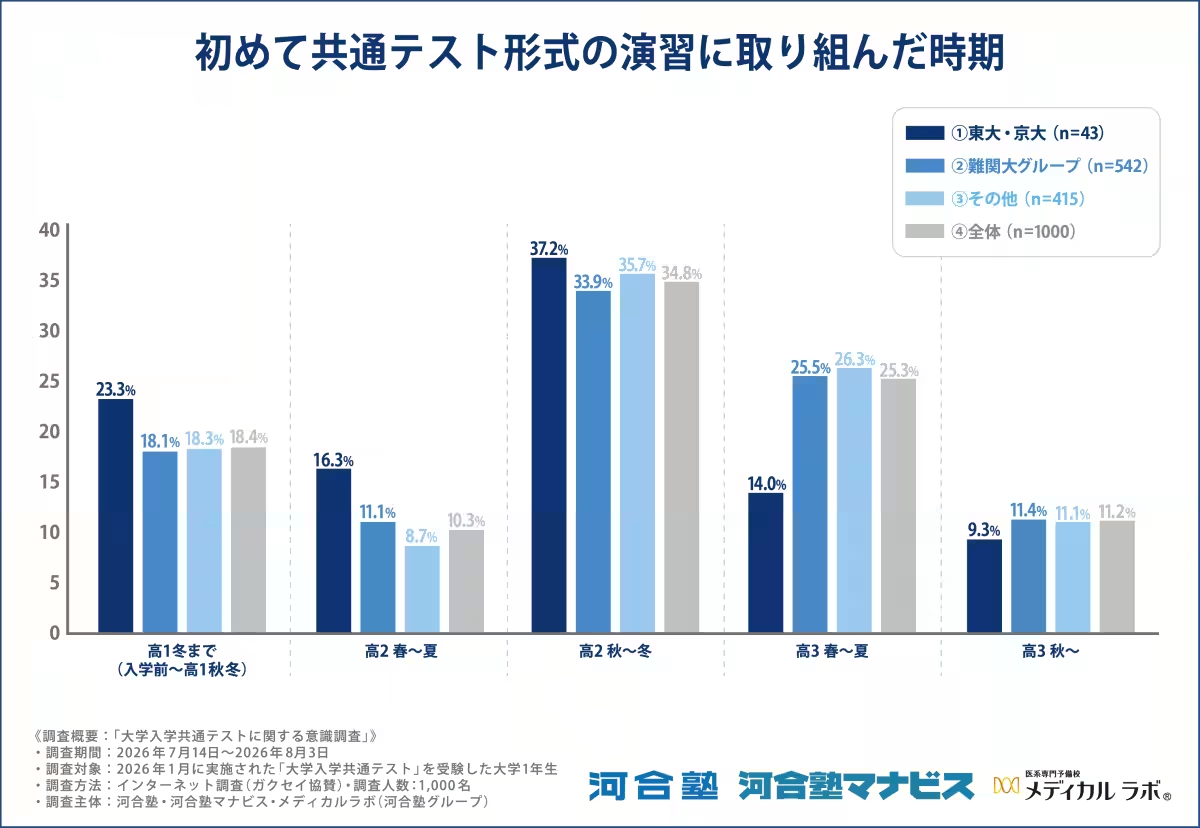
Data revealed a concerning trend: early preparation correlates strongly with successful exam results. Of the respondents admitted to prestigious institutions, a significant 76.8% began their preparations by the end of their second year of high school. Meanwhile, only 23.3% overall began their studies in their first year of high school, compared to the low 18.4% for the entire participant group. This demonstrates a clear edge among those who commenced their studies earlier.
Gaps in Expectations and Performance
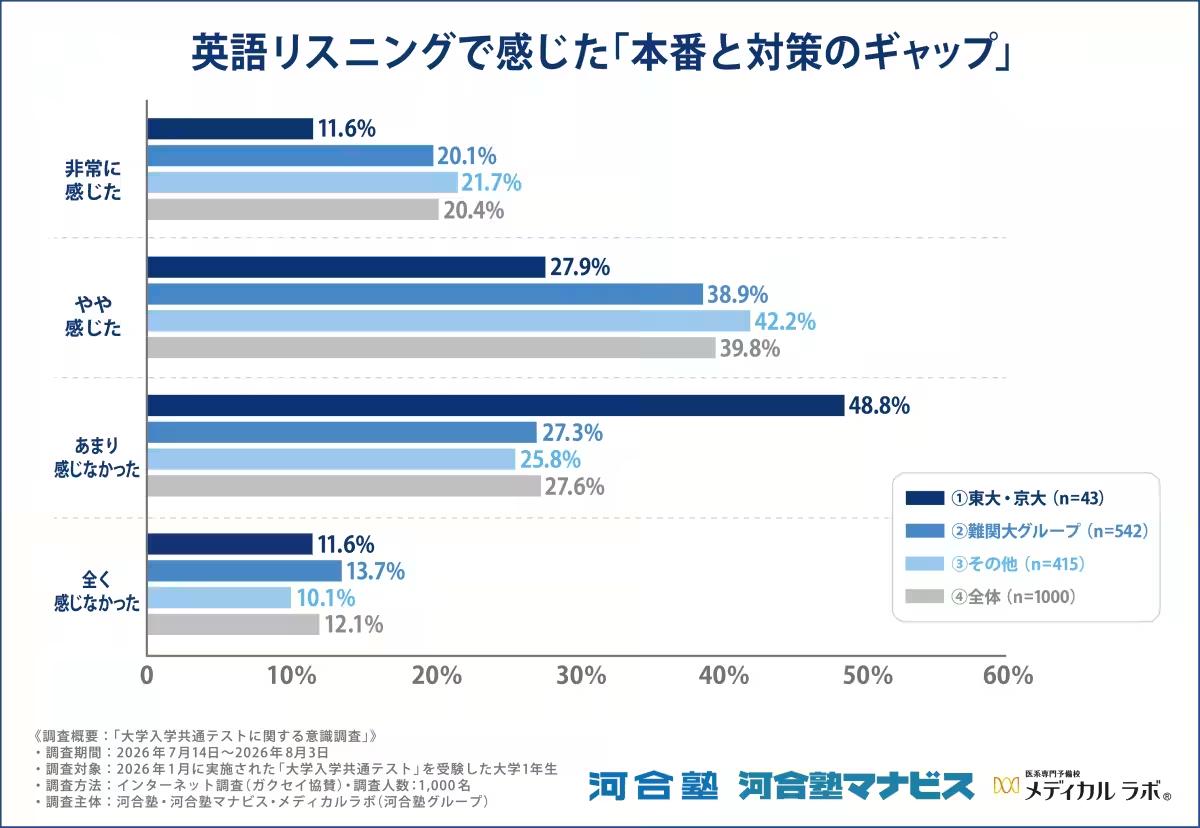
When comparing past performance to test realities, high-achieving students reported feeling fewer discrepancies. For instance, a notable 60.2% expressed they felt a gap in expectations with the English listening section, in contrast to only 39.5% of students from top universities. Although many of these students managed to exceed their target scores, about half did not achieve their desired results, indicating that even those prepared could struggle under the exam’s rigors.
Words of Wisdom from Upperclassmen
Reflecting on their experiences, past examinees offered valuable advice for prospective test takers:
- - “A strong foundation simplifies the test. If you find it hard, your basics are shaky.” – University of Tokyo
- - “The key to success lies in practice. The earlier you start, the better your comprehension will be.” – Kyoto University
- - “Focus on mathematics as early as possible, especially for humanities students.” – Osaka University
- - “Speed in information processing is vital; learn to read swiftly and maintain accuracy.” – Kyushu University
- - “Even if you prefer private universities, the basics matter—prepare well.” – Waseda University
The Emphasis on Processing Skills in Admissions
Shunsuke Fujiyoshi, an executive at Kawaijuku Manavis, underlined the importance of information processing skills. Similar trends apply to admission tests at the University of Tokyo, where comprehension skills and quick thinking become increasingly crucial. Among the surveyed successful applicants, nearly 10% began their preparation even before their high school entrance, showcasing a proactive approach to mastering the entrance exam.
Conclusion: A Call to Action for Future Test Takers
The survey highlights that the University Entrance Exam is less about rote memorization and more about how effectively one can process information under pressure. As exam formats demand analytical abilities and comprehension skills, it’s clear that early and targeted preparation can significantly impact performance.
For high school freshman and sophomores, diverse study options are now available, including Kawaijuku’s upcoming mock examination to further gauge exam complexity. Time management skills and early practice will be pivotal in navigating the challenges of the University Entrance Exam in the future.

Topics Other)








【About Using Articles】
You can freely use the title and article content by linking to the page where the article is posted.
※ Images cannot be used.
【About Links】
Links are free to use.