



BIPROGY and DNP Launch Comprehensive Solutions for Carbon Neutrality Support
BIPROGY and DNP Launch Comprehensive Solutions for Carbon Neutrality Support
On June 18, 2026, BIPROGY officially commenced the provision of its new service designed to assist companies in their journey towards carbon neutrality. This initiative, in collaboration with Dai Nippon Printing Co., Ltd. (DNP), aims to reduce environmental impacts by promoting energy efficiency and the use of renewable energy sources. The service, titled "Environmental Value Utilization CN Support Service," is geared towards businesses striving to achieve carbon neutrality by addressing energy-related challenges ranging from diagnostics to operational support and effective information disclosure.
Background of the Initiative
With the world grappling with accelerated global warming due to increased greenhouse gas (GHG) emissions, the Japanese government has made a landmark declaration aiming for net-zero GHG emissions by 2050. More than 80% of these emissions in Japan stem from the energy transformation sector, making it crucial to reduce emissions in this area to achieve the carbon neutrality goal. Additionally, recent regulatory developments such as the GX-ETS greenhouse gas emissions trading system and requirements for climate change disclosures in securities reports, effective from March 2027, have compounded the complexity of environmental responses expected from companies. This backdrop has spurred accelerated efforts to promote energy savings and non-fossil energy utilization efforts among businesses.
Overview of the Environmental Value Utilization CN Support Service
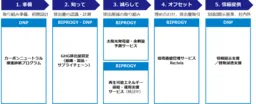
Through the "Environmental Value Utilization CN Support Service," BIPROGY and DNP facilitate compliance with the five-step framework proposed by the Ministry of the Environment aimed at achieving carbon neutrality. Specifically, the service combines BIPROGY's expertise in energy efficiency and non-fossil energy utilization with DNP's consulting and communication support. This comprehensive approach provides companies with assistance in several key areas:
1. Carbon Neutral Promotion Diagnostic Program: Establishing a starting point for companies unsure of where to begin their carbon neutrality journey. This includes situation assessments and the development of action plans, with specialized personnel providing six months of ongoing support.
2. GHG Emission Calculations: Assisting organizations in quantifying their GHG emissions across products and supply chains. The service also automates data collection and input to streamline this process.
3. Information Disclosure Support: Facilitating environmental and sustainability information disclosures through integrated reports and websites. A dedicated team will manage the communication strategy from planning to execution, targeting both internal and external stakeholders.
4. Management of Non-Fossil Certificates: Ensuring efficient management related to non-fossil energy certificates, enhancing the ability to engage in established sustainability practices.
This service is particularly beneficial for companies with multiple sites, where the management of electrical power and environmental value can be burdensome; it significantly alleviates operational loads.
Commitment to Future Efforts
BIPROGY and DNP plan to continuously enhance their offerings to ensure businesses pursuing carbon neutrality receive effective and sustainable support. By customizing their services according to customer objectives and challenges, BIPROGY aims to significantly contribute to the realization of corporate carbon neutrality goals.
DNP’s Efforts in Sustainability
DNP has developed systems to calculate and verify the carbon footprint of its products, acquiring certification from the Sustainable Management Promotion Organization (SuMPO). This system can provide reliable carbon footprint data across various product categories, thus bolstering efforts to aid companies in visualizing and reducing their GHG emissions.
Conclusion
The partnership between BIPROGY and DNP symbolizes a strategic move towards a greener future, poised to aid companies amid a landscape of increasing environmental accountability. By integrating energy efficiency and sustainability into core business practices, they not only promote carbon neutrality but also contribute to the broader goal of a sustainable society. Together, they are set to make a substantial impact on the energy landscape in Japan, helping organizations navigate their paths towards carbon-neutrality with confidence and resilience.


Topics Other)

【About Using Articles】
You can freely use the title and article content by linking to the page where the article is posted.
※ Images cannot be used.
【About Links】
Links are free to use.