



Revolutionizing Travel in Japan: My Route QR Code Ticketing Project
Revolutionizing Travel in Japan: My Route QR Code Ticketing Project
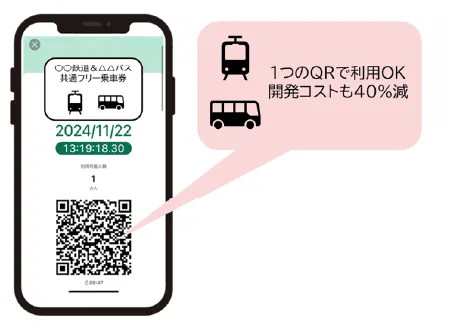
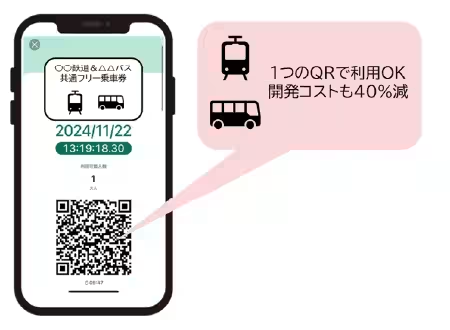
In a groundbreaking initiative led by the Ministry of Land, Infrastructure, Transport and Tourism, the My Route service is set to transform public transportation in Japan through the standardization of QR code ticketing. This pilot project, entitled the 'QR Code Ticketing API Standardization Project', seeks to address the issues of transportation accessibility and convenience across the country. My Route, developed by Toyota Financial Services (TFS) in collaboration with Nippon Signal Co., Ltd. and Lecip Inc., aims to connect trains, buses, and shopping experiences all through a single QR code.
Aiming for a Seamless Experience
The pilot program will take place on November 27, 2025, at major transport hubs in Kumamoto, including Kumamoto Station and Sakuramachi Bus Terminal. The goal is to facilitate smoother transitions between different modes of transport, allowing users to enjoy a unified travel experience. By employing a singular QR code, passengers can utilize not only trains and buses but also local shops, thereby enhancing their overall travel experience.
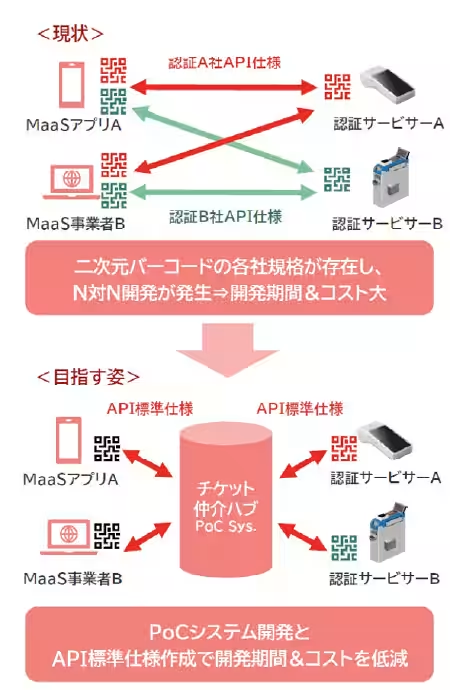
The necessity for streamlining processes has become increasingly apparent as users face the challenges posed by separate ticketing systems. Currently, the proliferation of unique ticket formats across various service providers leads to confusion and inconvenience during travel. Each transfer often requires customers to switch tickets, creating a frustrating experience that could deter sustainable mobility solutions.
Addressing Digital Challenges in Public Transport
The rise of digital ticketing has seen QR codes become a staple in the public transportation sector. However, differences in ticket specifications among service providers pose significant challenges. Each company typically requires individual systems for ticket reading and verification, escalating both development costs and implementation times, thus hampering the broader adoption of Mobility as a Service (MaaS).
To combat this, TFS, in conjunction with Nippon Signal and Lecip, is developing a standardized QR code ticketing API with a shared format applicable across various services. This initiative is not merely technological; it represents a fundamental shift in how people engage with public transport.
Overview of the Pilot Experiment
On November 27, 2025, from 10:00 to 15:00, the pilot project will showcase its QR code ticketing capabilities across participating transportation operators: Kyushu Railway Company (JR Kyushu) for rail services, Kyushu Sanko Bus for bus services, and United Toyota Kumamoto for retail experiences. Lecip will provide bus-mounted systems, while Nippon Signal will manage the ticket verification systems at stations.
The experiment will focus on several key areas of evaluation:
- - Seamless Mobility: Testing the interoperability of the QR code across different transportation providers and retail locations.
- - API Functionality: Assessing the operational capabilities for API integration among different service platforms.
- - Technology Assessment: Identifying technical and operational hurdles when integrating with existing reading systems.
- - User Experience Evaluation: Measuring usability and satisfaction levels of users interacting with the new system.
Insights gained from this pilot will inform future standard developments, enabling broader regional implementations and smoother transitions for national users.
Vision for the Future: Enhanced Mobility
The ultimate vision of this initiative is a world where a single QR code enables movement across various transportation services, including trains, buses, and even shopping experiences. The desire is to create a genuinely accessible urban mobility network. As my route seeks to foster an environment that encourages mobility, the QR code ticketing standardization is central to this mission.
Expanding Opportunities in Regional Ecosystems
This project aspires to be more than just a technological solution; it aims to evolve into a comprehensive 'mobility-centric ecosystem' that integrates transport modes with tourism, community experiences, and commerce. As users move seamlessly from one service to another via their QR codes, they can discover new opportunities and experiences within their regions, thus contributing to a vibrant local culture.
In regions where public transport faces accessibility challenges, this system could significantly enhance convenience, facilitating better access for marginalized communities. TFS, along with its partners, remains committed to collaborating with a diverse array of service providers and local governments to drive this progressive vision toward reality.
Future Directions
As the My Route framework expands based on findings from the pilot project, the emphasis will be on further developing digital ticketing services linked to the QR code system. This will ensure enhanced access across communities, ultimately solving mobility challenges for many. By engaging with initiatives like the COMmmmONS project, the focus on standardization and establishing an inclusive ecosystem will continue to be a priority.
For more information on the My Route application, please visit here.
Topics Consumer Technology)
【About Using Articles】
You can freely use the title and article content by linking to the page where the article is posted.
※ Images cannot be used.
【About Links】
Links are free to use.