



Green Energy & Company Launches First Issue of GREEN MOOK Exploring Energy Storage Innovations
Green Energy & Company Launches First Issue of GREEN MOOK
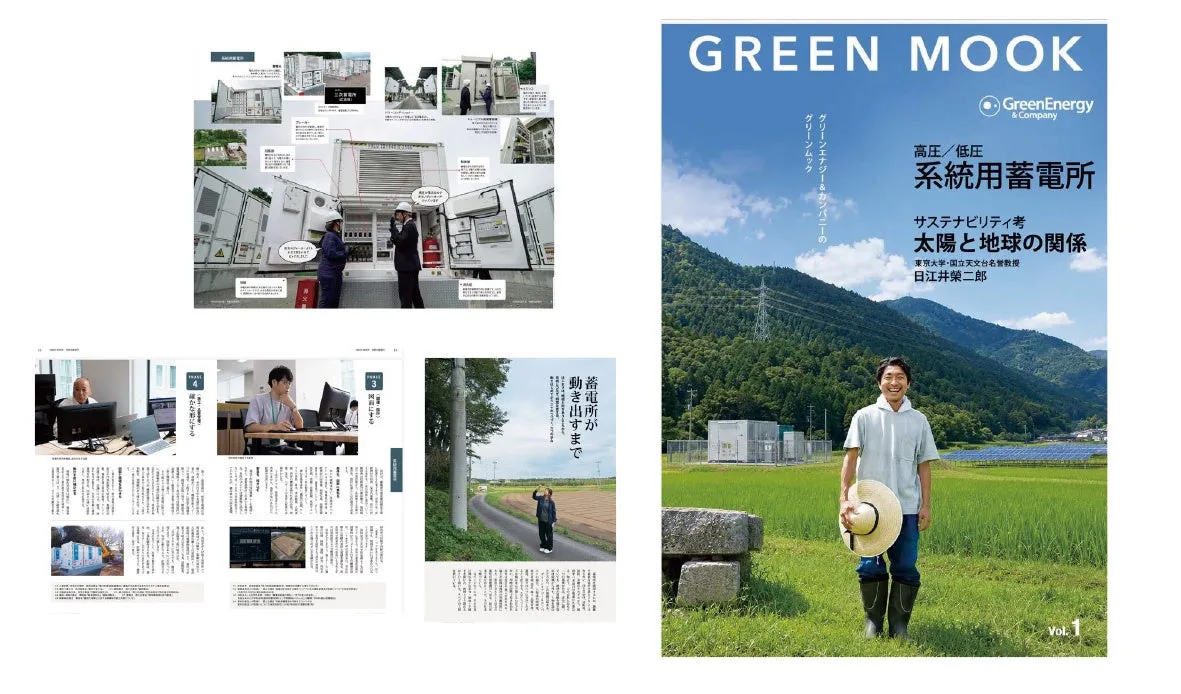
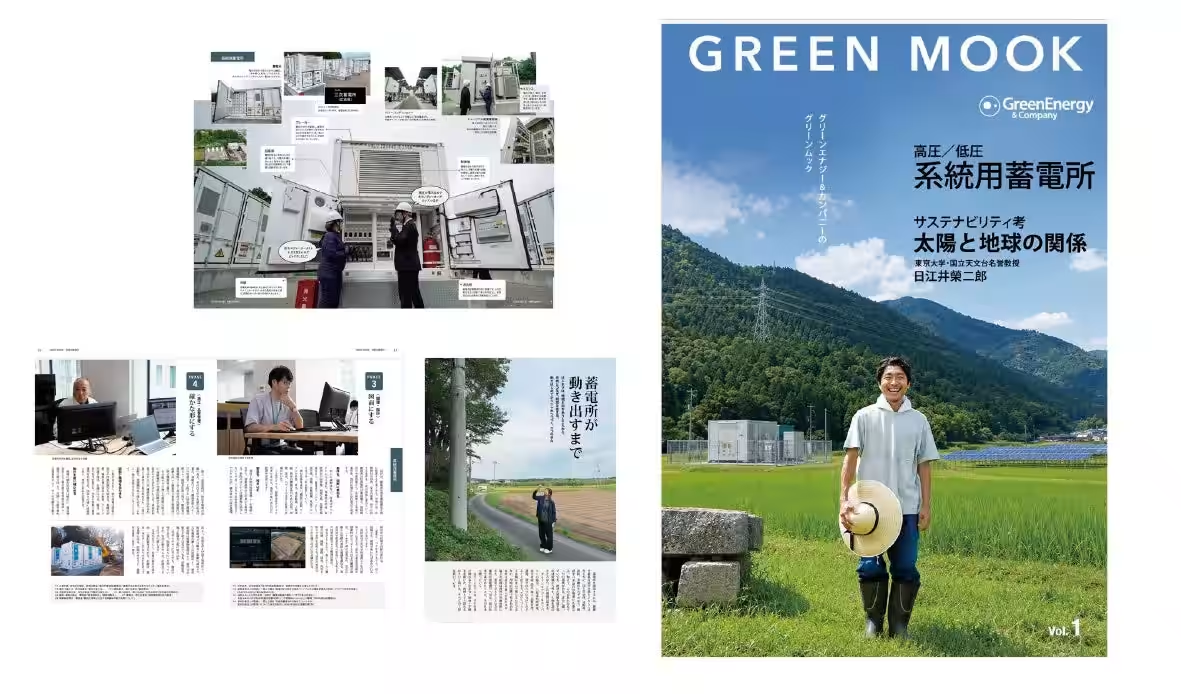
On September 8, 2026, Green Energy & Company, headquartered in Minato, Tokyo, and Itano district, Tokushima, officially released the first volume of its information magazine, titled "GREEN MOOK Vol.1." The magazine explores the crucial theme of energy storage, particularly focusing on the "grid-connected battery storage systems" that have become integral under the Electricity Business Act since 2022.
The publication navigates the inner workings of these systems, examining essential topics such as job creation within the energy market and the historical evolution of energy storage technologies over the past 300 years, all while looking ahead to the energy landscape of 2050. This comprehensive issue connects facilities, workforce, scientific endeavors, and societal impact, offering insightful analysis.
Background of the Publication
The concept for GREEN MOOK originated in spring 2024, amidst the ongoing construction of new energy infrastructure, such as grid battery storage systems. As the urgency surrounding energy solutions becomes more pronounced as a societal issue, the necessity for such innovations has come into sharper focus.
New infrastructure naturally leads to new employment opportunities. Key stages of development include land selection, connection to the power grid, regulatory compliance, design, construction, market linking, operation, and maintenance. This magazine delves into the lesser-known aspects of battery storage facilities, providing a detailed perspective on the workforce behind these systems through six critical phases.
The aim is to foster transparency, sharing insights obtained from inside the business with society at large. GREEN MOOK is dedicated to achieving this objective.
Highlights of the Issue
Exploring Grid-Connected Battery Storage Systems (p.3-20)
The positioning of battery storage within the Electricity Business Act in 2022 marks a significant milestone, one that remains unfamiliar to many. The magazine provides a fresh perspective on these facilities, spotlighting both the operational context and the personnel involved.
A dedicated feature on the Miyoshi Battery Storage Facility in Hiroshima, boasting a rated output of 1.99 MW and a storage capacity of 8.128 MWh, offers a direct insight into the technical components such as storage units, power conditioners, transformers, and substation equipment.
Insights from employees involved at every stage—land evaluation, power applications, regulatory research, design, procurement, quality management, construction, operation, and maintenance—are presented as they outline the criteria determining site viability and required protocols for integration into the power system.
The issue also discusses the upcoming developments in the low-voltage grid-connected battery storage facilities expected in March 2026, detailing the mechanisms and potential of small-scale installations requiring merely the space of two parking spots.
From the Universe to 2050: The Context of Energy Storage (p.21-31)
"Where do we stand now?" This provocative question introduces a segment examining sustainability. Rather than concentrating solely on immediate energy sources, the magazine broadens its focus to incorporate solar and earth energy, as well as the past and future dynamics.
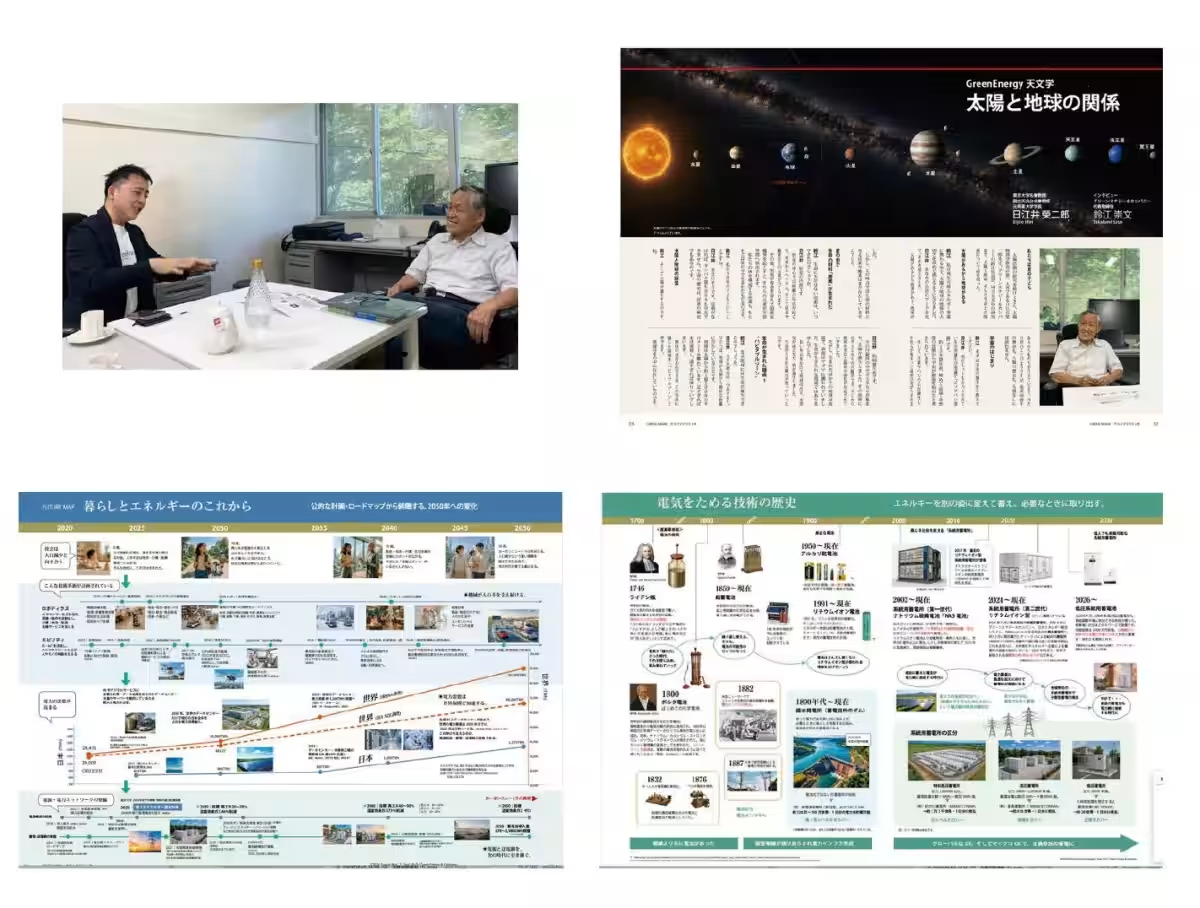
A dialogue between Emeritus Professor Eijiro Niekawa of The University of Tokyo and President Takafumi Suzuue traces the universe's 13.8 billion-year timeline, moving from the Big Bang to the creation of the elements vital for life, bridging connections to solar and terrestrial existence.
Next, sustainability scientist Kanako Tanaka, previously of the IPCC, shares insights on the future energy landscape, emphasizing the importance of demographic changes to consider necessary technologies. This leads to two infographics relaying 300 years of energy storage technology history from its inception with Leiden jars to contemporary advancements driven by renewable energy.
The second infographic, titled "FUTURE MAP: The Next Steps for Life and Energy," overlays demographic shifts, robotics, mobility developments, and energy demand along a timeline leading to 2050, thereby connecting societal evolution with individual lifespan experiences.
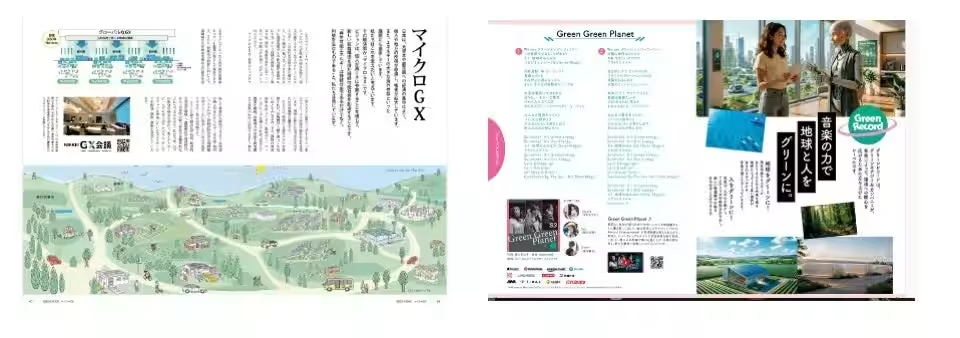
The narrative is further augmented by "Green Green Planet," the premier release from the company’s new music label Green Record, launched in May 2026.
Additional Content
Other features include insights into the company's initiatives presented at COP29 (Baku) and COP30 (Belém), centered on the decentralized energy model "Micro GX," which empowers individuals and communities to generate and utilize renewable energy, fostering local value circulation.
Additionally, the magazine features visits to locations like a trailer house equipped with solar panels and a craft beer brewery in Kamikatsu, Tokushima, emphasizing sustainable practices within the company’s broader operations.
Editorial Perspective
In the editorial note, the editors emphasize that generating electricity is not enough; the essence of energy lies in storage and utilizing it as needed. With grid-connected battery storage systems increasingly established, this volume aims to illuminate both the functionality of these facilities and the processes involved in their operationalization, highlighting the roles of people and their contributions.
A holistic approach reveals the complexities surrounding sustainability, emphasizing the interconnectedness of solar energy, planet Earth, and the historical and future potential of how we live. With a focus on the systemic relationships in energy and environmental studies, GREEN MOOK embodies one platform through which Green Energy & Company strives to clarify these connections.
Issues Distribution
The magazine will be distributed at the Sustainable Management Week event at Makuhari Messe from September 9-11, 2026. Visitors will receive copies while exploring the first real-life showcase of the low-voltage grid-connected battery package, GREEN CHORD.
Closing Thoughts
Green Energy & Company is committed to shaping a future defined by sustainable practices, aiming to foster a greener planet for both humanity and the Earth through innovation in energy. As they aim for a net-zero society, the company emphasizes continuous efforts towards developing energy infrastructures with objectives to enhance renewable energy uptake and stabilize the overall power system.



Topics Consumer Products & Retail)







【About Using Articles】
You can freely use the title and article content by linking to the page where the article is posted.
※ Images cannot be used.
【About Links】
Links are free to use.