



New Discoveries in Chronic Kidney Disease: The Role of Thioredoxin
Introduction to the Discovery
A collaborative research team from Okayama University and the University of Tokyo Medical Research Institute has made groundbreaking discoveries regarding chronic kidney disease (CKD). This research reveals the significant role of a protein called thioredoxin, which protects the body from oxidative stress, in maintaining kidney health. Published online in Translational Research, this study sheds light on the mechanisms underlying CKD progression and opens avenues for potential therapies.
Background on Chronic Kidney Disease
Chronic kidney disease is prevalent globally, affecting approximately one in five adults in Japan alone. As the disease progresses, it can lead to severe complications requiring dialysis or kidney transplantation. Understanding the factors contributing to this condition is crucial for developing effective treatments and management strategies.
Key Findings in the Research
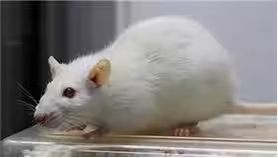
The study focused on rats that exhibited weakened thioredoxin function, leading to the spontaneous progression of CKD. It was observed that over time, these rats showed a gradual decline in kidney function, mirroring the alterations seen in human CKD cases. Notably, there was an increase in proteinuria, hypertension, and fibrosis, highlighting the seriousness of the disease.
Moreover, the research team identified that mitochondrial dysfunction occurred alongside cell death and inflammation in the kidneys, which are critical aspects of CKD development. This intricate interplay emphasizes the need for further research into mitochondrial health as a potential therapeutic target.
Impact of the Research
The research presents a promising new animal model for studying the mechanisms of CKD progression. The findings underscore the importance of thioredoxin in combating oxidative damage, suggesting that targeting oxidative stress and mitochondrial dysfunction could lead to innovative CKD treatment strategies. Over time, this could significantly improve patient outcomes and quality of life for those affected by CKD.
Professor Iori Ohmori's Perspective
Professor Iori Ohmori, who led the research team, noted that CKD is a serious condition that may progress unnoticed, necessitating significant interventions like dialysis or transplantation as it reaches advanced stages. His research has demonstrated the crucial role of oxidative stress protection mechanisms in preserving kidney health. He aims to leverage these findings to advance collaborative research focused on halting the disease's progression and finding new therapeutic avenues.
Future Directions
This research not only paves the way for new insights into CKD mechanisms but also invites further studies on how thioredoxin and related oxidative stress pathways can be leveraged to develop effective therapies. Given the significant burden of CKD, especially in aging populations, the implications of this study are profound and far-reaching.
Conclusion
The collaboration between Okayama University and the University of Tokyo's Medical Research Institute marks a pivotal step forward in understanding chronic kidney disease. As future research builds on these findings, it is hoped that new treatments targeting oxidative damage and mitochondrial function will emerge, offering hope to millions affected by this challenging disease.
For more in-depth information, the research paper titled "A novel spontaneous rat model of chronic kidney disease with mitochondrial dysfunction driven by thioredoxin insufficiency" can be accessed here.
The study was supported by various grants aimed at enhancing research capacity within Japan and represents a significant advancement in the field of nephrology.

Topics Health)
【About Using Articles】
You can freely use the title and article content by linking to the page where the article is posted.
※ Images cannot be used.
【About Links】
Links are free to use.